NZDF arrives in northern Cook Islands for construction, health and hydrography tasks
17 September 2026
Unfortunately you are viewing this website on an outdated browser which does not support the necessary features for us to provide an adequate experience. Please switch to a modern browser such as latest version of Google Chrome, Mozilla Firefox, Apple Safari or Microsoft Edge.
Ngā mihi nui
In Juba, the capital of South Sudan, United Nations peacekeeper Major Dylan Wright steels himself for a day of petty confrontation as he navigates the chaotic streets. On the demilitarised zone (DMZ) on the Korean peninsula, Captain Steen Hemmingsen re-checks the message he’s about to read over the phone to an unnamed soldier in North Korea.
This is the daily fare of testing situations for New Zealand Defence Force (NZDF) personnel on United Nations missions, posted to places with a long legacy of tension and outright conflict between cultures, factions and countries.
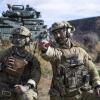
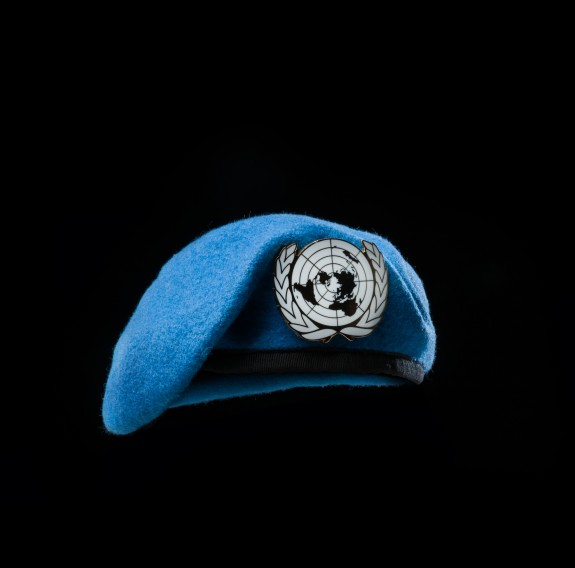
Some of these places can be justifiably called ‘hot spots’. Some are hotter than others. Major Wright and Lieutenant Wise, wearing blue berets, represent United Nations Peacekeeping, the largest and most visible representation of the United Nations, which seeks to secure commitment and cooperation towards peace and security in volatile environments through the deployment of peacekeepers.
Captain Hemmingsen’s work is part of the United Nations commitment to monitor the armistice between North and South Korea. It’s in these tricky locations, from the Middle East region to North Africa and Asia, where the NZDF maintains deep-seated deployments lasting decades, in an effort to maintain a stable world order.
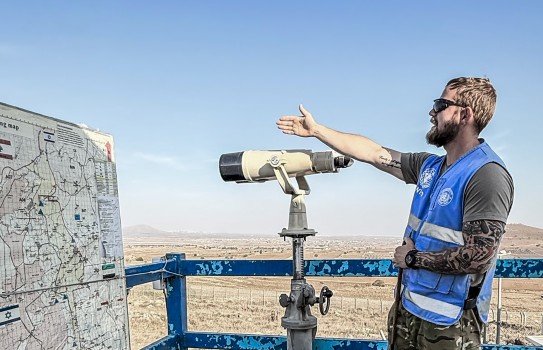
Lieutenant Chris Wise is five months into his 12-month deployment to Operation Scoria, the New Zealand Defence Force contribution to the United Nations Truce Supervision Organisation’s (UNTSO) supervision of armistice agreements between Israel and Egypt, Jordan, Lebanon and Syria. He’s a United Nations Military Observer (UNMO), there to monitor adherence to the 1974 Agreement on Disengagement between Syrian and Israeli forces. It requires patience, resilience and an open mind – and always being prepared for the worst-case scenario.
Things can change here in the blink of an eye. Having the ability to understand the situation and react accordingly is very important.
LT Chris Wise
Overshadowing everything, from late February, has been the United States' and Israel's war against Iran. Despite this, the workload of the team is only slightly reduced, says Lieutenant Wise. Morale is high. Everyone is performing well and has a positive attitude.
It’s a long deployment, but it can take up to three months in the field to pass all the assessments to become a fully competent military observer. Every month personnel from different nations rotate in and out, and the deployment’s length means there’s always experienced personnel to pass on the knowledge and ensure the standard of military observers stays high. The concept of an observer stationed at a remote Observation Post (OP), scanning a vast territory before them, is not far off their most common tasking. “Static Operations” are conducted from permanent observation posts, looking out over the Area of Separation (AOS) as laid out in the 1974 Agreement.
It’s usually two people, taking shifts over seven to 14 days, but everyone must be prepared to stay longer. Due to the conflict their relief might not be able to make it through for a variety of reasons. It means the OPs have to have far more supplies than normal, to ensure the observers can carry on for an extended period. At any moment, perhaps many a day, a missile is detected and the team get an alert – head to shelter.
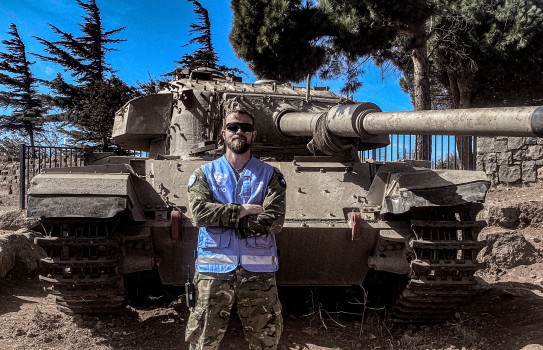
Then there are mobile operations, which involve car patrols into areas of interest. Going mobile means any New Zealand-instilled driving courtesies go out the window. It’s about remembering to drive on the right, and there’s no point in waiting for a gap in traffic – you have to make your own gaps.
The observers could be planning to establish temporary observation posts to enhance their situational awareness, plus gauge the atmosphere within the local populace. It could be an investigation into an allegation of a violation of the 1974 Agreement. The observers will conduct a fact-finding mission to determine what happened in order to submit a report to the authorities.
Inspections take place from time to time, when an inspection team will enter a military position and conduct a count of personnel and equipment to ensure it is within the limits required in the agreement. There’s tension in this kind of work. The observers don’t want to antagonise host nation sensitivities, and it’s best to avoid situations that have the potential to go bad. They are often approached by civilians, sceptical of the United Nations and the work the MOs are doing.
War or not, it’s always been a conflict zone. The MOs report their movements around their Area of Operations as they go, ensuring they are tracked at all times. There’s a lot of old explosive remnants of war around. Knowing where it’s safe to drive – or walk – is vital.
Patrols would normally involve one vehicle heading to an assigned sector. Now it’s two vehicles – one of them a Light Armoured Vehicle – and the patrol will head directly to a Point of Interest and head back afterwards, minimising the exposure on the Golan Heights. Each morning there’s a GO or NO GO directive. It’s all part of being more mindful of the situation and seeking ways to reduce the risk.
This deployment has been a career aspiration for some time. It’s a mission that has seen generations of New Zealanders take part, each with their own unique set of stories and experiences. To be part of that story and history is extremely rewarding, knowing that I have contributed to New Zealand’s peacekeeping efforts on the world stage.
LT Chris Wise
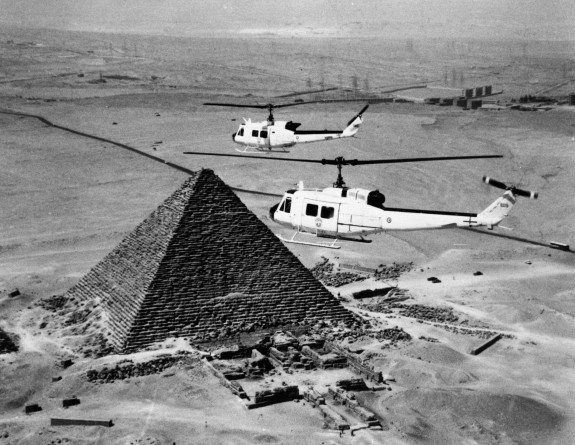
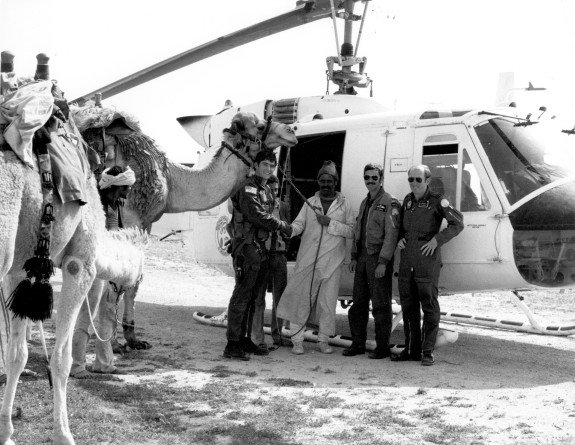
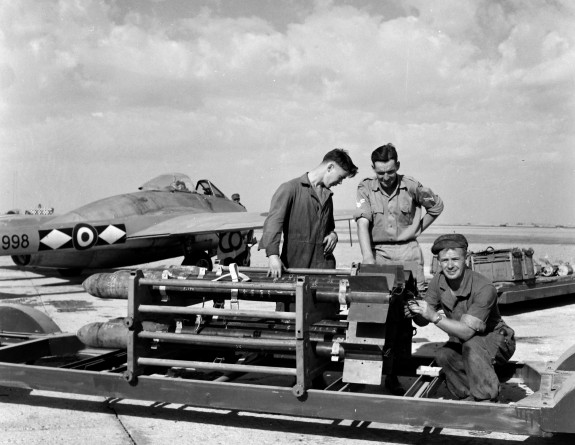
In the wake of the Second World War deployments began to United Nations peace-keeping missions along the disputed Arab-Israeli borders. The UNTSO was established in 1948 to monitor the respective armistice agreements signed between Israel and Egypt, Lebanon, Jordan, and Syria which ended the First Arab-Israel War. NZDF personnel joined the missions in 1954.
In 1979, Israel and Egypt signed a Treaty of Peace and parties negotiated a protocol agreeing to the establishment of the Multinational Force and Observers (MFO). New Zealand was among the first countries to deploy service personnel to the MFO. In 1982, New Zealand provided personnel for a combined Rotary Wing Aviation Unit with Australia to operate 10 Bell Iroquois Helicopters. They were used for aerial surveillance of Egyptian and Israeli forces, and to transport MFO troops to and from isolated observation posts. They were replaced in 1986 by a New Zealand Army Training and Advisory team.
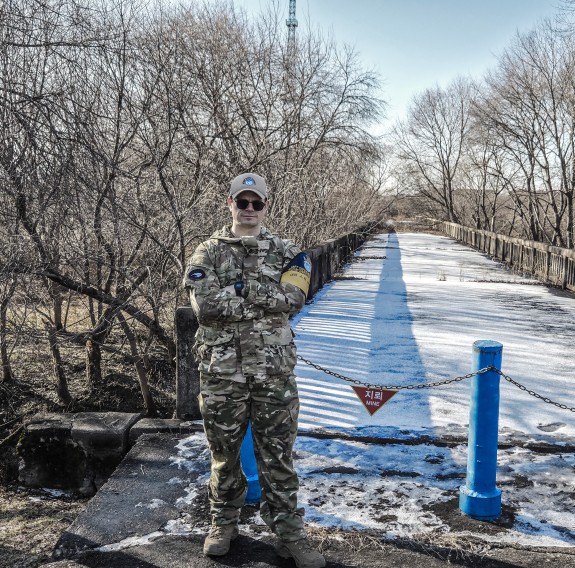
Captain Steen Hemmingsen joined the NZ Army because he wanted a career that provided academic, physical and interpersonal challenges. His latest deployment is notable for the latter; so far he’s talked to a North Korean soldier, had dinner with North Korean defectors and has met the Crown Princess of Sweden, the US Secretary of Defence, the FBI director, a Vatican cardinal and US comedian Craig Robinson from The Office.
Captain Hemmingsen has completed a six-month posting to Operation Monitor, New Zealand’s commitment to the United Nations Command (UNC) and the United Nations Command Military Armistice Commission (UNCMAC) in Korea.
It’s about keeping the peace, but Operation Monitor is not a United Nations Peacekeeping mission; the personnel do not wear the blue beret. UNC was established as a combatant command to provide collective security to the Republic of Korea. During the Korean War, under the banner of the United Nations, 22 nations, including New Zealand, contributed either combat forces or medical units to support South Korea during the conflict.
UNCMAC, a subordinate entity within UNC, was later established as a condition of the Armistice to monitor the belligerent parties’ adherence to the armistice agreement. It provides the ‘quality control’ in the mission to maintain military stability between the Republic of Korea and the Democratic People's Republic of Korea.
Our office controls the ‘Pink phone’ that is the only overt line of communication to North Korea from United Nations Command. I will be involved in the drafting of the message content and language and oversee the passing and reporting of the message.
CPT Steen Hemmingsen
NZDF personnel have deployed to South Korea, including to the DMZ between north and south, since 2001. The deployment has been called Operation Monitor since 2004. At the DMZ, Captain Hemmingsen’s most important mission, as an assistant joint duty officer, was communication with North Korea. His other priorities were coordinating and controlling access to the Joint Security Area (JSA) and providing briefings and orientation about the JSA to those that need them.
That latter mission has the biggest variety, taking up most of his week. It involves frequent briefings to anyone from local unit soldiers, ministers of foreign national governments, ambassadors, distinguished visitors and three-star generals.
Then there’s the access approvals. More than 100 civilians live and work inside the DMZ in Daeseong-dong, which absorbs a lot of his attention around visitors, maintenance callouts and external workers.
The priority one mission, passing messages to North Korea, is occasional.
Captain Hemmingsen and his team were working in the eyeline of armed North Korean guards, but were not armed themselves, as per the armistice agreement. The best safety measure is routine and normality in activity – predictable actions create predictable reactions. There is also the reassurance of a Security Battalion to watch their backs when they’re in the JSA.
Exploring in the wilder areas is not encouraged. There are still mines and unexploded ordnance left over from the Korean War, and every monsoon season moves and unearths new dangers.
The complex mix of command chains is a big challenge, from UNC, UNCMAC, UNC Security Battalion, the wider US forces in Korea and the Korean Military – which some are under UNC and some are not. There are many different priorities and who holds the relevant authority on a matter can be difficult to determine. It’s a juggle, but for a young officer it’s an excellent learning environment for understanding how multinational coalitions work at the action end of the stick, in a high-profile area.
For downtime, the gym is conveniently close to their accommodation in ‘Kiwi Lines’, which is also 400 metres from his office – a great commute. A favourite dish for Captain Hemmengsen is Duk-galbi, a Korean dish of spicy chicken and cheese. If the weekend schedule permits Seoul is under two hours away by train, or there’s Munsan, the nearest town at 15 minutes drive south.
20
rotations of Operation Whio
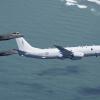
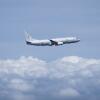
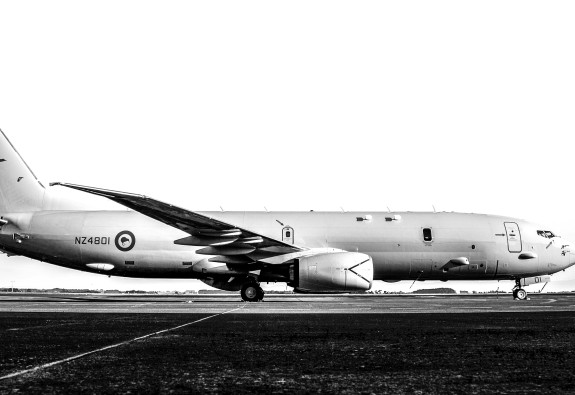
It’s not the only New Zealand contribution to the peninsula. Since 2018, Operation Whio covers the monitoring of the United Nations Security Council’s sanctions against the Democratic People’s Republic of Korea. To date, there have been more than 20 rotations of Operation Whio, including multiple deployments of P-3K2 Orion and P-8A Poseidon aircraft, aircrew, and support personnel, and the deployment of HMNZS Aotearoa.
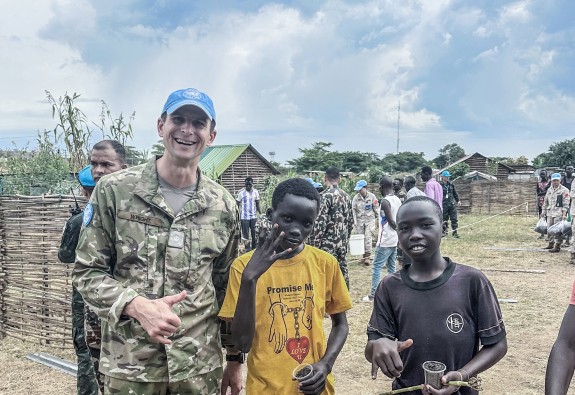
Healthcare, running water, electricity, and sealed roads are all things you take for granted in New Zealand. South Sudan is nothing like that, says Major Dylan Wright.
Major Wright has just completed a nine-month tour of duty to Operation Sudden, as a military staff officer to the United Nation’s mission in South Sudan (UNMISS). South Sudan is in the midst of a humanitarian crisis driven by ethnic conflict. The United Nations plays an important role in the protection of civilians, peace-making and facilitating the delivery of humanitarian aid.
The NZDF contributed personnel to the United Nations Mission in Sudan from 2005 to 2011, when the United Nations Mission in South Sudan (UNMISS) was established to consolidate peace and security and enable the newly-established Government of South Sudan to assume its functions.
The NZDF now supports UNMISS, with the Deputy Chief of Plans in the Force Headquarters and an officer in the Joint Operations centre both contributing to the daily running of the mission and longer-term planning.
1. Protection of civilians.
2. Facilitating humanitarian assistance.
3. Providing support for the peace process.
4. Monitoring, reporting, and investigating violations of international humanitarian law and human rights.
5. Providing electoral support.
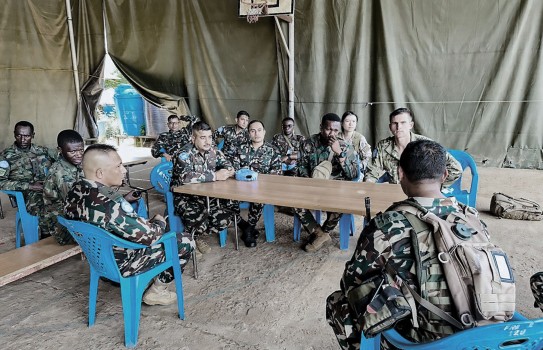
Major Wright was based in Juba, the capital of South Sudan, helping maintain one of a number of military sectors that cover the country. Each sector is commanded by a Sector Headquarters – along the lines of an Army Brigade Headquarters. His main job, within the G5 (Plans) department of Sector Juba HQ, was the upkeep of the team’s crisis contingency plan – essentially the plan should the security situation in South Sudan deteriorate and people need to be protected or evacuated.
You still need to be aware of your surroundings as soon as you step outside the base. There are crazy driving conditions, opportunistic crime, small scale conflicts, and police and military checkpoints with varying degrees of confrontation.
MAJ Dylan Wright
Downstream from that was assisting with training and assessment for Battalions in the section, reviewing plans and task orders, and going on patrols within the sector to get a feel for how the patrols are being conducted and received. Patrols, he says, provide the ‘ground truths’ in the neighbourhood.
Juba is the most stable part of the country, but it’s all relative.
The multi-national environment was extremely diverse, he says. English is the second language for most people and the level of training or experience amongst the UN cohort could be vastly different. It was common to feel a sense of frustration, a feeling of being unable to do things to a level of effectiveness that the team thought it should achieve.
Unsurprisingly, mental resilience is important, as well as managing emotions when the team handled confrontations, negotiations and explanations. Humility went a long way towards understanding how everyone involved has very different experiences and perspectives, he says.
The resilience of children in such adverse conditions was something that kept him going when frustrations weighed him down. They might be playing among living conditions beyond belief for a New Zealander, but they did it with laughter and smiles. Despite the adversity Major Wright says he’s gained a lot from experiences and opportunities that couldn’t be replicated elsewhere.
He had always been attracted to visiting a remote part of the world that had a certain element of risk and adventure, and Op Sudden had been on his radar as something he’d like to do once he promoted to Major. On missions like this, friends and staying engaged socially keeps everyone grounded, he says. Christmas Day was spent on base.
We cooked and enjoyed some great Christmas food and just hung out playing games through the day. Overall, it was actually a really cool day and a Christmas I will remember as something different to my normal life at home.
MAJ Dylan Wright