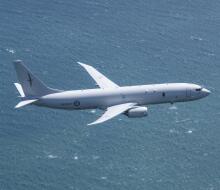
Every operational squadron flying as Royal New Zealand Air Force operations continue to pace
14 October 2026
Unfortunately you are viewing this website on an outdated browser which does not support the necessary features for us to provide an adequate experience. Please switch to a modern browser such as latest version of Google Chrome, Mozilla Firefox, Apple Safari or Microsoft Edge.
Ngā mihi nui
A Royal New Zealand Air Force (RNZAF) C-130J Hercules has returned to New Zealand after taking part in the United States Air Force-led (USAF) Exercise Red Flag, held at Joint Base Elmendorf-Richardson (JBER) in Anchorage, Alaska.
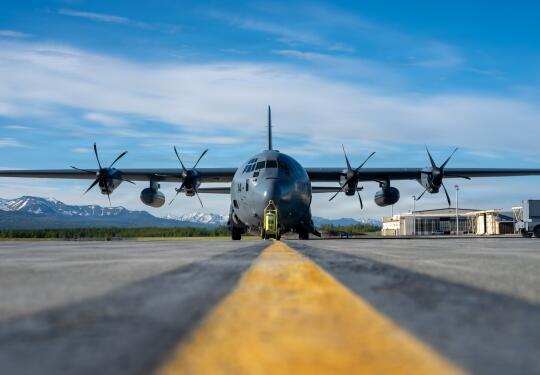
The transport aircraft operated by No. 40 Squadron at RNZAF Base Auckland was among 85 aircraft involved in the multi-national exercise, which is designed to improve aircrew combat readiness.
Red Flag, held at Joint Base Elmendorf-Richardson (JBER) in Anchorage, provides realistic training in a combined air and ground threat environment, including tasks with requirements such as threat evasion, airdropping of land combat personnel, landing on unprepared airstrips and fighter escort co-ordination.
Alongside New Zealand’s
No. 40 Squadron has five Lockheed C-130J Hercules aircraft that provide strategic airlift (inter-theatre) and tactical airlift (intra-theatre) as well as participating in international training exercises.
were fighter aircraft from various United States units and the Republic of Singapore Air Force, tankers, command and control and transport aircraft including C-130Js from the USAF’s No 36 Airlift Squadron based in Yokota, Japan, and aircraft from the Royal Air Force and the Royal Canadian Air Force, all based at JBER and Eielson Air Force Base.
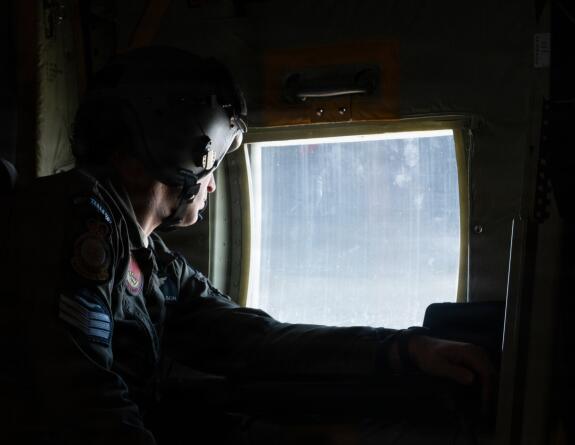
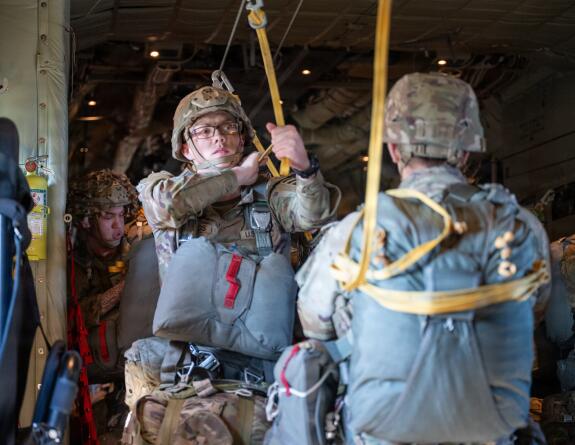
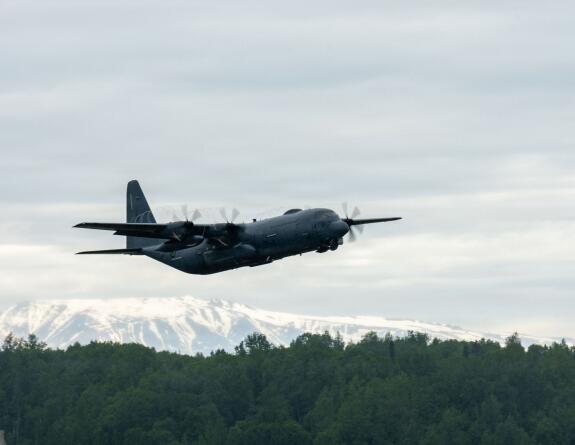
The RNZAF detachment commander, Squadron Leader Adam Palmer, said the exercise had been highly successful.
"The benefit of operating the C-130J is that we can seamlessly integrate into a large coalition force, as was demonstrated during the Joint Forceable Entry Operation supporting the 11th Airborne Division. The relationships built with partners at Red Flag enable us to successfully integrate during operational deployments.
"To operate with our partners in a high-end, complex threat environment, against a simulated near-peer adversary, ensures our C-130J crews are ready to respond to a wide range of events at home and abroad.”
Squadron Leader Adam Palmer said New Zealand’s participation in Exercise Red Flag was also a significant milestone for the C-130J capability
“We have taken part in earlier iterations of this exercise with the C-130H, but this was the first time our C-130J had attended. This allowed No. 40 Squadron to operate aircraft self-protection systems against simulated threats, and tactical datalinks within a coalition environment.”
14 October 2026

12 August 2026
10 March 2026
07 February 2026
08 December 2025
10 October 2026

01 October 2026
17 September 2026
07 August 2026