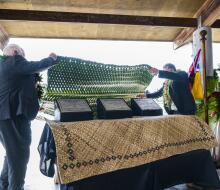
Memorial headstones recognise Niuean First World War servicemen
27 August 2026
Unfortunately you are viewing this website on an outdated browser which does not support the necessary features for us to provide an adequate experience. Please switch to a modern browser such as latest version of Google Chrome, Mozilla Firefox, Apple Safari or Microsoft Edge.
Ngā mihi nui
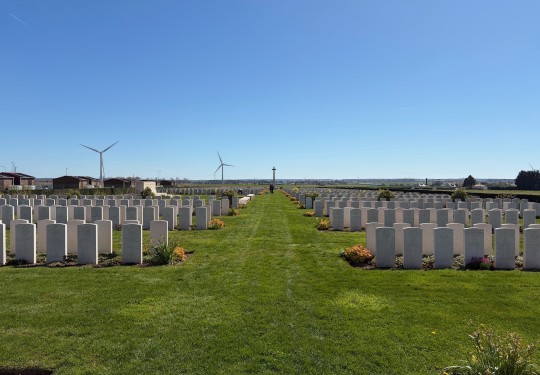
The partial remains of two New Zealand soldiers who died during the First World War have been reburied in France, after being housed in a Philadelphia museum for more than 100 years.
In September last year, the Mütter Museum and Historical Medical Library informed the Commonwealth War Graves Commission (CWGC) it had 113 sets of partial First World War human remains within its collection.
The remains had been collected from a military hospital in Le Tréport, France and were transferred to the United States for medical study in 1919, which was an accepted practice at the time.
After extensive research, the CWGC confirmed many of these remains belonged to war casualties who were already buried in Mont Huon Military Cemetery in France.
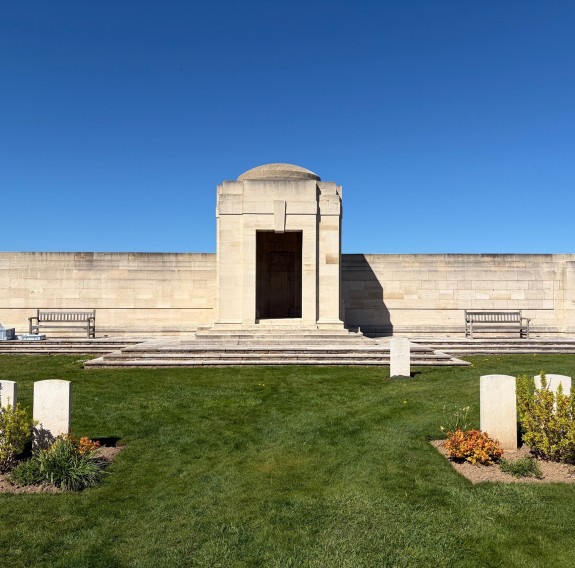
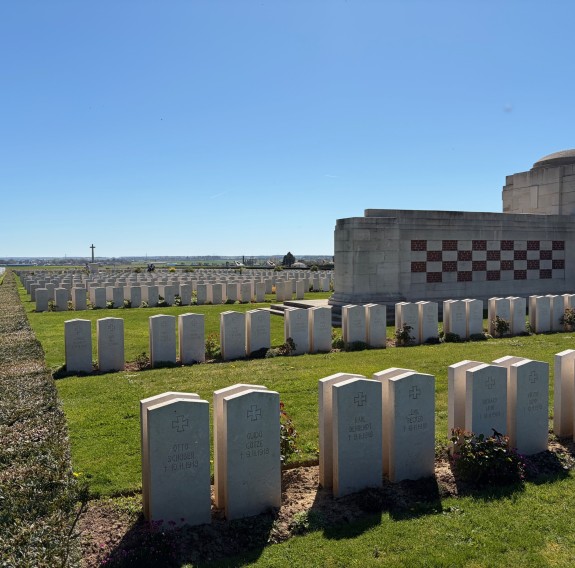
Mont Huon Military Cemetery, a Commonwealth War Graves Commission cemetery at Le Tréport
Mont Huon Military Cemetery, a Commonwealth War Graves Commission cemetery at Le Tréport
Among them were Lance Corporal Patrick Duffy and Rifleman George James Tombs, who were serving with the New Zealand Expeditionary Force at the time of their death. The other identified remains belong to Australian, British and Canadian war casualties.
Lance Corporal Duffy, born 26 March 1882, was one of 10 children of Michael and Lily Duffy, from the Otago town of Tapanui.
He embarked for Europe in November 1915, and was wounded and fell ill several times during his almost three years of war. On 16 October 1918 while serving in France, Lance Corporal Duffy sustained gunshot wounds to his head and left hand while serving in France. He died from his wounds on 24 October - less than three weeks before the end of the war.
Rifleman Tombs, born 7 May 1893, was one of at least three children of Sara and James Herbert Tombs, from Swindon in the English county of Wiltshire.
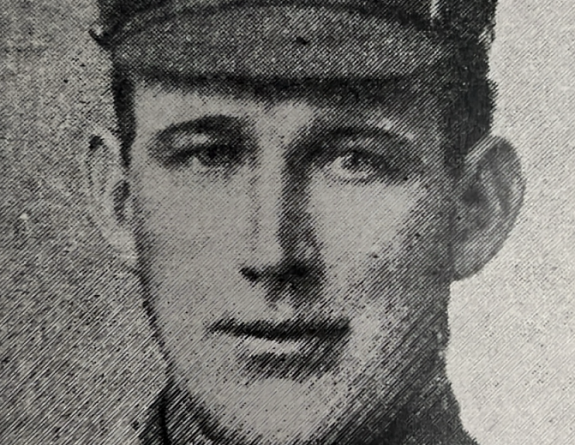
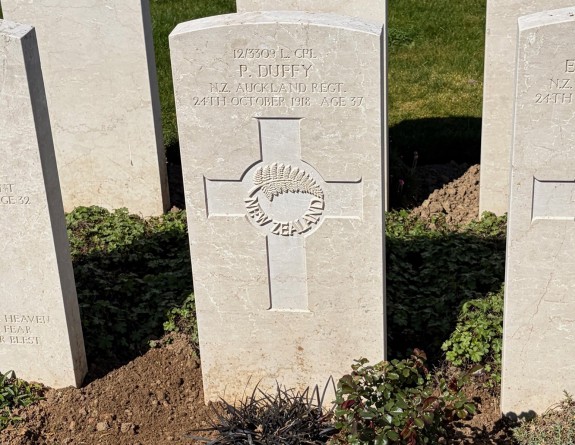
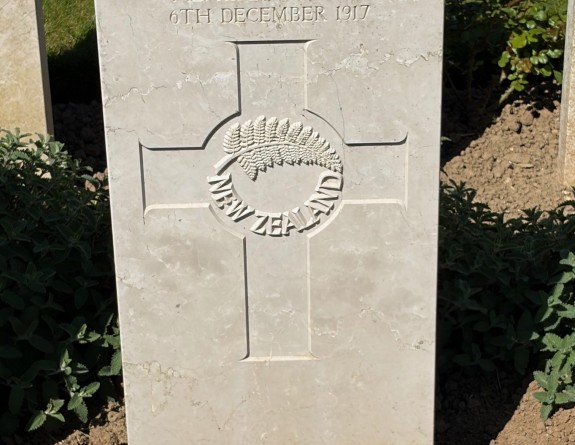
Lance Corporal Patrick Duffy (left), his resting place in Mont Huon Military Cemetery (middle) and the resting place of Rifleman George James Tombs in Mont Huon Military Cemetery in France (right).
Less than six months after embarking for the Western Front in April 1917, he suffered a gunshot wound and severe fracture to his left arm at the Battle of Passchendaele on 12 October 1917 – widely regarded as New Zealand’s “blackest day”. Within a few hours, 843 New Zealanders were killed on the day, with the assault ultimately claiming the lives of more than 950 New Zealanders, including Rifleman Tombs. He later became seriously ill as a result of his wounds, and almost two months after he was injured he died on 6 December 1917.
The New Zealand Defence Force (NZDF) has contacted the families of these two soldiers. Their partial remains were buried in their existing graves earlier this month by the CWGC team in France, in a private, technical interment, attended by New Zealand’s Defence Attaché based in Belgium.
The NZDF will work with the families and the other CWGC member governments to determine whether a public ceremony will be held to further commemorate these men.
27 August 2026
05 May 2026
25 April 2026
14 May 2025
09 May 2025
22 April 2024
26 April 2026
25 April 2026
31 March 2026