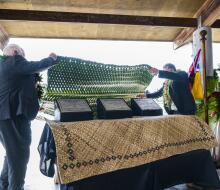
Memorial headstones recognise Niuean First World War servicemen
27 August 2026
Unfortunately you are viewing this website on an outdated browser which does not support the necessary features for us to provide an adequate experience. Please switch to a modern browser such as latest version of Google Chrome, Mozilla Firefox, Apple Safari or Microsoft Edge.
Ngā mihi nui
The Battle of Kap’yong is a poignant and significant chapter in the history of the New Zealand Army, Ngāti Tūmatauenga.
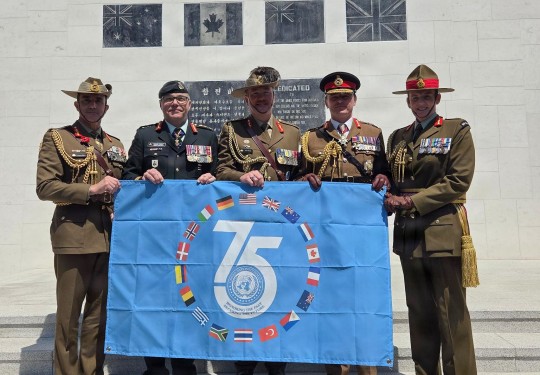
New Zealand was one of the first countries to answer the United Nations call to support efforts with the conflict in Korea, a mission that would see New Zealand Defence Force personnel, largely drawn from the NZ Army, deployed for seven years, including three years of active conflict.
It was a particularly significant event for 16th Field Regiment, Royal New Zealand Artillery, which was formed in 1950 in direct response to the conflict on the Korean Peninsula, and is why a contingent of gunners, supported by representation from both transport and signals personnel, have travelled to Korea to support the commemorations.
“Our forebears in the Regiment fired more than 750,000 artillery rounds in the Korean conflict, more than any other commonwealth Regiment,” said Commanding Officer 16th Field Regiment, Lieutenant Colonel Brent Morris.
“During the Battle of Kap’yong in April 1951, the 16th Field Regiment served with distinction, firing more than 10,000 rounds in one engagement alone, destroying the enemy advance onto a Canadian position with a mix of high-explosive and airburst ammunition. They played a vital role in defending and protecting allied positions and personnel.”
By the end of the Korean conflict, 45 New Zealanders were killed either during, or as a result of their deployment, with 16th Field Regiment troops having earned the Korean Presidential citation for their efforts, which is proudly worn by today’s gunners on their service uniforms.
“Being able to pay our respects to all those who fought in the conflict is incredibly meaningful to not only those here, but to the entire Regiment and wider 1st (NZ) Brigade. It allows us to uphold the legacy of those who went before, 75 years ago,” said Lieutenant Colonel Morris.
The contingent has supported commemorative events across the Peninsula over the past few days, laying wreaths and poppies during national commemorative events, and performing the NZ Army haka.
United Nations Command (UNC) Deputy Commander, Australian Army Lieutenant General Scott Winter, said the multi-national effort that remains in Korea today stands as a testament to international cooperation and the enduring commitment to peace and security in the region
“We remain indebted to the veterans whose service demonstrated selfless dedication to freedom and democracy on the Korean Peninsula,” Lieutenant General Winter said.
New Zealand’s Chief of Army, Major General Rose King and Sergeant Major of the Army, Warrant Officer Class One Dave Alder are also in Korea to observe the commemorations, which will include linking up with Australian personnel to mark Anzac Day in Seoul.
“These occasions are not only a chance for us to reflect on the journey we’ve been on as Ngāti Tūmatauenga, but it reinforces the path we are on and what lies ahead, which is more important than ever with today’s strategic competition and challenges,” said Major General King.
“So much has changed in the 75 years since Kiwi soldiers, mainly gunners, drivers, and signallers, were here in Korea, but being able to reflect on their courage, commitment, and comradeship shows us that our core values have remained a constant for our organisation – they are what continuously drives us to do better, to be better, and it ultimately underpins what enables us to be us a highly valued, trusted and respected ally and partner."
27 August 2026
05 May 2026
23 April 2026
14 May 2025
09 May 2025
22 April 2024
17 June 2026
03 June 2026
14 May 2026