RNZAF NH90 helicopter reaches global milestone
07 September 2026
Unfortunately you are viewing this website on an outdated browser which does not support the necessary features for us to provide an adequate experience. Please switch to a modern browser such as latest version of Google Chrome, Mozilla Firefox, Apple Safari or Microsoft Edge.
Ngā mihi nui
While Government funding for further combat-focussed strike capabilities will be allocated over the coming years, the weapons currently used by the NZDF’s armed forces are fit for purpose in the deteriorating strategic global environment.
The Royal New Zealand Navy (RNZN) operates the Penguin Mk 2 Mod 7 missiles, which are carried by SH-2G(I) Seasprite helicopters and loaded by Royal New Zealand Air Force armament technicians; the New Zealand Army looks after the Javelin Medium Range Anti-Armour Weapon (MRAAW) in the field; and the RNZN can launch the Sea Ceptor Common Anti-Air Modular Missile (CAMM) from its two frigates. The strike capabilities of these weapons are highly successful at short range and are a precise method to defend New Zealand’s interests.
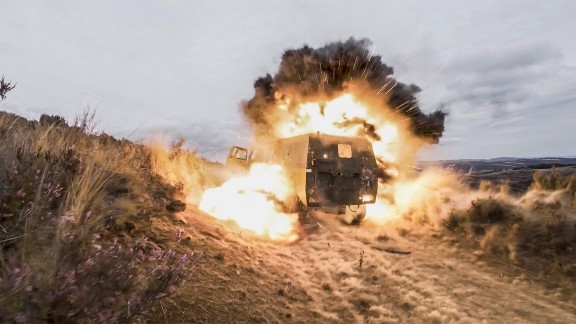
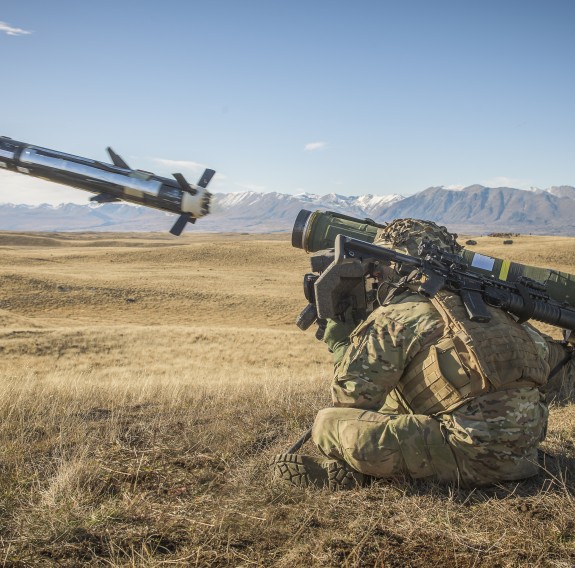
The Javelin MRAAW is a highly effective short-range anti-armour “fire-and-forget” missile system that is used primarily within the NZ Army’s infantry units. The shoulder-fired precision missile is principally designed to destroy tanks and other armoured vehicles but can also be employed against other threats such as fortified buildings and bunkers.
“It’s light, it’s robust and it’s a crew-served weapon system. With a bit of training, it’s quite lethal in the right hands,” Warrant Officer Class 2 Joe Seconi from the NZ Army Combat School, said.
“It’s also a reconnaissance asset that provides imagery we can use to identify threats. If we identify these threats, the platform then allows us to engage then and there.”
Once the round is fired the technology and software inside the missile will lock onto the target with high-end accuracy.
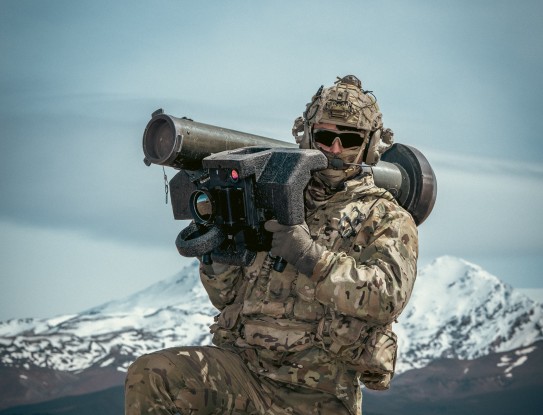
Rounds fired from the Javelin weapon-system will leave a signature, which is where the fire-and-forget element comes into play. As soon as the missile is launched, the operator can either reload with another missile or quickly move to a safer location.
“It’s just another element and layer of protection for our soldiers on the ground,” Warrant Officer Class 2 Seconi said.
“There is no requirement for the operator to have eyes on the target. Once the round is fired the technology and software inside the missile will lock onto the target with high-end accuracy.
“I believe it gives the soldiers on the ground peace of mind – a safety net – that if they do come across an armoured threat we have something that can match that threat and potentially destroy it, if required.”
Soldiers who have fired the missile get an “absolute rush”, he said.
“They are aware of the importance of what they are doing, that not everyone in the battalion gets to fire it, let alone the Army, or the wider Defence Force. So any chance they get to fire a live Javelin, they’ll grab it.”
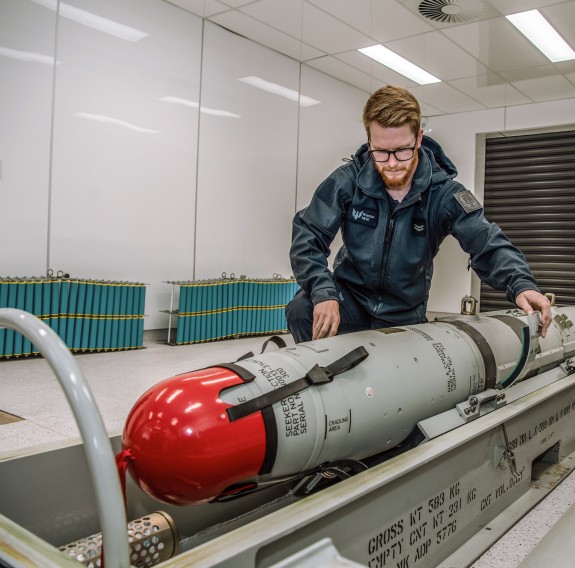
With a range of more than 34 kilometres, targeting warship-sized vessels at subsonic speed with a rocket engine, the Penguin Mk 2 Mod 7 is a stand-out missile for Navy flight crews on board No. 6 Squadron’s SH-2G(I) Seasprite helicopters.
“It delivers a powerful 120-kilogram high‑explosive warhead in a compact, three‑metre missile – an impressive feat when you consider that the missile must also house its propulsion, guidance, navigation, and terminal targeting systems within the same space,” airborne tactical officer (observer) Lieutenant Commander Dave Dessoulavy said.
The missile is designed to skim above the sea and penetrate targets at their waterline. The warhead has a delay fuse which detonates inside the target. The result is a proven, tightly-integrated weapon that combines accuracy, lethality, and reliability.
Within the cockpit, the Penguin integrates seamlessly with the aircraft’s combat system, allowing the crew to employ the weapon with precision and confidence. RNZN observers like Lieutenant Commander Dessoulavy will load data into the system, which the Penguin relies on to be guided to the target.
The missile is designed to skim above the sea and penetrate targets at their waterline.
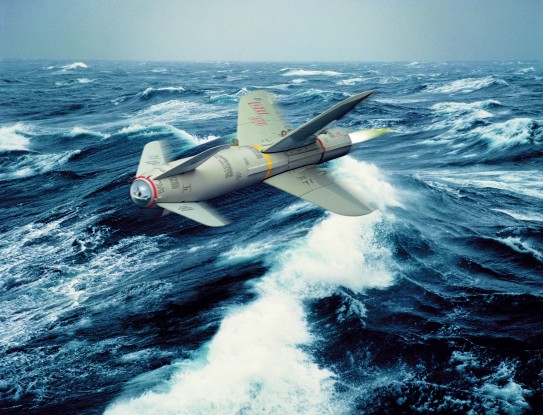
Photo credit: Kongsberg
“Despite the sophistication of the process behind the scenes, the moment of launch itself is surprisingly understated. There is no dramatic countdown, big red button or oversized firing handle—just a small, unremarkable green button. Pressing it sets in motion a chain of events that sends 120 kilograms of high explosive on its way toward the enemy.”
The enemy, in real life, would be a warship-sized or smaller vessel.
“If we can put two missiles into it to destroy it, then that’s what we would do,” Lieutenant Commander Dessoulavy said.
No. 6 Squadron armament technicians load the missile onto the helicopters and are specially trained to handle the high-explosive weapon.
“The weapon needs to be loaded onto the aircraft and then prepared – the wings have to be fitted, canards, which are hydraulically actuated to steer the missile, have to be fitted, as well as safety checks made to ensure the missile will function as intended,” armament technician Sergeant Shaun Lindsay said.
“It’s always good to take every opportunity to practise loading the missile because when the moment comes for it to be launched in a non-drill situation, we need to be able to ensure it launches successfully.”
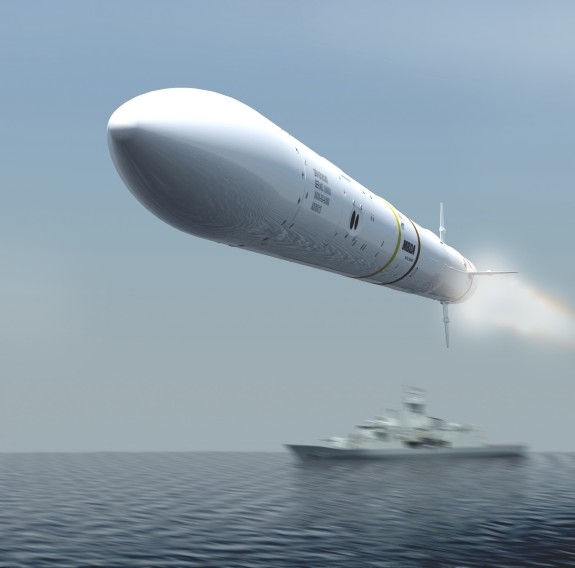
Photo credit: MBDA Missile Systems
Not everyone on board RNZN frigates gets to see a Sea Ceptor missile launch. But everyone definitely gets to hear it. In 2023 and 2025, HMNZ ships Te Mana and Te Kaha conducted Sea Ceptor surface-to-air missile firings in the East Australian Exercise Area, completing the final part of the frigates’ testing and evaluation process following their upgrade in Canada between 2018 and 2022.
In Te Mana’s case, the ‘threats’ were uncrewed aerial platforms, two-metre long sub-sonic drones, simulating inbound missiles. One was aimed at Te Mana and, two days later, one was targeted away from Te Mana to replicate an attack on another vessel operating with the frigate.
A year later, Te Kaha underwent the same test but with a single sub-sonic drone aimed at the ship. Lieutenant Commander Stephen Barry, the Principal Warfare Officer (PWO) aboard Te Kaha at the time, said it was a fair amount of effort to prepare the ship and crew, all leading up to that push of a button. The drones, courtesy of a specialised target training company in Australia, are launched from an onshore ramp, and are controlled from an airborne Learjet.
“The day before was a test run. The team on a Learjet control the drone near the ship, so we can see what the drone looks like on the radar plot and whether it fits the profile you expect. We’re basically running a script, where everyone is saying all the right things, but nothing is launched from the ship.”
It was a fair amount of effort to prepare the ship and crew, all leading up to that push of a button.
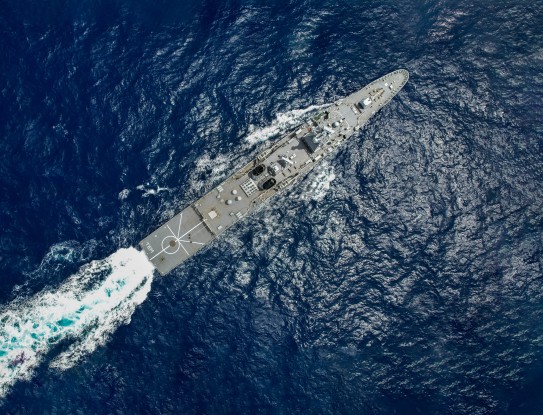
On launch day, the teams run through it all again. An hour before launch, they reach the “go, no go”, point. It’s a go.
“When the drone is launched, we get a message from shore: the drone is up, you’ll see it in five or six minutes. As soon as we pick it up, the timer on the ship starts.”
The drone is put through a calibration loop, showing the Learjet has control. From there, the drone is pointed at Te Kaha, and it all comes down to ranges and timing. Four miles out, the team in Te Kaha is running through equipment checks. “Check good, check good.”
Two miles out, the PWO asks the Commanding Officer for firing permission. She gives the order. The intercept point will be about 1.4 miles away.
“Up until the actual launch, the atmosphere is that of a focussed operation room. Then you give the order to launch, and there’s a moment of deathly silence. Then there’s a big ‘thunk’ as the compressed air sends the missile out of the silo. It’s a sound you can hear across the entire ship. And then, the rocket motor starts with a big roar. Then people start breathing a bit.”
The interception and destruction of the drones demonstrated that the frigates had the ability to both defend themselves and defend another ship, meaning they move from a solely ‘defend self’ position to a ‘defend others’ capability.
Learn more about the Sea Ceptor Common Anti-Air Modular Missile (CAMM)