New Zealand Army advancing short-range drone capability with new course
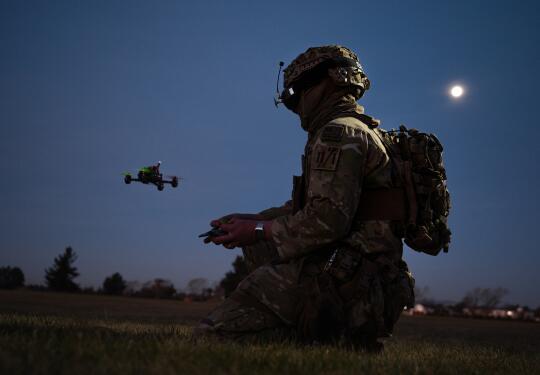
The New Zealand Army is building its First Person View (FPV) drone capability with a new specialist course.
17 August, 2026
Delivered by 2nd/1st Battalion, Royal New Zealand Infantry Regiment (2/1 RNZIR), the three-week FPV uncrewed aerial system (UAS) course provides already qualified drone operators additional training on emerging UAS platforms and the skills required to operate, maintain, and integrate them into military operations. This starts with building the UAS they will use, including 3D printing parts and building fibre-optic control systems.
2/1 Battalion Commanding Officer, Lieutenant Colonel Jerry Mateparae, said the course reflected the New Zealand Army's commitment to adapting to evolving technology and equipping personnel with the skills required for operations.
The course content draws from training delivered by the Australian Army’s Land Combat College and is supported by Australian instructors. This integrated effort strengthens interoperability between the New Zealand and Australian Armies and contributes to the ongoing objectives of Plan ANZAC.
“The course provides soldiers with a broad understanding of emerging UAS technologies and how they are employed in modern military operations. Building our own UAS and 3D printing parts is pretty innovative but also enables effective training in a very cheap and realistic way.
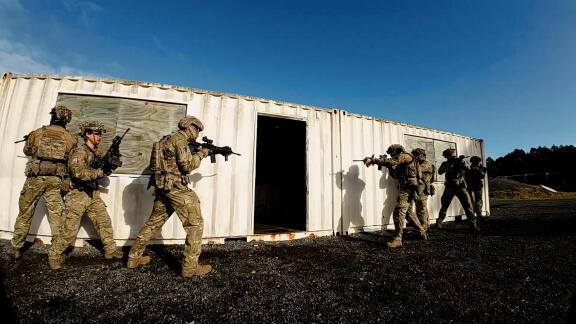
FPV Drone Capability | New Zealand Army
“The knowledge gained from this training means soldiers can quickly identify faults, conduct repairs in the field and maintain this key capability with limited resources. It also reduces reliance on external supply chains, improving resilience in challenging operating environments,” Lieutenant Colonel Mateparae said.
Soldiers develop mission plans, conduct operational briefings, and employ the UAS in realistic tactical scenarios reflecting operations across a battalion-sized area of responsibility.
The UAS are equipped with daylight and thermal imaging systems for day and night operations. They will mainly undertake training for intelligence, surveillance and reconnaissance tasks, but if armed, they could also conduct strikes against targets should that be required.
“To be clear, we are not flying UAS with live explosives, but it is clearly a mature technology now that is being used in current conflicts, so we are future proofing our needs by developing the skills to be able to do this,” Lieutenant Colonel Mateparae said.