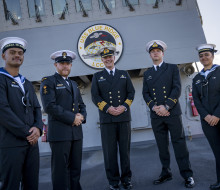
Kiwi sailors thrive on US Navy flagship
23 May 2025
Unfortunately you are viewing this website on an outdated browser which does not support the necessary features for us to provide an adequate experience. Please switch to a modern browser such as latest version of Google Chrome, Mozilla Firefox, Apple Safari or Microsoft Edge.
Ngā mihi nui
The Defence Health School at Burnham Military Camp has achieved a significant milestone this week with the first graduation under a new training programme of New Zealand Defence Force (NZDF) medics.
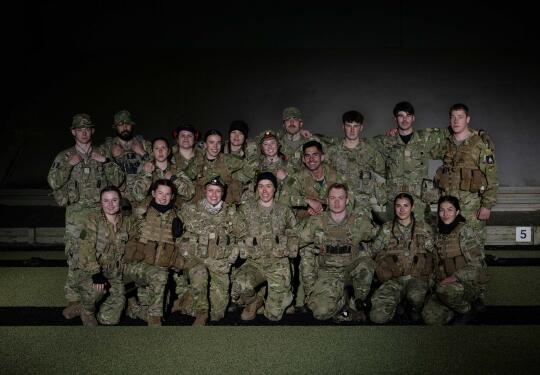
McLuckie class graduated from Defence Health School on Wednesday with a Bachelor of Paramedicine, a graduate Certificate in Health Science and a NZDF medic qualification. They were joined by Bramley Class who graduated with a Diploma in Paramedicine.
Chief Instructor, Squadron Leader Jo Atkinson, says the graduations mark a successful transition to a new two-year training programme, partnered with the Auckland University of Technology (AUT), and was a significant milestone for Defence Health School.
“This marks the first year of our new business as usual. The successful transition to a new model over the past 12–18 months reflects significant effort by Defence Health School staff, who have maintained training delivery while implementing the programme.”
About 80 medics are under training at any one time in classes of 20, allowing the NZDF to graduate 40 medics each year, who go on to support operational readiness.
The Diploma in Paramedicine and Graduate Certificate in Health Science is an 18-month academic programme delivered in partnership with AUT.
The programme provides student medics with a strong clinical foundation in pre-hospital emergency care, patient assessment, and evidence-based practice. These qualifications are nationally recognised and are comparable to early-career civilian paramedics.
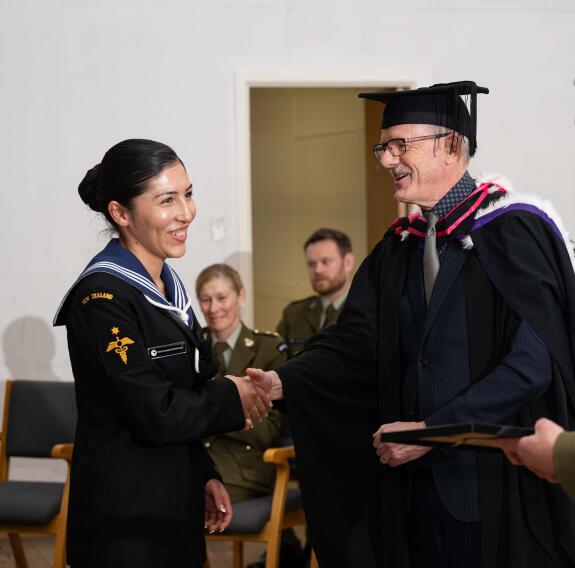
Able Medical Assistant Nelly Aruquipa-Southerwood, left, from McLuckie Class receiving her Certificate of Completion for their NZDF Medic Course from Professor Brett Cowan, Dean of AUT Faculty of Health and Environmental Sciences
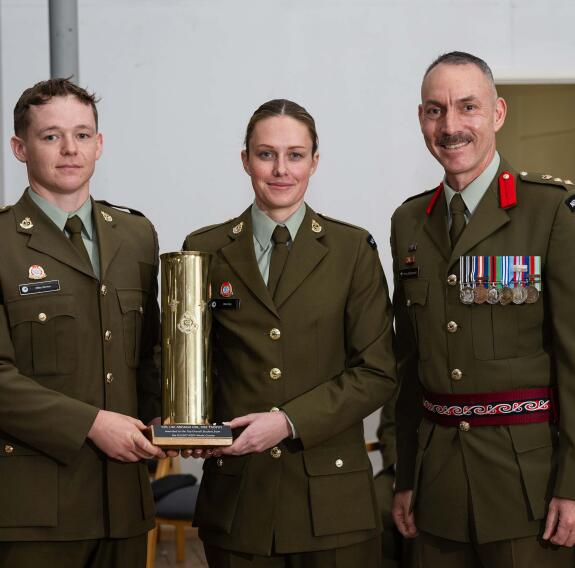
Private Millar Morton, left, shared the Top Student Award from McLuckie Class with Private Olivia Day, centre, with Commander Joint Support Group, Colonel Terry McDonald
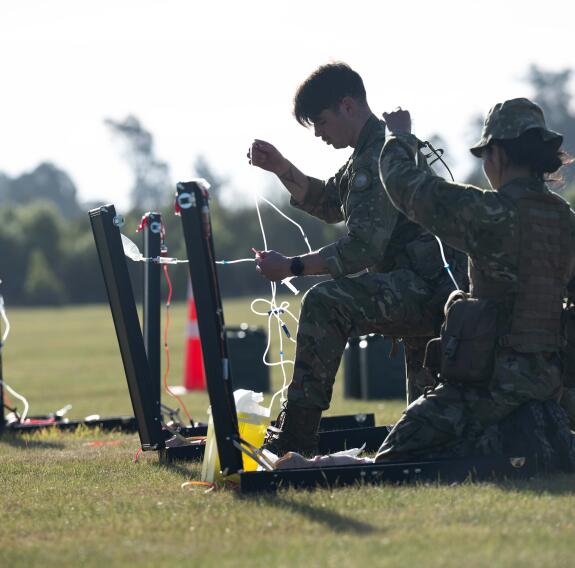
The six-month NZDF medic training course that follows builds on the academic course and focuses on applying clinical skills in primary health, operational and field settings, including tactical medicine and prolonged casualty care.
“Importantly, NZDF training goes further by integrating military-specific clinical application, including austere medicine, operational decision-making, and care in resource-constrained environments,” Squadron Leader Atkinson said.
Following graduation, medics are posted to their respective service (Navy, Army, Air Force) to complete about six months of Transition to Practice, consolidating their skills in the real-world under supervision before they are deployable.
Having completed this training, NZDF medics then have the opportunity to continue their academic study towards a Bachelor of Health Science in Paramedicine.
AUT senior lecturer, Major (Rtd) Brendan Wood, says training medics in a residential military environment provides a more immersive and applied learning experience, which is important for delivering operationally effective medics.
Private Millar Morton joined straight from Thames High School and completed basic training in February 2024. He jointly won the McLuckie class top student award with Private Olivia Day.
“I've always wanted to do this. I was either going to do paramedicine full-time civilian or coming to do this and when I saw that you can do AUT and be a military medic, I thought it was a great opportunity,” Private Morton said.
“It’s far more immersive than what you’d get if you were doing this in a class of 60 people.
“We're all really close because as a class, we've spent so long living together, and we also have lecturers available to us all the time, so I think we get a massive advantage. There’s so much opportunity to excel,” he said.
23 May 2025
14 May 2025

12 May 2025
09 May 2025
09 May 2025
07 May 2025
28 January 2025
23 January 2025
21 January 2025