CALLING THE SHOTS
As landmarks speed past at 700kmh, the fighter prepares its final approach.
21 November, 2025
“Phoenix two one, this is Goblin one four. Call ready. Game plan.”
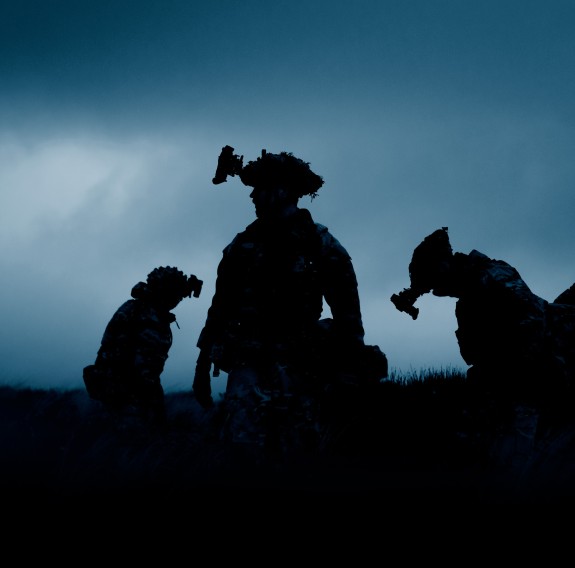
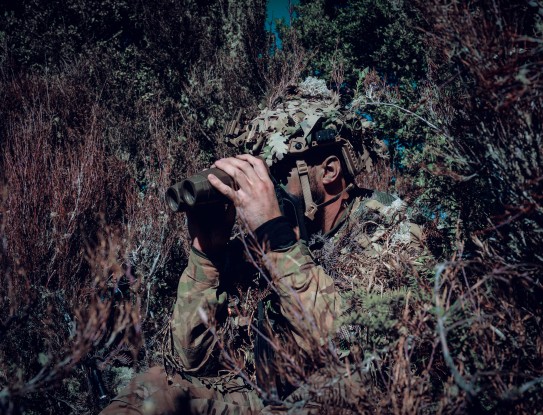
At ground level, blended with their environment, barely visible above the shrub line, a highly capable Joint Fires Team (JFT) lies waiting. Soldiers with their eyes on the enemy. The pilot punches in the details and adjusts his altitude and approach. It’s now a straight run to the vital pieces of enemy equipment.
"Three times enemy armour. Located at grid: Victor, Bravo, seven, zero, eight, four, niner, six, one, two.”
"Phoenix two one copy. Positioning.”
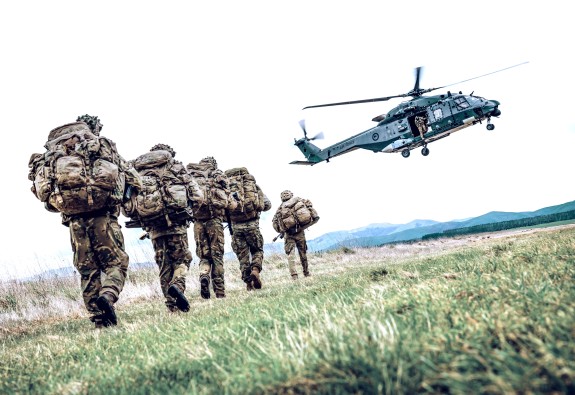
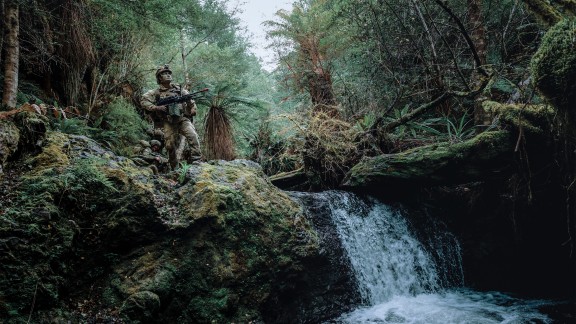
Three days of trekking through New Zealand’s dense, challenging terrain, carrying up to 45kgs in equipment on their backs, and their mission comes down to this moment. From their vantage point half a kilometre from the target, soldiers watch as the jet deploys its payload.
A moment of silence. A suspenseful pause as the jet pulls away, and the smoke clears from the enemy position.
"This is Goblin one four. Good hits. Good hits. Three times enemy armoured vehicles destroyed."
Transcript
Two minutes
Phoenix two one, this is Goblin one four
Call ready, game plan
Go ahead, Phoenix two one
three times enemy armour
Located at grid, victor bravo seven zero
eight four niner six one two
Phoenix two one copy, positioning
Phoenix two one, continue drop
This is Goblin one four; good hits, good hits
three times enemy armoured vehicles destroyed
Phoenix; thanks for your work
UNIQUE TRAINING
Close-country expertise is a capability Ngāti Tūmatauenga, the New Zealand Army has prided itself on for generations. The ability to navigate and overcome challenging, dense and unpredictable terrain is something the Kiwi soldier has become respected for and is highly-regarded the world over. Malaya. Vietnam. East Timor. Nation-defining missions. That reputation is in no small part down to the environments and unique military training opportunities available in New Zealand.
"Our region is defined by its non-contiguous nature with close country and complex terrain an almost certainty."
Colonel Mike van Welie
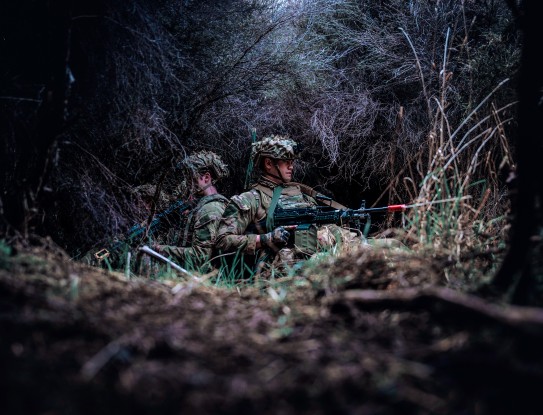
Soldiers from 16th Field Regiment recently tested four of its JFT right to the limit – at times even pushing beyond it – on a challenging exercise in the Central North Island. The teams, made up of highly-trained artillery personnel, play a vital role in any multi-domain, multinational conflict.
They provide the ability for the New Zealand Defence Force to coordinate and control strikes from assets on land, from the sea and air. They often need to be able to circumvent enemy defences, get close enough to the frontline to have eyes on targets, without attracting any eyes themselves.
“In modern conventional conflict, success depends on how well we integrate air, land, and maritime effects into a single, synchronised fight. No domain wins alone anymore — it’s about creating tempo and overwhelming the enemy through coordinated precision, timing, and information. When every effect complements the other, our JFT’s turn isolated actions into decisive outcomes.”
– Lieutenant Colonel Brent Morris
In completing their mission, a Joint Fires Team is an invaluable force multiplier. Pinpointing coordinates for effective, lethal strikes on enemy forces in order to protect their comrades, allies, partners and civilians caught up in the fight.
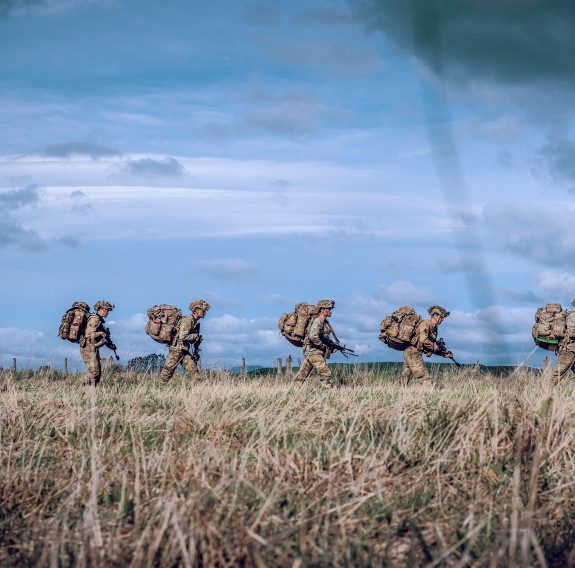
“The JFTs were tasked with operating forward of the main force prior to a large scale Joint Force Entry Operation. Their role was to destroy enemy air defence in order to enable coalition aircraft to strike high value targets deeper in the battlespace.”
Major Jake Boersen
BREAKING DEFENCES
A fictional scenario in the South West Pacific sets the scene for the activity. An island nation has come under occupation. Martial law has been instituted across its Island Chains. Some of the main islands are impenetrable – heavily secured and guarded strategic hubs for enemy forces.
But there is one chink in the armour. A small island that houses air defence systems and ground forces. But, crucially, the island also protects a pivotal air corridor leading to the mainland.
Intelligence suggests the enemy wouldn’t be able to reestablish their defences for at least 72 hours – enough of a window to turn the tide of the conflict. But first. How to get there. With no approach possible from the shore, there’s only one way in.
FROM THE SKY
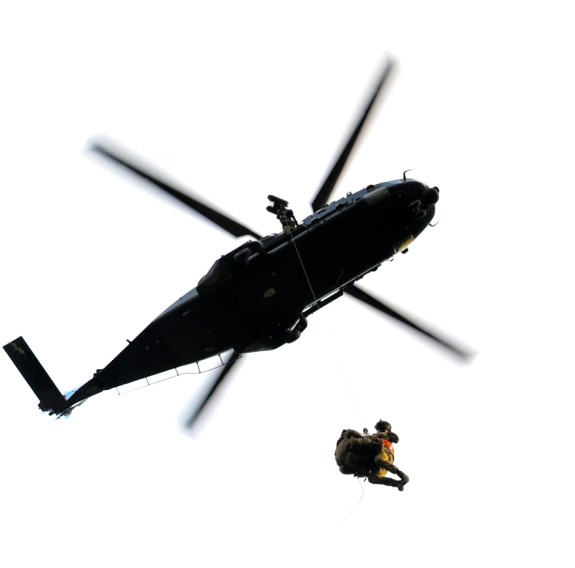
Royal New Zealand Air Force (RNZAF) NH90 helos provided the teams with the best tactical option to fly into the contested area undetected. Balancing 45kg packs, MARS-L rifles held tight across their chests, eyes scanning the forests below, the personnel wait for the green light from the RNZAF No. 3 Squadron pilot.
"When you think about it objectively, sure it’s a bit scary. You’re dangling 300 feet above some of the most remote forests in the country, weighed down by nearly your bodyweight in gear, but you can’t think about it. You put your hours and hours of training front and centre, and just release the cable.”
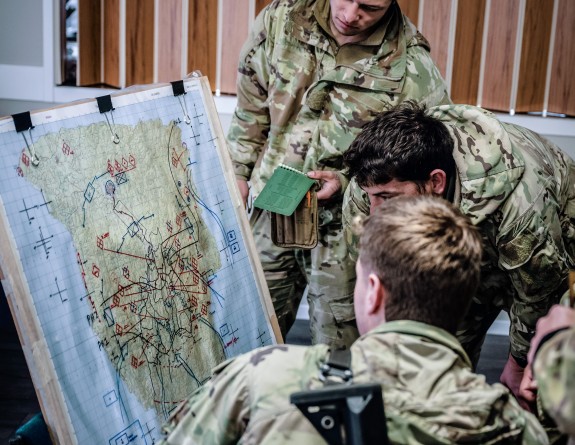
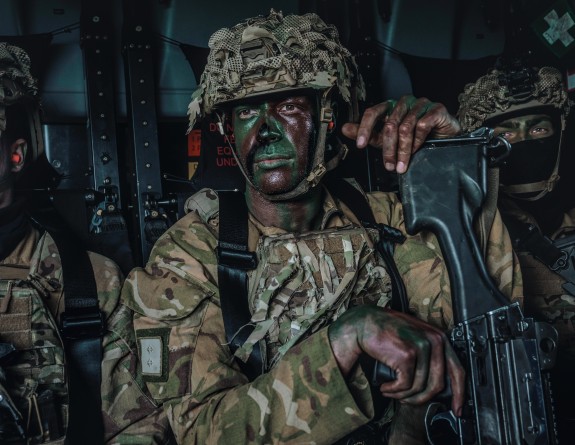
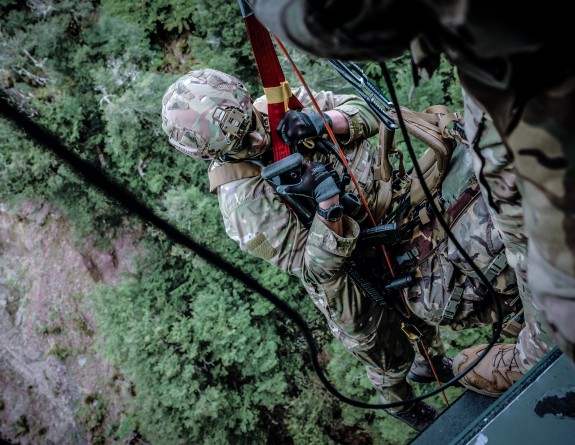
“No plan survives H-Hour. Operating in complex terrain against a determined enemy force isn’t an easy task. Detailed planning and rehearsals ensure that everyone knows the plan inside out so that, when required, commanders make the right decisions to achieve mission success.”
Major Jake Boersen
FAILURE TO PREPARE, PREPARE TO FAIL
As much as this mission relies on the ability to execute a plan, the conditions for success are set in motion well before the first boots descend the fast-rope and touch the ground. Deliberate planning, understanding the full tactical environment and having all members of the team on the same page is crucial not just for the objective, but for the safety of each member of the team.
Particularly when navigating unfamiliar and challenging terrain, every minute spent ahead of time planning the mission makes the execution clearer, and more feasible.
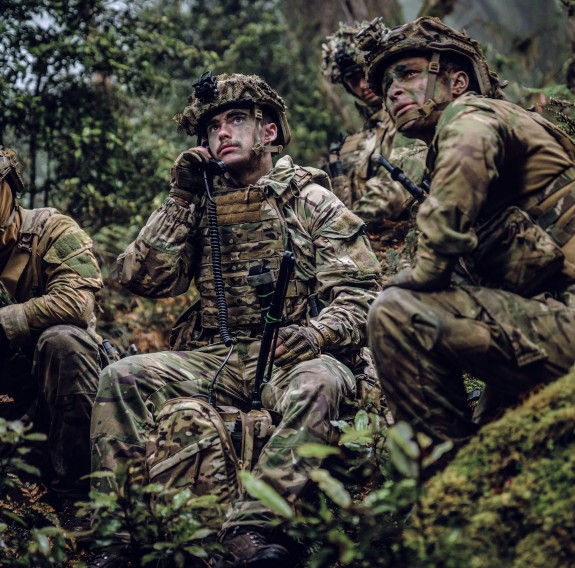
“After we simulated naval guns to destroy enemy air defence elements, we were then able to coordinate friendly attack aviation to destroy enemy armour. Destroying these assets set the conditions for the infantry to arrive on the island and conduct their mission.”
CALLING IT IN
From a small clearing in the scrub, the Joint Fires Teams have eyes on the target for the first time in their mission. A small opportunity to gather their thoughts, catch their breath and assess the situation in front of them. Air defence systems, ground forces all in place as their intelligence suggested.
Previously, these teams have had to travel internationally to conduct close air support training, normally embedded in an allied or partner military force. But this time, in the skies above the Central North Island, they had real-world, physical air assets to call in.
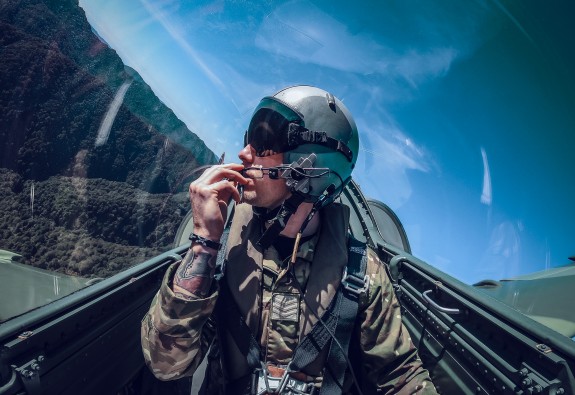
For the first time, 16th Field Regiment linked up with a local defence contractor to simulate a strike from a fighter jet. A Czech Republic-made L-39 Albatross training fighter, operated by Fighter Jets NZ, played the role of two US F/A-18 fighter jets. They may not have a payload attached, but these jets can fly at a max speed of 900kmh and simulate a number of the real-world applications of a fighter jet. The perfect training scenario for these soldiers at home.
“Having the means to simulate attack aircraft during domestic training significantly enhances the trained state of our personnel and increases our lethality on the battlefield.” – Lieutenant Colonel Brent Morris.
There was also one NZ Army Senior JTAC aboard the jet to provide the simulated military eye in the sky. His role was to bridge the gap between the civilian pilots and what is expected of a military F/A-18 fighter jet pilot, offering vital feedback and communication to the team of observers on the ground.
“This exercise tested our JFTs to their limits. Realistic and challenging training like this ensures our personnel are ready to deliver multi-domain fires alongside our ally and partners at a moment’s notice.
“I’m proud of what 16th Field Regiment achieved on this exercise and their Joint Fires expertise strengthens not just our brigade, but the combined force.”
– Colonel Mike van Welie