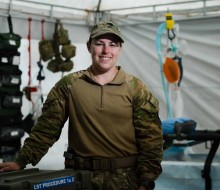
Nelson anaesthetist and soldier part of large multi-national exercise
04 May 2026
Unfortunately you are viewing this website on an outdated browser which does not support the necessary features for us to provide an adequate experience. Please switch to a modern browser such as latest version of Google Chrome, Mozilla Firefox, Apple Safari or Microsoft Edge.
Ngā mihi nui
“It feels good to be back.” Private John Rodney Gregana’s first overseas deployment has returned to the Philippines where he was born, to train alongside the Armed Forces of the Philippines and other close regional partners.
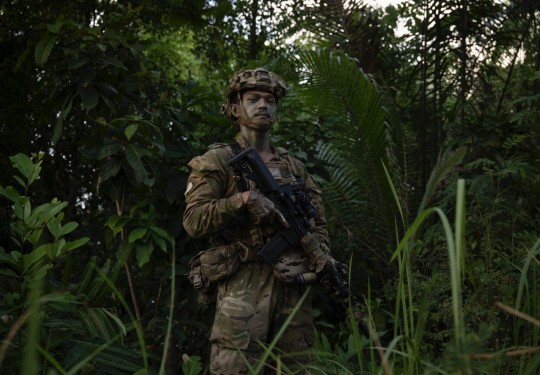
Exercise Balikatan - meaning “shoulder-to-shoulder” in Tagalog - is an annual military training exercise involving the Philippines, United States, France, Australia, Japan and for the first time Canada and New Zealand.
Training with New Zealand’s close regional partners provides the New Zealand Defence Force (NZDF) an opportunity to improve capability at tactical and operational levels, share knowledge, build relationships strengthening defence cooperation and enhance combat readiness.
Born in Cebu City, Philippines, Private Gregana moved with his family to New Zealand in 2011 when he was 11.
After attending Christchurch Boys’ High School he studied psychology and philosophy at the University of Canterbury, joining the New Zealand Army in 2024.
“I wanted to get out my comfort zone and do something that's the complete opposite of what I was doing and so I chose the Army.”
After Basic Training and Infantry Corps Training, Private Gregana was posted to 2nd/1st Battalion, Royal New Zealand Infantry Regiment based at Burnham Military Camp, near his home in Christchurch.
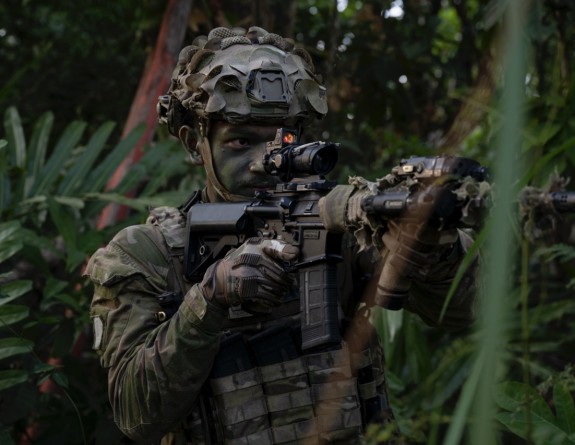
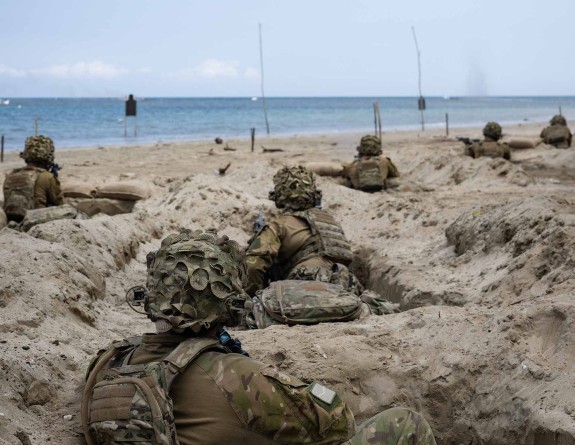
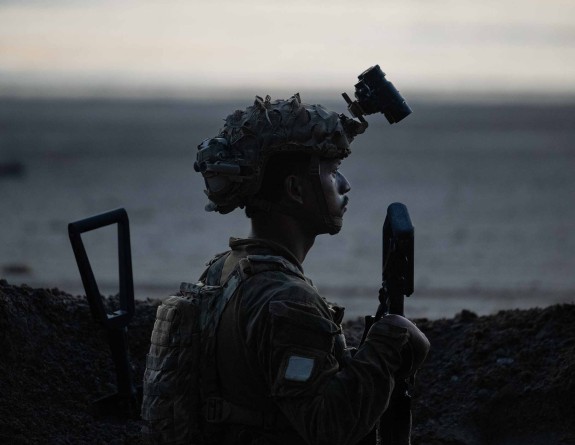
Private Gregana on Palawan Island, Philippines during Exercise Balikatan
On Palawan Island, Private Gregana has been deep in training alongside partner militaries as part of a New Zealand Army light infantry platoon group integrated into Combat Team Jackal, a combined Australian and New Zealand combat team formed for Exercise Balikatan.
Deployed for the first time overseas, Private Gregana has had the opportunity to gain experience first-hand working with and sharing knowledge with partners.
He said interacting with other nations’ militaries like the Philippine Marine Corps, United States Marine Corps, and the Australian Army has given him insight into the differences in how they operate in and the similarities everyone experiences.
He said that he’s adapted to English as his main language, although he does speak Filipino at home with his family, and had been fun interacting with people that speak the same language.
“I've been able to talk with marines from the Philippine Marine Corps where they’ve shared their experiences of combat. Even though we're in the same job they've got real world experience they’re able to share with us.”
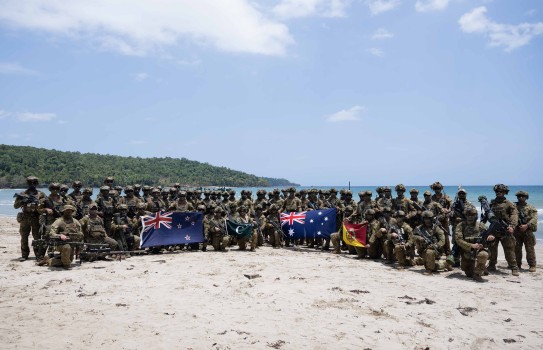
Exercise Balikatan has enabled New Zealand Army soldiers to increase their expertise in jungle warfare in tropical environments.
“Training is similar because we specialise in jungle environments and the density of the bush is very similar. The difference is there’s a lot of creatures around. They don't exist in New Zealand like snakes and crocodiles.
“The risk of the creatures around takes a bit of adjusting. Even though I was exposed to it when I was younger, now that I have been out of that environment, coming back into it reignited the fears.”
Operating in the tropical heat of the Philippines jungle is challenging.
“Back in New Zealand in the South Island we don't normally need to take account of heat during summer. Most of the time it's cooler so we cool down pretty quickly.”
Exercise Balikatan involves more than 17,000 Armed Forces personnel this year. Around 70 NZDF personnel are participating, primarily drawn from the NZ Army, including a light infantry platoon group, movement operators, health specialists, cyber specialists, and communications experts.
04 May 2026
26 August 2025
14 August 2026
27 July 2026
16 July 2026
08 July 2026
06 May 2026
16 October 2025
09 October 2025