Wai Māori
Drinking Water
A safe and reliable water supply is essential to the functioning of NZDF facilities, and to the health and safety of members of the NZDF, their families and the wider community.
Our water management activities span maintaining the pipes and pumps that move water from local public networks around NZDF camps and bases, through to producing own drinking water and even providing water services for neighbouring communities.
This page is a place for our water consumers to learn about the water they drink, and get the latest official information in the event of any drinking water safety incident or water restrictions.
Drinking Water at our Camps and Bases
-
Whenuapai
- RNZAF Base Auckland (Whenuapai) is connected to Watercare’s public water supply. NZDF operates its own reticulation network on the Base and the off-site housing area. A complete renewal of the network is underway and will be completed in 2027. NZDF monitors water quality within the network with regular sampling.
- Whenuapai is classed as a ‘downstream supply’ under the DWQAR and will be registered before November 2028.
-
Kaipara
- Kaipara Air Weapons Range sources water from an onsite bore
- The water is treated by cartridge filtration and UV disinfection.
- The supply is classed as a self-supplied building. It has no reticulation network and therefore does not require chlorination.
- Supply ID: KAI051 Kaipara Air Weapons Range, Self-supplied building
-
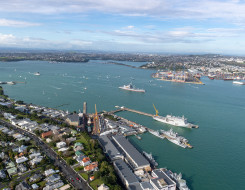
Devonport Naval Base
- Devonport Naval Base is connected to Watercare’s public water supply. NZDF operates its own reticulation network on the Base. NZDF monitors water quality within the network with regular sampling.
- Devonport is classed as a ‘downstream supply’ under the DWQAR and will be registered before November 2028.
- The Defence houses above the Base are supplied directly by Watercare.
-
Papakura
- Papakura Military Camp is connected to Veolia’s public water supply. NZDF operates its own reticulation network on the Camp. NZDF monitors water quality within the network with regular sampling.
- Devonport is classed as a ‘downstream supply’ under the DWQAR and will be registered before November 2028.
- The off-site Defence housing area is supplied directly by Veolia.
-
Ardmore
- Supply ID: ARD005 Ardmore Barracks
- The housing and barracks at Ardmore have individual roof water supplies comprising storage tanks, pumps, cartridge filters and UV disinfection systems.
- The house supplies are not regulated under the Water Service Act.
- The Ardmore Barracks Water Supply is classed as a ‘self-supplied building’, and complies with the Acceptable Solution for Roof Water Supplies.
-
Waiouru
- Supply ID: WAI002, Waiouru Military Camp
- NZDF’s Waiouru Water Supply serves both the military camp and the surrounding township through an agreement with Ruapehu District Council.
- It is a Level 3 supply, serving a population of more than 500 people.
- Water is sourced from two dams located on Waiouru Stream and Waitangi Stream.
- Treatment involves coagulation/flocculation, clarification, rapid sand filtration and chlorination. UV disinfection will be added in 2026 to comply with protozoa barrier requirements in the DWQAR.
- Water is stored in two large reservoirs and distributed via an extensive reticulation network. Leakage is an issue in the aging network and NZDF is planning remediation works.
- Comprehensive monitoring of the source, treatment and distribution network is carried out in accordance with the Level 3 rules.
-
Linton Military Camp
- Supply ID: LIN001, Linton Military Camp
- The Linton Military Camp water supply is a Level 3 supply, serving a population of more than 500 people. The supply also serves Manawatū Prison through an agreement with the Department of Corrections.
- The water is sourced from deep bores on site, filtered, chlorinated, fluoridated and distributed to users via storage reservoirs and a reticulation network.
- Later in 2026, the treatment plant and reservoirs will be decommissioned, and Linton will be supplied from a trickle feed connection to the Palmerston North City Council’s public supply. Flow will be buffered in two large reservoirs to accommodate the daily fluctuations in demand, and a small treatment plant will top up chlorine levels as required. The PNCC supply is already fluoridated.
- Comprehensive monitoring of the source, treatment and distribution network is carried out in accordance with the Level 3 rules.
-
RNZAF Base Ohakea
- Supply ID: OHA002 RNZAF Base Ohakea
- RNZAF Base Ohakea has a trickle feed connection from Manawatū District Council’s ‘Ohakea Rural Water Supply’. Flows are buffered in a storage reservoir to accommodate the daily fluctuations in demand.
- NZDF has a small treatment plant that tops up chlorine levels if required and adds fluoride for dental health.
- NZDF operates its own reticulation network on the Base, and monitors water quality within the network with regular sampling.
- Ohakea is classed as a ‘downstream supply’ under the DWQAR and is registered.
- The off-site Defence housing area is supplied directly by Veolia.
-
Trentham Military Camp
- Trentham Military Camp is connected to Tiaki Wai’s public water supply. NZDF operates its own reticulation network on the Camp. NZDF monitors water quality within the network with regular sampling.
- Trentham is classed as a ‘downstream supply’ under the DWQAR and will be registered before November 2028.
- The off-site Defence housing area is supplied directly by Tiaki Wai (ex Wellington Water).
-
RNZAF Base Woodbourne
- Supply ID: WOO004, RNZAF Base Woodbourne
- The RNZAF Base Woodbourne Water Supply is a Level 3 supply, serving a population of more than 500 people.
- Water is sourced from two bores on site, and treated by cartridge filtration, UV disinfection and chlorination. The treatment plant is aging and struggles to demonstrate full compliance with some rules.
- In 2026, a brand new treatment plant (using the same processes) will be commissioned, along with 2 new large reservoirs, and a third bore.
- Water is stored in a water tower and fed by gravity into the reticulation network.
- Comprehensive monitoring of the source, treatment and distribution network is carried out in accordance with the Level 3 rules.
-
Dip Flat Camp
- Supply ID: DIP002, Dip Flat Camp
- The Dip Flat Camp water supply is a small supply that operates only when the camp is occupied.
- Water is sourced from a mountain stream and treated by cartridge filtration, UV disinfection and chlorination.
- Dip Flat is classed as a Level 2 supply will be registered before November 2028.
-
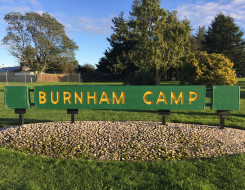
Burnham Military Camp
- Supply ID: BUR001 Burnham Military Camp
- The Burnham Military Camp Water Supply is a Level 3 supply, serving a population of more than 500 people.
- Water is sourced from a deep bore on site, and UV disinfected, chlorinated and fluoridated for dental health. A second bore is retained for emergencies.
- Water is stored in a large ground reservoir and two water towers.
- The reticulation network was completely renewed in 2025
- Comprehensive monitoring of the source, treatment and distribution network is carried out in accordance with the Level 3 rules.
-
West Melton Rifle Ranges
- The West Melton Rifle Ranges water supply sources water from an onsite bore.
- The treatment plant was upgraded in 2024 and incorporates cartridge filtration, UV disinfection and chlorination.
- The supply is classed as Level 2, and will be registered before November 2028.
-
Tekapo Military Training Area
- Supply ID: BAL005 Tekapo Military Training Area
- Tekapo Military Training Area sources water from Mackenzie District Council’s gallery intake on the Fork Stream via a 2025 pipe bridge. An onsite gallery intake is maintained as an emergency source.
- The water is treated by cartridge filtration, UV disinfection and chlorination before being pumped to reservoirs on an adjacent hill.
- The supply is classed as Level 2, but the population varies depending on the training calendar. A chlorine top-up system maintains chlorine levels in the storage reservoirs during times of low demand.
- Water is distributed to users via a reticulation network that was renewed in 2021.
Drinking Water Treatment Processes
-
Infiltration gallery
An infiltration gallery is a well dug near a riverbank that is fed by a system of perforated pipes laid below the river water level. The gravel provides some natural filtration.
-
Straining / Screening
Straining or screening uses a mesh or perforated screen to filter out large particles like sticks, stones and leaves.
-
Coagulation / Flocculation
Coagulants (such as alum) are added to the water to generate positively charges ions that cause small particles to coagulate or clump together to form 'flocs' that are heavy enough to sink.
-
Clarification
Water sits in a clarifier (normally a concrete tank) for long enough for the flocs to settle to the bottom. Clean water is collected from near the surface to go on to the next stage of treatment.
-
Filtration
Filters come in all shapes and sizes from small disposable cartridge units to concrete sand-filters the size of a garage. Filters remove small particles, and are an important part of the protection from large pathogens such as protozoa.
-
Ultra Violet (UV) Disinfection
Water passes by lamps that emit strong ultra violet radiation (like the UV we slip, slop and slap against in the summer). UV deactivates bacteria and protozoa.
-
Chlorination
Chlorine is a disinfectant that is effective against bacteria and viruses. A major benefit of chlorine is the protection it provides between the treatment plant and your tap. If any bugs manage to get into the system, for example via a leaking valve, the residual chlorine will kill them.
-
Fluoridation
Fluoride occurs naturally and is present in most water at low levels. Fluoridation brings the fluoride concentration up to between 0.7 and 1.0 parts per million, which is recommended by the Ministry of Health as providing the optimum protection against tooth decay.
-
pH Adjustment
pH is a scale of acidity (below pH 7) and alkalinity (above pH 7). Water needs to be near neutral to be good to drink and to ensure treatment processes like chlorination are effective.
Water FAQs
-
What is a Drinking Water Safety Plan?
A Drinking Water Safety Plan (DWSP) is a living document that water suppliers in New Zealand must maintain for all supplies over a certain size. It outlines a public health risk-based assessment and management process that aims to ensure a safe and secure supply of drinking-water for consumers.
It promotes a multi-barrier approach to managing risks, which safeguards against the failure of any one barrier. The WSP supports continuous improvement and guides day-to-day activities into the future.
A DWSP is an essential tool for providing safe drinking-water.
-
Why is there chlorine in my water?
Chlorine is added in the water treatment process to kill bacteria and viruses that could make us ill. Chlorine is dosed at a level to maintain 0.6 to 1.0 milligrams per litre of chlorine in the storage reservoirs and in the pipework between the reservoirs and our taps. This provides protection against any bugs that might enter into the system after treatment, for example through a leaking pipe or damaged reservoir.
-
Why is there fluoride in my water?
Fluoride is added in accordance with the Ministry of Health's recommendation for dental health protection. Fluoride is a naturally occurring mineral, but the fluoridation process adjusts the concentration to between 0.7 and 1.0 parts per million, which is the optimal level for protection aganst tooth decay. For more information, visit Health New Zealand/Te Whatu Ora’s website: https://www.info.health.nz/health-topics/keeping-healthy/teeth-gums/fluoride(external link).
-
Why are some supplies not fluoridated?
NZDF intends to fluoridate all significant Defence water supplies in accordance with Ministry of Health recommendations. Some supplies are not yet fluoridated, but fluoridation will be added as parted of planned treatment upgrades.
Very small supplies, or supplies serving transient populations (e.g. training facilities) will remain unfluoridated as cost would outweigh the benefits.
-
Why are some supplies more highly treated than others?
Treatment processes are designed to fit the 'raw' water coming into the treatment plant. Before deciding on treatment, the chemical make up of the water is tested, and the catchment is assessed to determine the likely contaminants that will need to be removed. For example, surface water (from a stream or river) has more 'bits' to remove than groundwater (from a bore or well), while groundwater normally contains more iron and manganese. Water sourced from a river in a catchment grazed by livestock has a higher risk of bacterial and protozoal contamination than water from a river in a native forest catchment.
-
What are my responsibilities as a water or wastewater service user?
Water is our most precious resource. Customers should be mindful of their water consumption all year round. If you see a leak, report it. If you notice a strange colour or taste, let us know. Working together as a community to treat this resource with respect will preserve it for generations to come, and will also protect the health of the community.
-
How can I be more efficient with my water use?
- Hand-water your garden rather than using sprinklers or irrigation.
- Don’t wash your car with the hose – use a bucket.
- Turn the tap off when you are brushing your teeth.
- Only put the washing machine or dishwasher on when there is a full load.
- Get a shower timer and limit showers to 4 minutes.
-
What does a Boil Water Notice mean?
A Boil Water Notice will be issued if there has been a treatment plant failure, or if E. coli is detected in the reticulation network.
If a Boil Water Notice is issued for your supply, you should boil water used for drinking, cooking, food preparation and brushing your teeth for one minute and allow it to cool before using. Even if there is enough chlorine present, it is best to exercise caution to prevent illness.
The Water Treatment Plant operators will be working with the Water Services Manager and the regulator to remove the Notice as soon as possible. If you are affected, you will be notified as soon as the Notice is lifted.
-
What is E. coli?
Escherichia coli (E. coli for short) is a bacteria that lives in the gut of humans and animals. While not generally dangerous itself, its presence is an indicator of faecal contamination, which could mean that pathogens (disease causing organisms) might also be present. Most pathogens are harder to detect, and so E. coli is used as an 'indicator species'.
-
What is plumbosolvency?
Plumbosolvency is a term applied to any water that, due to levels of naturally occuring salts, can dissolve small amounts of metals from plumbing fixtures if left sitting for a long period of time. Most water in New Zealand is plumbosolvent. This can result in a metallic taste, and although the health risk is low, the Ministry of Health recommends that we always flush a mugful of water from our taps before drinking.
The word comes from the Latin word 'plumbum' meaning 'lead' (the same root as the modern word 'plumbing', which used to be made from lead), and 'solvent', meaning able to dissolve other substances.
-
What are the 3 Waters?
Drinking-water, wastewater (i.e. sewage) and stormwater.
-
What is NZDF’s 3 Waters Policy?
NZDF's Three Waters Policy is contained in DFI 43.2 Chapter 5.
-
I don’t like the taste of chlorine. What can I do?
Fill a jug with tap water and leave it in the fridge overnight. The chlorine will dissipate and you shouldn’t notice it.
-
What causes brown water to come out of my tap?
Common causes of brown water are iron and manganese, which are naturally occuring minerals that do not pose a health risk at the levels found in our water supplies. Often discoloured water is the result of mineral build up in older cast-iron pipes, or there may have been a mains break in your area.
Try flushing an outdoors tap to clear the discolouration. If it does not clear after 10 minutes, contact your maintenance service provider.
-
Why are there bubbles in my water?
There may have been some work done on the network recently in your area. Flush an outdoors tap for a few minutes to clear the air from your line.
-
Why does my water look white?
This may be air bubbles. Pour a glass of water and let it sit for a few minutes. Look closely to see if there are bubbles that are floating to the top. Flush an outdoor tap for a few minutes to clear the air from your line.