Taupō trumpeter in demand in brand new career with Royal New Zealand Navy Band
26 August 2025
Unfortunately you are viewing this website on an outdated browser which does not support the necessary features for us to provide an adequate experience. Please switch to a modern browser such as latest version of Google Chrome, Mozilla Firefox, Apple Safari or Microsoft Edge.
Ngā mihi nui
When Royal Air Force (RAF) pilot Squadron Leader Paul Harrison moved his family across the world from the UK to Nelson and started work as a Royal New Zealand Air Force (RNZAF) flying instructor, he wondered about joining the Black Falcons aerobatic team.
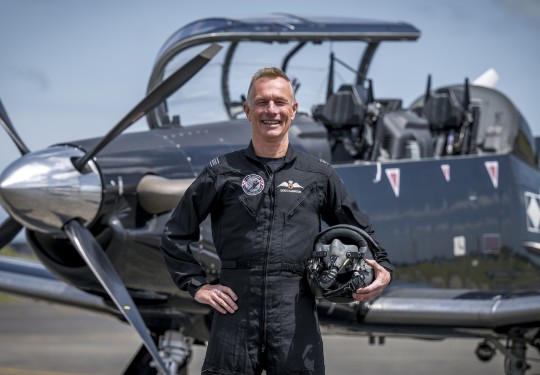
“But I thought the last thing they’d want is an old bugger like me.”
However, his skill and experience – he has flown RAF Jaguars, Hawks and Buccaneers and also flew in the first Gulf War in the early 1990s -- were exactly what the team valued and Squadron Leader Harrison now flies in the number five position in the display formation.
The relaxed lifestyle, beautiful countryside and good work-life balance pulled Squadron Leader Harrison to a life in New Zealand, arriving in the country in early 2020 just as the Covid pandemic hit.
Now a regular commuter between Nelson and Manawatū, the experienced Air Force pilot is an instructor at the Central Flying School at RNZAF Base Ohakea, and is a key member of the aerobatic team, the Black Falcons.
For a variety of reasons, he never applied to join the RAF’s equivalent the Red Arrows, however Squadron Leader Harrison discovered that young instructors here were mostly required to fly the “frontline aircraft”, leaving a small unit of older and experienced instructors to fill core positions on the aerobatic team.
“I was lucky enough in 2024 to be selected – there are just two of us in the current team with previous experience and that was a deliberate decision in order to retain experience.
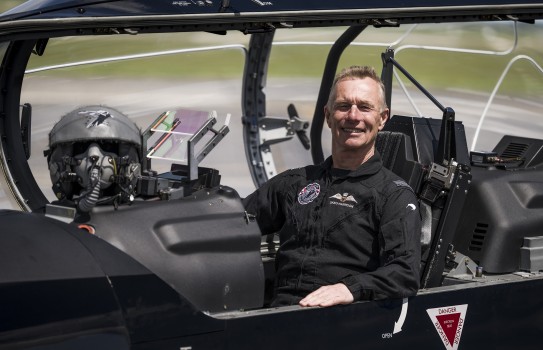
Squadron Leader Paul Harrison, a member of the RNZAF Black Falcons
“The beauty of the Black Falcons flying is that you're pushing yourself individually as a pilot rather than as an instructor. So it gives you that lovely blend of the challenging flying, and having to work harder to be better.”
Display flying comes with challenges as well and Squadron Leader Harrison, known by his colleagues as Skids, said for him it was ensuring there was fitting in enough training alongside his full-time role.
“We have to get to a certain standard, a presentational standard quite quickly. A lot of effort goes into getting us good enough to do a display. Individual time and weekends are given up, and then you've got to get that balance right with us being able to display often enough to make it worthwhile.”
His advice to young people looking to the skies and joining the Air Force was to show some interest through programmes like Air Cadets, which was a useful way of getting some flying experience.
“Otherwise, if they are able, a couple of flying lessons with a local club would be beneficial. But if being a pilot doesn’t work out, there are still opportunities for plenty of other trades in the Air Force and in the Defence Force in general and I would encourage any young person to look into what is an amazing career.”
Read more about the RNZAF Black Falcons team.
26 August 2025
16 October 2025
09 October 2025
07 August 2025
05 July 2024
31 March 2026
31 March 2026

30 March 2026

30 March 2026