Best experiences worth waiting for: NZ Army engineer reflects on 52-year career
After more than five decades in the New Zealand Army, engineer Major Nigel Gattsche says playing the long game paid off and after special and eye-opening deployments he was still enjoying some of his richest experiences towards the end of his career.
06 March, 2026
The 68-year-old recently stepped away from fulltime soldiering after clocking up 52 years in both the Regular and Reserve Forces and said he never stopped learning in the military.
“You can play the long game. My biggest experiences have been predominantly in the latter years.”
Major Gattsche went into the Army in 1974 from Palmerston North Boys’ High School, where a carpentry apprenticeship in Regular Force Cadets was the start to his goal of becoming an architectural draftsman.
He completed the apprenticeship and graduated into the Corps of Royal New Zealand Engineers (RNZE). He commenced officer training in 1979 at Portsea in Australia and rejoined the RNZE as a 2nd Lieutenant in 1980.
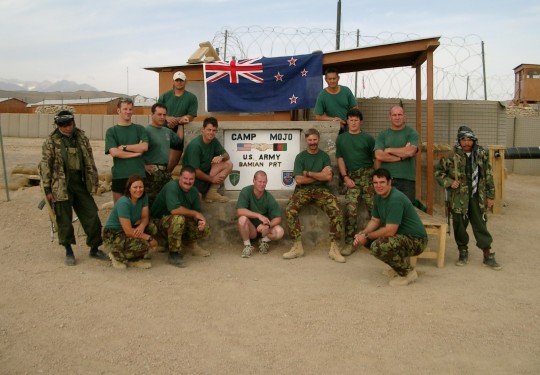
His deployments and roles are almost too numerous to list but include Antarctica (commanding the Scott Base reconstruction team in the early 1980s), West Germany in 1984, the Sinai (twice), Afghanistan (three times, including the advance party on the first deployment to Bamiyan), the Solomon Islands and South Korea.
He was the site manager for rebuilding Linton Military Camp for the return of troops from Singapore in the late 1980s and held several staff appointments at New Zealand Defence Force headquarters in Wellington, and also at Joint Forces Headquarters at Trentham, gaining experience in operational planning and using naval and air assets.
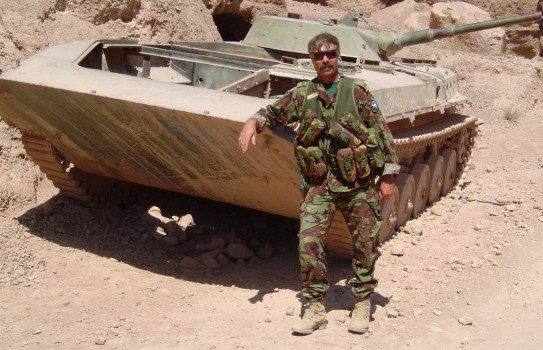
Major Gattsche with an abandoned Russian “BMP” infantry fight vehicle on the outskirts of Bamiyan
Major Gattsche’s son Josef also served in the Reserve Force, and the pair deployed together to the Solomons in 2006, where Major Gattsche was the contingent commander of New Zealand’s first operational Reserve Force deployment since the Second World War.
However, his “top four” deployments were to Afghanistan, South Korea, China - where from 2016 he worked on the planning and construction of the New Zealand Embassy in Beijing - and the construction of the New Zealand Liberation Museum – Te Arawhata in France.
“Being on the first NZDF deployment to Afghanistan was very special. The 16-member advance party had two weeks’ notice before we flew out to Bagram before heading up to Bamyan in converted Hiluxes.”
The New Zealand base in Bamiyan was about six months old and upgrading it for the main body was a big challenge, but there was an amazing team to work with, he said.
“I remember doing patrols on horses with our Special Forces. At that time there were still pockets of Taliban operating around the region, so the patrols were quite tense.”
In 2007, he had the “eye-opening” role of operations officer in the demilitarised zone between North and South Korea, inspecting guard posts and authorising any material going into North Korea.
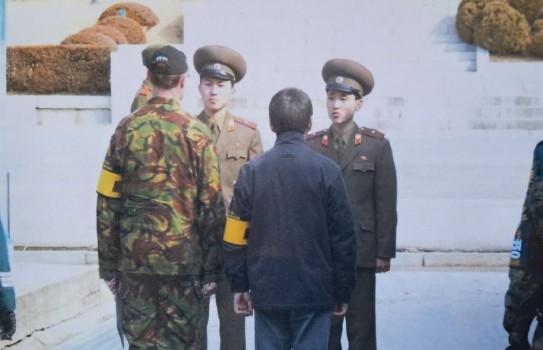
Major Gattsche, at left, with his opposite from North Korea and their respective translators, in 2007
He was also the first non-American to be appointed as the Joint Duty Officer, with the role of keeping communications open with North Korea by telephone, holding meetings on the Military Demarcation Line and communicating with the Pentagon.
“It was a fascinating time and experience.”
In 2023, he was seconded to the New Zealand Liberation Museum Trust as a site project officer for the Te Arawhata project in the French town of Le Quesnoy.
“It’s a fascinating story in New Zealand military history, where at the closing stages of the First World War the NZ Brigade liberated the civilian population of Le Quesnoy who had been held captive for four years.
“The relationship which New Zealand has with the township is amazing. The townsfolk still remember and commemorate the sacrifices our soldiers made for the French people.”
Despite his 52 years in the NZ Army, Major Gattsche still isn’t quite letting go. He might keep his eye in on the standby Reserve Force list from his home in the Wairarapa.
“In the Army there is comradeship, great trade training, amazing travel opportunities and experiences.
“The Army engineers provide a great opportunity to learn a trade and enjoy great comradeship while also being able to deploy on many varied tasks around the world.”
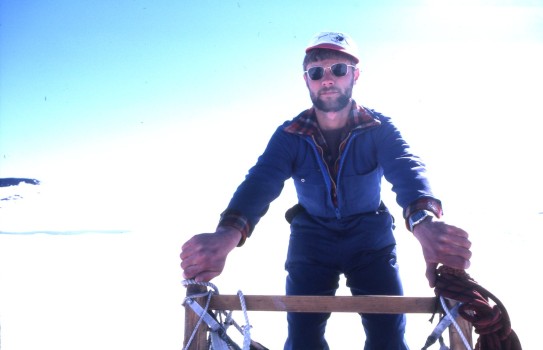
Major Nigel Gattsche at the helm of a sled drawn by a 13-dog husky team before heading out to Cape Royds in Antarctica in 1981