Anzac Day

16 April, 2026
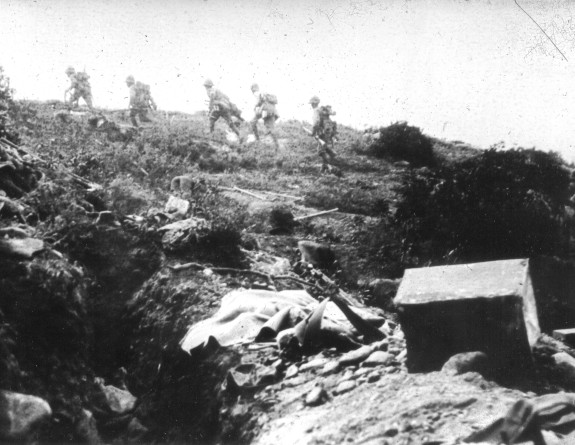
Anzac Day marks the anniversary of the landing of New Zealand and Australian soldiers – the Anzacs – on the Gallipoli Peninsula on 25 April 1915. It was New Zealand’s first major engagement of the First World War.
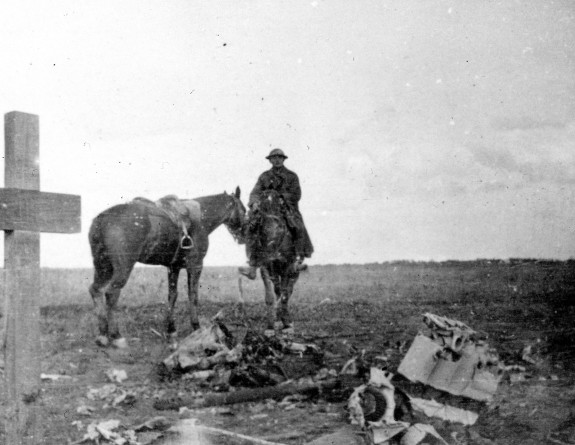
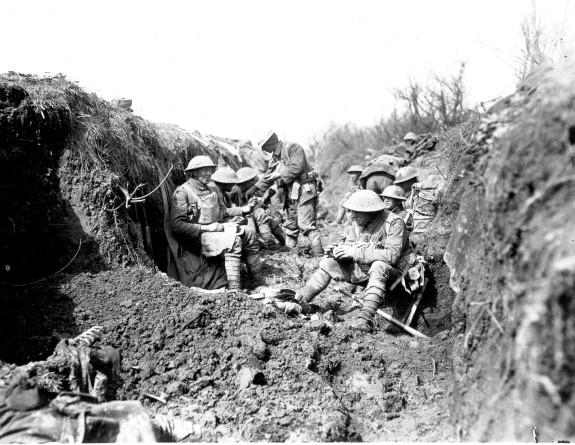
The first Anzac Day service, held in 1916 at Tinui in Wairarapa, was understandably focused on the Gallipoli campaign. But attention would shift to the Western Front during 1917-1918, which would claim almost five times as many New Zealand lives as Gallipoli.
These early Anzac Day services served to help distressed communities come to terms with the toll of the First World War. In 1921 Anzac Day became a public holiday. It remains closely linked to Gallipoli but over time it has come to embrace New Zealanders’ service and losses during the Second World War, Korea, Malaysia, Vietnam, Afghanistan and many other conflicts and peacekeeping operations.
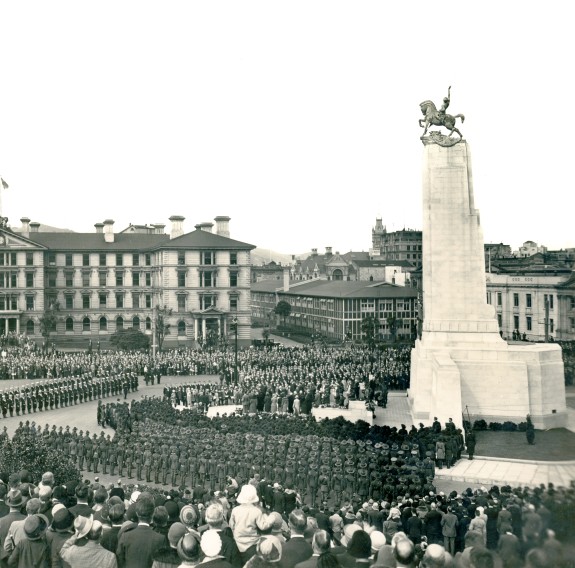
To those experiencing the formality of Anzac Day services and parades steeped in military protocol, they can seem like a funeral. Those early services intended it that way, as a time for soldiers to remember and honour their mates who died in the line of duty.
Anzac Day is also a day to remember those who did return and acknowledge their adjustments and struggles in post-war society. This diversity of New Zealand’s experiences of war has now been properly formalised with the passing of the Anzac Day Amendment Act in February. It means this year will be the first time Anzac Day commemorations formally recognises all those who have served New Zealand in times of war. Previous legislation did not acknowledge conflicts after 1966.
Anzac vs ANZAC
You should use the term ‘ANZAC’ with all capitals only when referring specifically to the Australian and New Zealand Army Corps, which was the name given to the military formation to which the New Zealand troops and Gallipoli were attached. For all other uses ‘Anzac’ should be used, including Anzac Day and references to the ‘Anzacs’.
For example:
‘On the Western Front there were two Anzac corps, with New Zealand Division serving in II ANZAC Corps until 1918. New Zealanders who died in war are remembered on Anzac Day.’
Today, the little bay at Gallipoli where the majority of the Anzac corps came ashore on 25 April 1915 is known as Anzac Cove.
Did you know?
The word ‘Anzac’ has been protected in legislation since 1916 in order to protect it from connection with trade or business ventures. In 2003 Australia and New Zealand successfully applied for international protection of the word ‘Anzac’.
There are some accepted uses that are considered not in breach of the Flags, Emblems and Names Protection Act 1981.
Probably the most famous is the use of the word ‘Anzac’ for that well-known rolled-oat traditional treat, the Anzac biscuit. However, you cannot have an Anzac ‘cookie’, ‘loaf’, ‘slice’ or ‘bar’.
It is possible to have an ‘Anzac Day sale’ but not an ‘Anzac sale’.
You can name a road using the word ‘Anzac’, such as Anzac Avenue, and you can name a business after the full name of the road, for example, Anzac Avenue Supermarket.
Anzac Day services
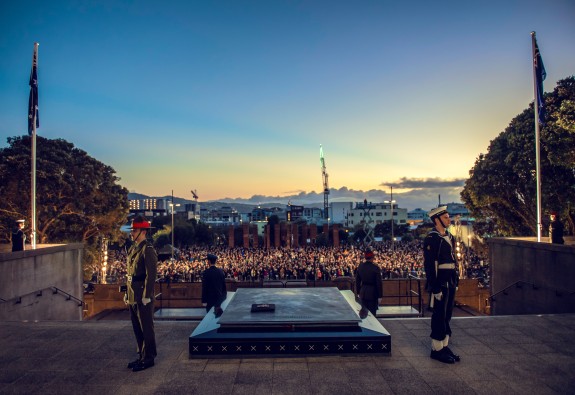
On April 25 hundreds of Anzac services are held across New Zealand. They can range from thousands attending a major dawn ceremony in Auckland, Wellington and Christchurch, to members of small communities gathering at their local cenotaphs and war memorials. Dawn services often take place at around 6am, while civic services take place at mid-morning. A parade usually takes place at a dawn service or civic service, made up of some or all of these elements:
Flagbearers
Catafalque Guar
Band
Veterans
Family
Descendents
New Zealand Defence Force personnel
Official party
RSA members
Youth/Cadets
Schools
Community Groups
The parade will arrive at the commemoration site and the Catafalque Guard will position themselves at the quadrants of the cenotaph or memorial or – in the case of Pukeahu National War Memorial – the Tomb of the Unknown Warrior, facing outward. At substantial commemorations the guard is usually made up of New Zealand Defence Force (NZDF) personnel. At community commemorations New Zealand Cadet Forces frequently provide the Catafalque Guard.
Near the memorial, you may see a ‘Field of Remembrance’, a collection of white crosses with the names of the local fallen written on them. The practice is a legacy of the White Crosses project as part of the 100th anniversary (WW100) commemorations of the First World War. This practice continues today in some localities.
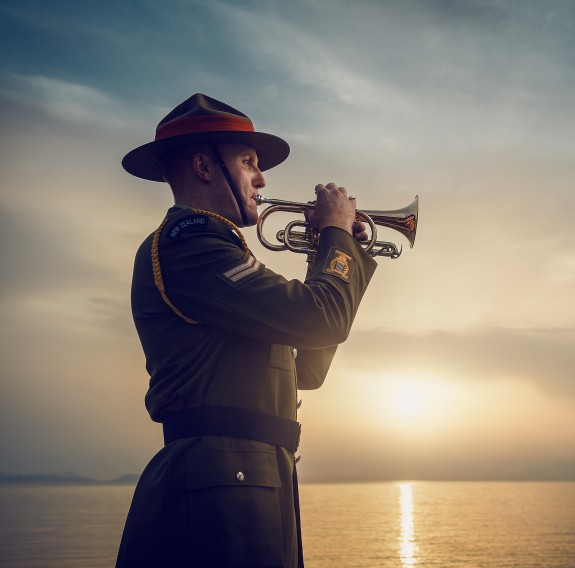
The service can involve prayers and hymns, guest speakers, a wreath laying ceremony, the playing of the Last Post, recital of the Ode of Remembrance, a period of silence, the playing of the Reveille and the National Anthem.
Where can I find an Anzac Day service near me?
Local authorities (district and city councils) usually publish details for their local Anzac Day services on their council websites.
The Ode of Remembrance
The Ode is the iconic fourth verse of Laurence Binyon’s ‘For the Fallen’, otherwise known as the ‘The Ode of Remembrance’:
They shall grow not old, as we that are left grow old
Age shall not weary them, nor the years condemn.
At the going down of the sun and in the morning
We will remember them.
E kore rātou e kaumātuatia
Pēnei i a tātou kua mahue nei
E kore hoki rātou e ngoikore
Ahakoa pēhea i ngā āhuatanga o te wā
I te hekenga atu o te rā
Tae noa ki te aranga mai i te ata
Ka maumahara tonu tātou ki a rātou.
Poppy Day
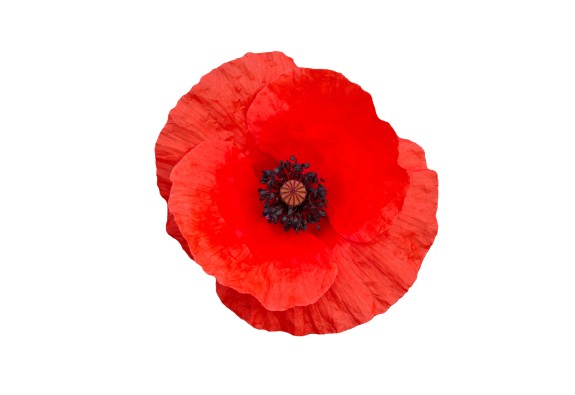
Poppy Day is the Royal New Zealand Returned and Services Association’s (RNZRSA) main fundraising activity on the first Friday before Anzac Day. The donations collected on Poppy Day help the RNZRSA improve the health and wellbeing outcomes for New Zealand’s veterans. During Poppy Day, RNZRSA members and volunteers position themselves on streets with collection buckets, ready to take donations and pass out a poppy emblem that can be attached to clothing.
In many centres NZDF personnel and New Zealand Cadet Forces cadets participate; in Wellington it has become a yearly tradition to see the most senior of military personnel on the streets. Even the US Marines from the US Embassy help with the collection. The appeal started in 1922, when poppies were sold for a shilling apiece, netting more than 13,000 pounds. Today’s poppies are sold for a gold coin donation, with close to a million poppies sold each year.

Wearing your poppy
The poppy is a symbol of remembrance and recognition of sacrifice. Many people have many different thoughts and opinions on ‘poppy etiquette.’ Our rule, along with the RNZRSA's, is this: wear the poppy with pride, and respect. You can pin your poppy in your hair, on your scarf, in your shirt pocket or on your blazer. You can wear it only on Anzac Day, or for as long as you see fit. As long as you wear the poppy and understand why it’s important, that’s all that matters.
During the Poppy Day appeal and on Anzac Day, you will see our personnel wear them differently, for different reasons:
Navy wear them on their left.
Army wear them on their hat (beret or lemon squeezer).
Air Force wear them on their right because, in the case of aircrew who have brevets on their uniforms, they don’t have any room when they wear medals on their left as well.
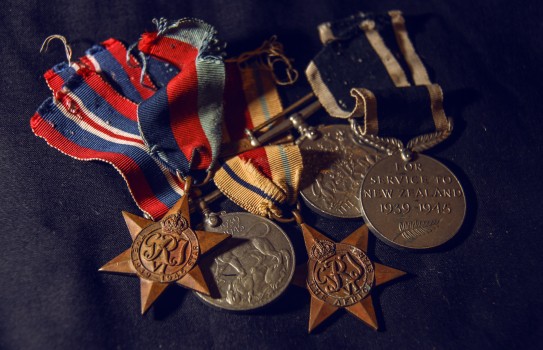
Wearing decorations and medals
Orders, decorations and medals (including miniatures, lapel badges and ribbons) may only be worn by the person to whom they were awarded. Medals are worn by the recipient on the left side. They can wear them after they retire on their civilian suit, jacket or coat in the same way as if they were wearing them in uniform.
However, the convention exists that the next of kin or other relatives may wear, on the right side only, on Anzac Day, the service medals of deceased military personnel. It is a matter of personal discretion and applies only to service medals and decorations (either full size or miniature) mounted on a medal bar.
The same rule applies to serving members of the NZDF who may wear their deceased relative’s medals on the right side of their uniform, while wearing their own medals on the left. It might be tempting to be equitable with a deceased relative’s medals and break up a set to share among family. The medals should remain as a group.
Are your medals mounted?
It could be that your relative’s medals are sitting loose in a box or container. The ribbons might be frayed or even lost. You may want to consider getting your relative’s medals restored and mounted, to enable you to wear them on Anzac Day and to allow them to be safely stored away or on display afterwards. A professionally competent medal mounter can undertake the task to the NZDF Medal Mounting Standard. Ask for references and to see some examples of the work done before you select a provider.
Feel free to contact the NZDF via the Contact Us section of the website if you need help identifying your medals.
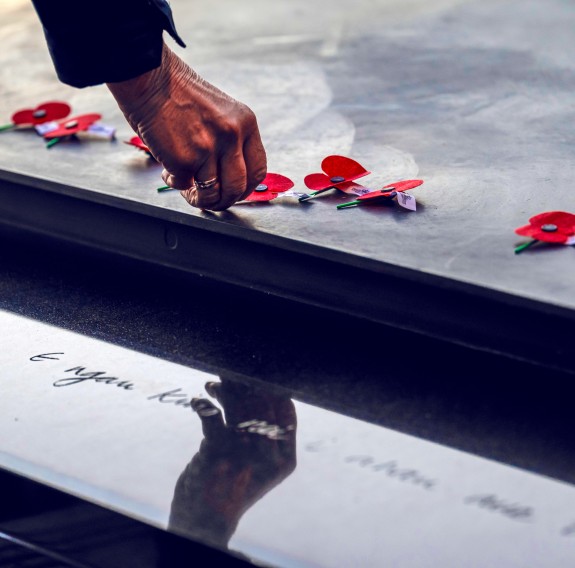
Did your relative receive their medals?
NZDF research undertaken in 2023 determined that thousands of Second World War campaign medals were never claimed by veterans. Around 75 percent of New Zealand Army and Royal New Zealand Air Force veterans refused to apply for their campaign medals in the first few years after distribution began in March 1950, five years after the end of the Second World War. Royal New Zealand Navy veterans received a special “Naval Prize Money” of five pounds ten shillings if they applied, leading to a substantial Navy uptake.
22000
Medals never issued
Over the years a slow uptake has meant an estimated 10 to 15 percent are still unissued - around 22,000 medal sets. To determine whether your relative received their medals or not, you should start your enquires with NZDF Personnel Archives and Medals via nzdf.pam@nzdf.mil.nz
If you have a relative who served in the British Armed Forces, you can start your enquiries by emailing DBS-Medals@mod.gov.uk
Are you interested in your relative’s service?
Digitised First World War service records are available online via the Archives New Zealand Collections website(external link).
For Second World War service records, you can make a request from NZDF Personnel Archives and Medals for more information.
More resources
We have a range of Anzac resources you can use. These include activity sheets for children, colouring-in sheets, and audio files that can be used as part of making this day special, no matter where you are in the world. View the Anzac Day resources here.