Nowhere to hide with Electronic Warfare Operators listening in
Exploiting enemy communications has never been more important for New Zealand Army Electronic Warfare Operators. As warfare continues to evolve technologically, maintaining their technical abilities, tactical mindset and overall fitness is imperative.
21 April, 2026
As enemy troops advance up the southern coast of the fictional island of Panay, an Anzac Battle Group has mobilised in response.
As the two forces prepare to stand-off along the main road artery north, a smaller team of NZ Army specialist Electronic Warfare Operators skirt around the Western flank.
Working alongside an infantry company their mission is to destroy enemy reconnaissance assets and deny them the opportunity to gather their intelligence.
That was the aim of Exercise Raven Dawn held recently in South Canterbury, where NZ Army soldiers gained the advantage in the recon space, which according to Lieutenant S, Officer in Charge of the exercise, is vital for any mission success.
Video: Ex Raven Dawn | New Zealand Army
“A Radio Reconnaissance Team (RRT) can provide a wide range of recon and intelligence support,” said Lieutenant S.
“They observe, identify, and report on enemy activities within the electromagnetic spectrum to support commanders in gaining an advantage. Their information can provide immediate warning of imminent enemy action, support targeting of enemy locations and feed into a combined intelligence picture.”
The main purpose of the exercise was to put new Electronic Warfare Operators through their paces on radio reconnaissance operations, with three teams of six operators working together during the scenario.
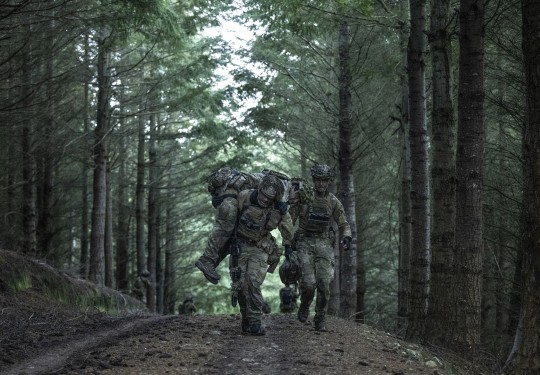
Lieutenant S said it’s difficult, challenging work with operators carrying up to 50kg packs through difficult terrain. But no matter the physical toll, they cannot lose focus as they operate in forward, vulnerable areas.
“They are exposed to enemy reconnaissance teams and drones, and so strict adherence to noise, light and thermal signature discipline is imperative,” Lieutenant S said.
“Beyond the physical fitness and understanding of our own equipment, they also have to be aware of enemy operations and doctrine, have an in-depth understanding of the electromagnetic spectrum and enemy communication practices, and be able to effectively communicate all of that back to their commanders.”
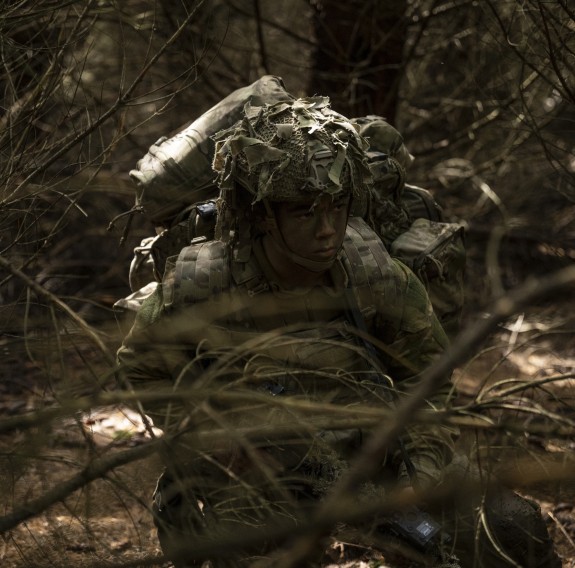
Electronic Warfare Operators carry packs up to 50kg in weight through dense, difficult conditions
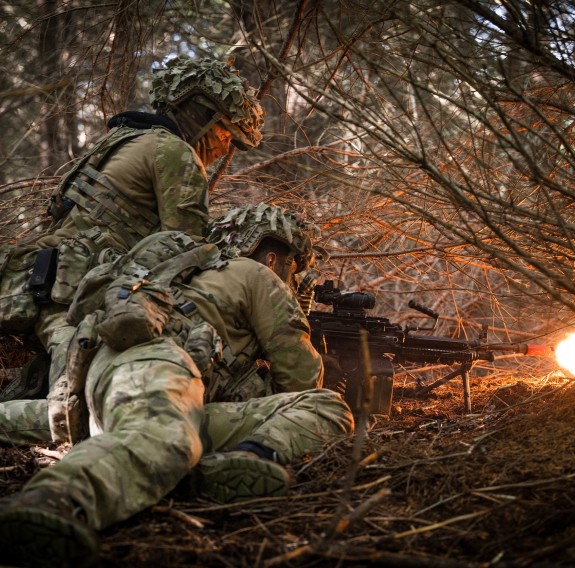
While concealment is the ultimate goal, soldiers must also make their hides defendable in case of enemy contact
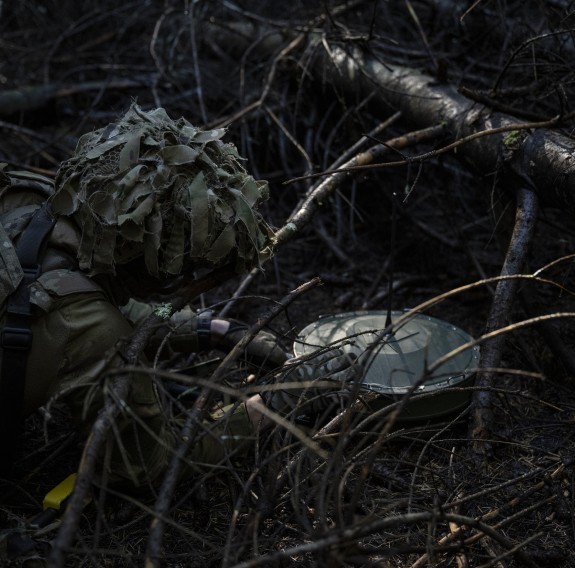
A soldier finds a suitable spot to set up their equipment for both intelligence gathering and defending their position
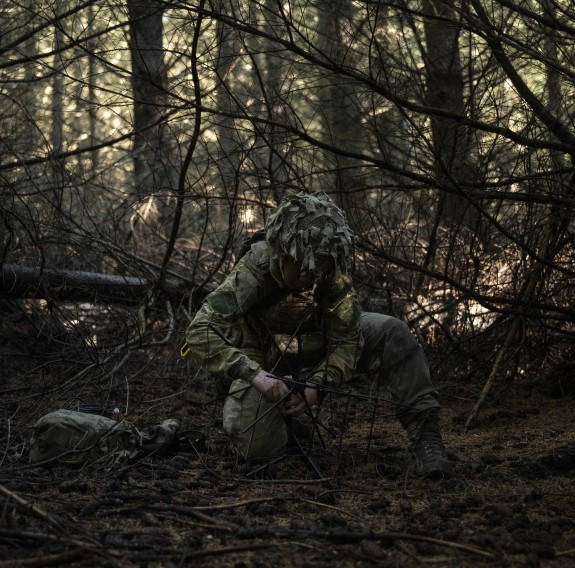
An Electronic Warfare Operator finds a suitable spot to set up his equipment
Fictional enemy forces in the exercise utilised unmanned aerial systems (UAS) to survey the area looking for the Kiwi operators, and they would identify personnel if not camouflaged well enough.
Which is where the hide comes in.
“Building an effective hide demands an in-depth understanding of why and how things are seen in the bush,” said Lieutenant S.
“A well-camouflaged hide will break up the shape of its occupants, utilise natural materials to blend in and allow for effective employment of claymore mines and the detachment machine gun to repel enemy. It’s effectively a gillie suit but for a team of six, including their weapon systems and electronic warfare equipment.”
Commanding Officer of 1st Command Support Regiment, Lieutenant Colonel Emily Hume said it’s vital for signallers and Electronic Warfare Operators to keep pushing their abilities in testing, challenging conditions, for which there is no better test than New Zealand terrain.
“Operating across the full signals and electronic warfare spectrum demands technical mastery, tactical awareness, and the resilience to adapt under pressure,” Lieutenant Colonel Hume said.
“Equally important are the fundamental soldiering skills—navigation, endurance, teamwork, and fieldcraft—that underpin our ability to fight, survive, and support the force in any environment.”