Every operational squadron flying as Royal New Zealand Air Force operations continue to pace
14 October 2026
Unfortunately you are viewing this website on an outdated browser which does not support the necessary features for us to provide an adequate experience. Please switch to a modern browser such as latest version of Google Chrome, Mozilla Firefox, Apple Safari or Microsoft Edge.
Ngā mihi nui
The first deployment of two Royal Australian Air Force (RAAF) F-35A Lightning II aircraft to New Zealand during Exercise Agile Tasman has highlighted the close defence partnership between Australia and New Zealand.
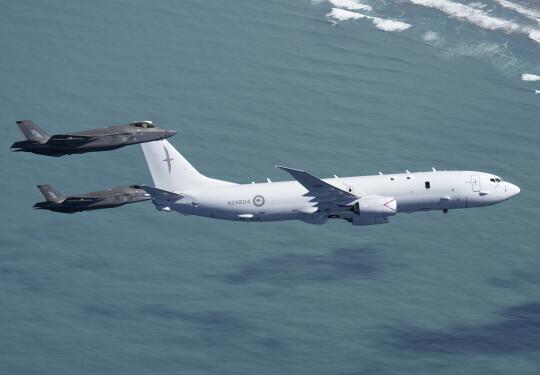
The Royal New Zealand Air Force (RNZAF) and New Zealand Army have trained alongside the RAAF demonstrating agile combat employment, integrating RAAF F-35As, C-130J and RNZAF
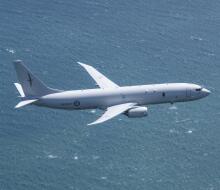
New Zealand’s Airborne Surveillance and Response Force (ASRF) is provided by No. 5 Squadron. After the retirement of the Air Force's Lockheed P-3K2 Orion aircraft in early 2023, No. 5 Squadron is now operating four Boeing P-8A Poseidon aircraft.
aircraft, as well as Joint Terminal Attack Controller (JTAC) personnel in a series of training activities at RNZAF Base Ohakea and Waiouru Military Training Area this week.
The first Exercise Agile Tasman stemmed from a joint Chief of Air Force Vision Statement signed by the RNZAF and RAAF in 2025 and the desire to put its objectives into action.
The Chief of Air Force, Air Vice-Marshal Darryn Webb, said the exercise was an opportunity to practise with Australia to project capabilities in the Pacific.
“Our responsibility to enhance the security and prosperity of our region is best done by Australia and New Zealand and many other nations working together. And to do that effectively, it simply takes practice.”
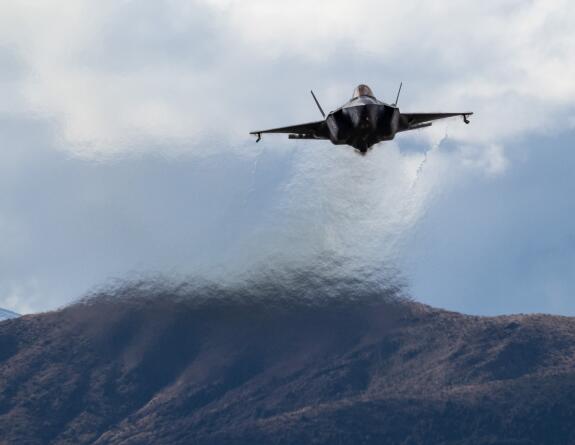
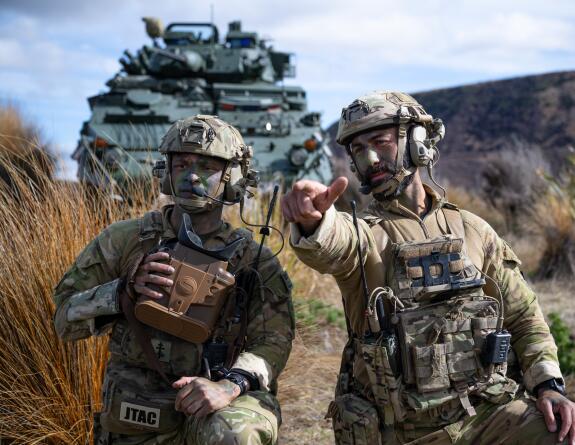
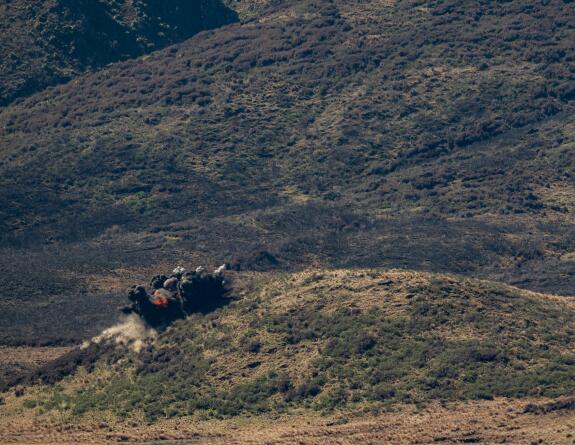
The RAAF F-35A jets approaching Waiouru, NZ Army JTAC personnel identifying on approach and the ordnance being detonated.
Training objectives included exercising an RAAF Forward Arming and Refuelling Point (FARP) outside Australia for the first time, delivery of high explosive ordnance into the Waiouru Military Training Area and intercept training with the RNZAF P-8A.
The Commanding Officer of No. 3 Squadron RAAF, Wing Commander Mark Biele, said it was wonderful to be in New Zealand and operating together, reinforcing the Anzac spirit, especially when the squadron was celebrating 110 years since its founding.
“It's our 110th birthday while we are here, and who would we want to spend that with other than our best mates across the Tasman?”
The main tasks of the exercises included the two F-35As flying from RAAF Base Williamstown to New Zealand, supported by a RAAF KC-30 air-to-air refueller, and then entering the Waiouru skies to execute a coordinated time-on-target strike employing two GBU-54 precision-guided bombs, which were GPS target designated into the training area under the control of JTAC’s.
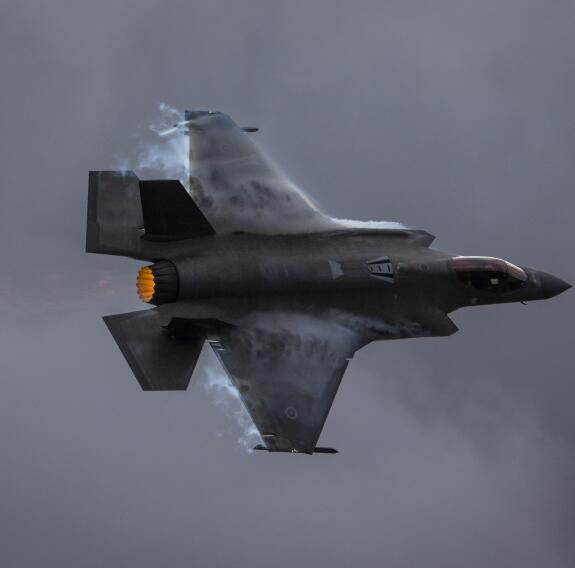
A F-35A Lightning II aircraft in flight during Exercise Agile Tasman
After this the jets landed at Base Ohakea, where they were refuelled from the tanks of a C-130J and rearmed. The FARP demonstrated the ability to rapidly refuel and rearm aircraft, increasing operational reach, resilience and mission tempo in remote or austere environments.
On the third day of the exercise, RNZAF No. 5 Squadron and its P-8As got involved with the jets conducting intercept training. Intercept training is a practice where military fighter jets learn to find, approach, identify and escort other aircraft in flight.
A team of 67 RAAF personnel, including aircrew, maintenance, security forces and refuellers travelled to Base Ohakea, working alongside about 32 RNZAF personnel including aviation rescue firefighters, security forces personnel, refuellers and aircrews from No. 40 and No. 5 Squadrons.
Led by the RAAF, and hosted by the RNZAF, the exercise has laid a platform for future training with enhanced interchangeability of personnel and aircraft between the New Zealand and Australia.
14 October 2026

12 August 2026
10 March 2026
07 February 2026
08 December 2025
10 October 2026

01 October 2026
17 September 2026
07 August 2026