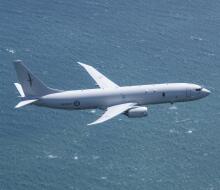
Every operational squadron flying as Royal New Zealand Air Force operations continue to pace
14 October 2026
Unfortunately you are viewing this website on an outdated browser which does not support the necessary features for us to provide an adequate experience. Please switch to a modern browser such as latest version of Google Chrome, Mozilla Firefox, Apple Safari or Microsoft Edge.
Ngā mihi nui
For the first time, a New Zealand Army reserve force team has competed in the British Army’s premier patrolling event in Wales, achieving a silver ranking.
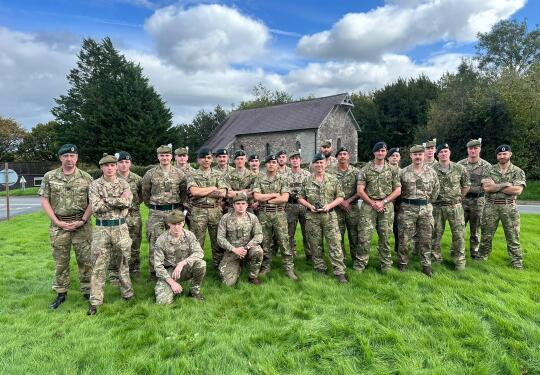
Eight personnel from the lower North Island's 5th/7th Battalion, Royal New Zealand Infantry Regiment (5/7 RNZIR) were among around 35 countries, as well as United Kingdom units, vying for top honours at Exercise Cambrian Patrol, the British Army’s premier All Arms Patrol Exercise this month.
In the largest iteration in 65 years, the exercise involved more 1,000 troops across 140 patrols traversing the undulating terrain of the Brecon Beacons, in all manner of weather, covering around 60km over 48 hours.
It is designed to be arduous, with participants needing to be mentally and physically prepared as they are tested on skills needed to survive and fight on a modern battlefield.
The battalion earned the privilege after winning the 1st (NZ) Brigade Skills at Arms competition in Waiouru in April, the first time reservists have won the competition.
Napier’s Sergeant Karlyn Butcher, patrol commander for the Cambrian team, had led a platoon to victory at Skill at Arms. But transitioning from Waiouru to the Wales was quite a challenge, he says.
Carrying more than 40kg per person, the patrols face casualty evacuation scenarios, intelligence-gathering missions, artillery fire planning, vehicle recognition, chemical and biological incidents, a tactical water crossing, minefield crossings and attacks on enemy positions, all under significant physical and mental pressure.
“There’s a lot more up and down in Wales, whereas Waiouru is more of a plateau,” he says.
“We expected it, and we did quite extensive training, but it was very hard.”
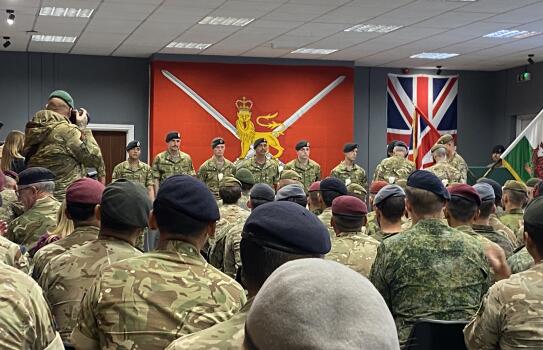
The 5th/7th Battalion Cambrian Patrol team at the coin presentation following the event
The Kiwi team was notably faster than others, causing them to be messaged – via a GPS tracker – that they needed to sit in place while things were prepared ahead.
“The water gap crossing looks daunting, but then you’re issued life jackets. But there was one area where we went up 200 metres over 100 metres in distance. That was quite scary.”
It was a very immersive scenario, fitting the realities of contemporary conflict, he said.
“It’s all basic infantry stuff, revolving around an invasion of a European country, where you’re advancing. You feel like you’re doing everything for real. There are roving tanks you have to avoid and find other routes around, you get buzzed by drones, and there are active ‘minefields’, where your GPS starts beeping.”
The fatigue was the biggest challenge.
“I didn’t sleep for 36 hours, then we got five hours sleep. But if you’re slow, you don’t get any sleep at all.”
He said his team had done very well.
“I think we were very close to getting the gold ranking.”
Patrols are awarded a gold, silver or bronze medal, or a competition coin. Ten patrols were awarded gold and 69 teams awarded silver. 14 patrols did not complete the event.
Staff Sergeant Josh Holden was team manager.
“Our team represented themselves and the NZ Army amazingly well, to a very impressive standard. They were very glad it was over when I picked them up!”
Commanding Officer 5/7 RNZIR, Lieutenant Colonel Shaun O’Connor and the battalion’s Regimental Sergeant Major, Warrant Officer Class 1 Murray Macaulay, were at the prizegiving in Wales.
“We are immensely proud of the team’s efforts, both in New Zealand and the United Kingdom,” says Lieutenant Colonel O’Connor.
“It was an outstanding achievement for a reservist unit to get the opportunity to participate and show they can compete with the best.”
14 October 2026

23 October 2026

12 August 2026
10 March 2026
07 February 2026
08 December 2025
10 October 2026

01 October 2026
17 September 2026