Vehicle Washing, Water Recycling, and Catchment Protection at Waiouru Military Camp
Operating a wide range of specialised military vehicles, the New Zealand Defence Force (NZDF) relies on thorough cleaning after training exercises, to remove sediment and contaminants and keep its fleet operating effectively.
08 June, 2026
This article was originally published by Water NZ.(external link)
Vehicle washing at Waiouru Military Camp - the largest military training area in New Zealand - has long been undertaken at an on-site facility that was built in the 1980s. Over time, the facility has faced growing infrastructure limitations as fleet numbers and training frequencies have increased and environmental expectations have tightened, driving the need for an upgrade.
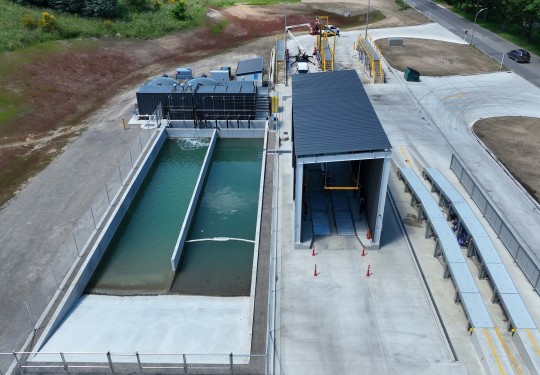
Pattle Delamore Partners (PDP) collaborated with Transport Wash Systems (TWS) to deliver an integrated design that incorporated TWS’ specialist washing equipment into the new wash facility optimised for NZDF’s specialist vehicles, constructed by Brian Perry Civil. The NZDF was actively involved during the design and construction phases, ensuring the design delivered all user requirements, including 24/7 operation, water recycling capabilities, and use of the facility by a wide range of vehicle types.
To allow a higher throughput of vehicles at the facility, the wash point footprint was set to expand significantly. With increasing hardstand areas and more frequent vehicle washing, stormwater management was a key consideration for the design to ensure that the downstream environment, the Waiouru Stream, was protected from high flows and contaminants washed from the vehicles.
The design approach focused on managing much larger volumes of wash water and site runoff, while delivering improved water use sustainability and contaminant control, including management of Lake Snow (Lindavia intermedia), an invasive microscopic alga present in the Lake Moawhango training area. Protecting the downstream environment was a key driver and a critical outcome for the upgraded site.
To manage stormwater, the site is split into ‘clean’ and ‘dirty’ catchments. Site grading and speed humps on the concrete hardstand isolate wash water and potentially contaminated runoff. These contaminated flows are diverted into a closed loop treatment system designed to support reuse within the wash process.
Clean stormwater from the surrounding areas is graded away from the dirty catchments, with a swale along the eastern extent of the site to divert runoff for collection and storage in two large dry basins. These basins act to detain and provide infiltration, reducing peak discharge rates and minimising high flow impacts on the existing stormwater network and the Waiouru Stream.
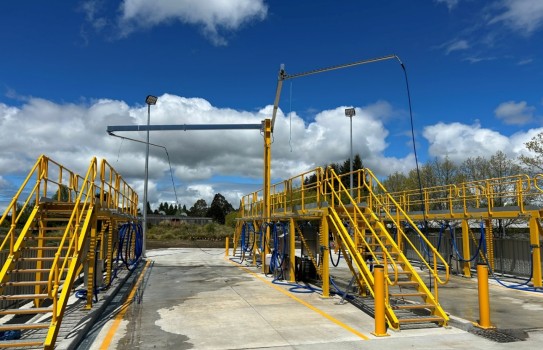
Manual Wash Bays with Walkways
The wash facilities designed and supplied by TWS within the ‘dirty’ catchment consist of three distinct cleaning areas:
- A covered automated contactless wash system, where vehicles ranging in size from utes to fire trucks can drive through a controlled repeatable wash process removing mud, sediment and biological material from the sides, top and underside of the vehicle.
- A ramped vehicle manual wash bay, which allows effective cleaning of the underside of vehicles where sediment and biological contaminants commonly accumulate. A pressure washing hose with chemical cleaning capabilities allows targeted manual cleaning of the vehicle.
- Two manual wash bays with washing capabilities for a wide range of vehicles and raised walkways on each side allow for side and roof cleaning on large military vehicles. These also operate via pressure washing hoses to enable the removal of all mud, sediment, and biological material from external surfaces.
These wash facilities have a combined peak water demand of over 600 m3 per day, all of which requires management, in addition to any runoff from rainfall. Vehicle wash water, all sediment and contaminants and runoff in the ‘dirty’ catchments are directed to a
300 m3 (8 m x 30 m x 2.5 m deep) open top concrete settlement tank. The settlement tank is designed to manage high hydraulic and contaminant loadings generated from vehicle washing, providing storage and treatment.
Surface booms are installed to capture floatable material and hydrocarbons, while a diversion wall, an internal weir, and submerged outlets enhance sedimentation by increasing residence time to remove fine suspended solids. Removal is aided through use of a flocculant, and a disinfectant ensures the removal of Lake Snow. The tank is also partly aerated to support water quality for reuse.
Once treated through the settlement tank, up to 90 percent of wash water is recycled through the vehicle wash system, with the excess treated water being wasted via a small pump station. Removing the excess water from the system ensures that the quality of the wash water does not degrade.
Along with managing the wash water, the extensive hardstand has increased site runoff which is captured in the ‘clean’ catchments. The northern basin collects runoff from a 1,000 m2 impervious vehicle waiting area with a three-stage oil and grit separator, attenuating 160 m3 before discharging into the existing stormwater network. The southern detention basin diverts runoff from the adjacent hill with capacity to attenuate 270 m3. This diversion significantly reduces runoff into the ‘dirty’ catchments and protects the downstream Waiouru Stream.
The upgraded Waiouru wash facility provides a closed-loop wash system that supports a growing military fleet, servicing vehicles and equipment from kayaks to tanks, while improving water use and sustainability and environmental outcomes for the Waiouru Stream by protecting it against contaminants and increased site runoff.
The facility demonstrates a resilient, water-enhancing approach that balances operational demands with environmental performance.
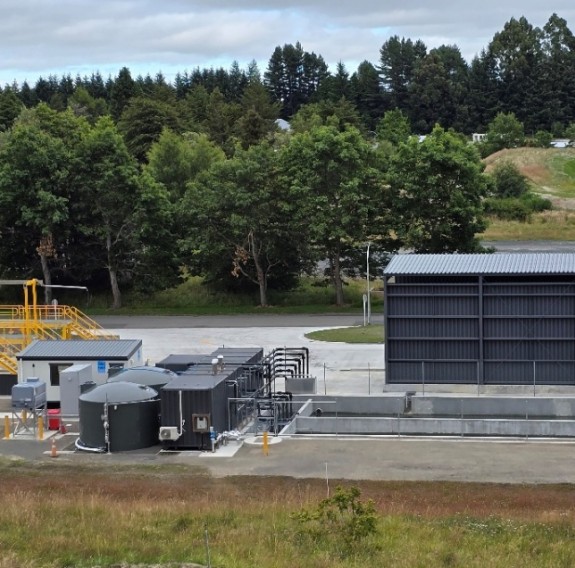
Waiouru Wash Facility Site
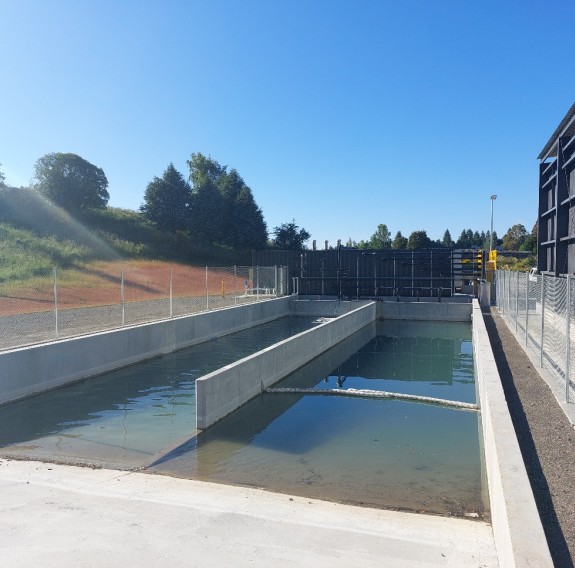
Settlement Tank
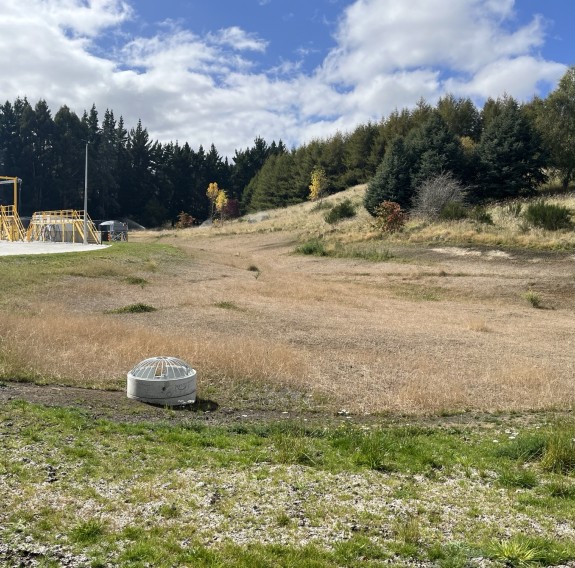
Southern Detention Basin
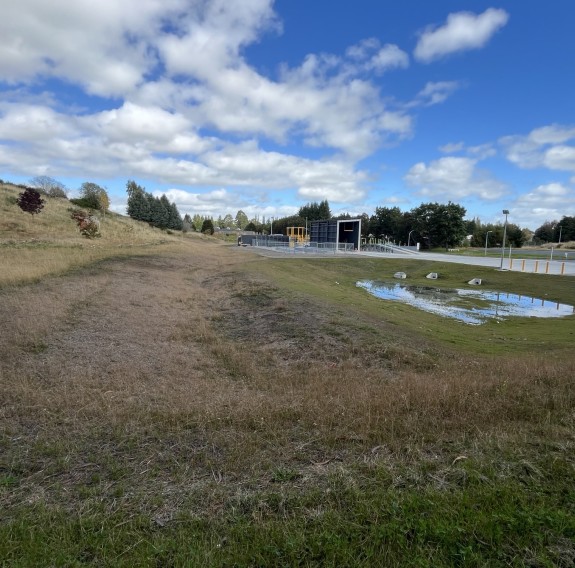
Northern Detention Basin (post rainfall event)
The facility has been operating since late 2025 and will continue to be closely monitored to ensure optimal performance of the system.
Reflection on the design and construction of this site highlighted several insights that may be relevant to other industrial developments:
- Work with the site
Design with the existing site falls, rather than working against them. Using natural topography to direct catchment separation reduces earthworks. - Revisit the brief
While scope control is important, user requirements may evolve over time, and it is worth revisiting them at regular intervals on projects that span over several years between inception and delivery. The greatest ability to influence design outcomes at low cost occurs early in the project, however requirements confirmed at brief stage may not hold by the time construction begins. - Invest in integrated design
Time spent in developing a well‑integrated design, and in resolving the interfaces between disciplines and suppliers, reduces the likelihood of issues during construction. At Waiouru, close coordination between the stormwater, wash water treatment, and reuse systems was essential to making the closed loop work and helped ensure the system performed as intended. - Prioritise water recycling
High rates of water recycling are achievable and provide an opportunity to significantly reduce discharges into the environment and wastage of potable water.
The principles applied at Waiouru are not unique to military facilities. Similar challenges arise wherever high-volume water usage takes place near sensitive waterways, including aggregate and quarrying operations, forestry log yards, and local authority maintenance depots. As environmental expectations for industrial sites continue to tighten, this project offers a useful reference for how to balance operational demands and catchment protection.
Authored by Sam Bennetts and Joseph Gibson at Pattle Delamore Partners