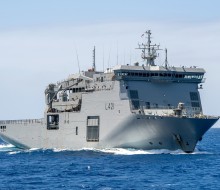
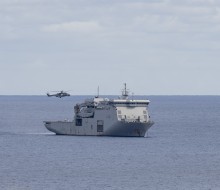
Royal New Zealand Navy’s HMNZS Canterbury departs for mission to Tokelau
07 February 2026
Unfortunately you are viewing this website on an outdated browser which does not support the necessary features for us to provide an adequate experience. Please switch to a modern browser such as latest version of Google Chrome, Mozilla Firefox, Apple Safari or Microsoft Edge.
Ngā mihi nui
This summer, the New Zealand Defence Force (NZDF), in partnership with the Ministry for Primary Industries, will conduct maritime patrols in the Southern Ocean to help protect Antarctic marine ecosystems and economically important fish stocks.
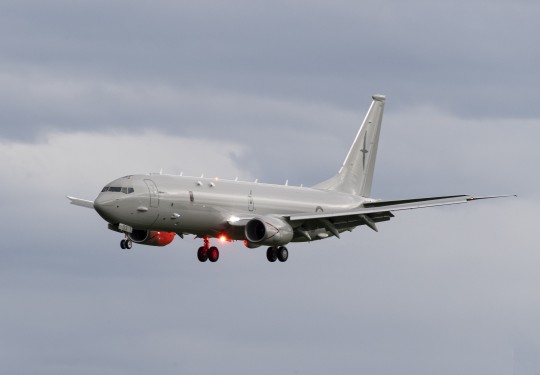
The Royal New Zealand Air Force will deploy
New Zealand’s Airborne Surveillance and Response Force (ASRF) is provided by No. 5 Squadron. After the retirement of the Air Force's Lockheed P-3K2 Orion aircraft in early 2023, No. 5 Squadron is now operating four Boeing P-8A Poseidon aircraft.
maritime patrol aircraft to the Ross Sea to detect and deter any illegal, unreported, and unregulated (IUU) fishing, and check compliance of licensed fishers.
Steve Ham, Director of MPI Fisheries Compliance, says these efforts are critical.
“Without monitoring fishing activity in high value fisheries such as this there is a real risk of vessel operators flouting the rules to secure financial advantages over compliant fishers”.
The NZDF’s Air Component Commander, Air Commodore Andy Scott, said aircrew would track and observe vessels, monitor fishing activity, check compliance, collect evidence of any suspected IUU fishing, and monitor for by-catch of protected species such as seabirds.
“Any suspected breaches identified during patrols are reported to relevant flag state authorities for investigation and appropriate action,” he said.
These patrols reinforce New Zealand’s commitment to protect the ecologically sensitive Southern Ocean environment, support sustainable fishing practices, and uphold the international rules that govern this region.
New Zealand is an active member of the Commission for the Conservation of Antarctic Marine Living Resources (CCAMLR) – the international body dedicated to safeguarding the unique marine ecosystems in Antarctic waters. Under CCAMLR rules, the Ross Sea fishery which opens on 1 December, is strictly limited to vessels flagged to member nations, operating under approved permits, and in compliance with conservation measures, including agreed catch limits.
07 February 2026
08 December 2025
25 July 2025
26 February 2026

11 December 2025
13 November 2025

21 October 2025
20 October 2025

09 September 2025