
NZ Army conducting stability and security training in Whanganui
12 August 2026
Unfortunately you are viewing this website on an outdated browser which does not support the necessary features for us to provide an adequate experience. Please switch to a modern browser such as latest version of Google Chrome, Mozilla Firefox, Apple Safari or Microsoft Edge.
Ngā mihi nui
A multinational exercise in Indonesia has shown how military capabilities can come together to assist communities in the event of a large-scale natural disaster.
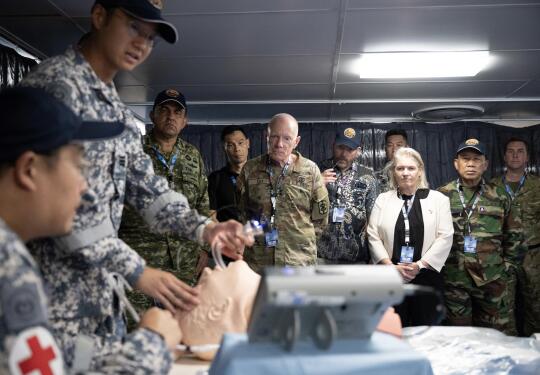
The New Zealand Defence Force (NZDF) deployed 28 personnel to participate to Exercise Trident Resolve (XTR), a combined field training exercise held in Banten, Indonesia from 20 to 26 September 2026, including a team of engineers, medical staff and personnel in a multinational control centre.
Exercise Trident Resolve is the first ASEAN Defence Ministers’ Meeting (ADMM)-Plus combined field training exercise involving working groups of experts on cyber security, Humanitarian Assistance and Disaster Relief (HADR) and military medicine.
It is the largest ADMM-Plus exercise in a decade, with about 2,200 personnel from 19 militaries and civilian agencies working together to prepare for natural disasters.
New Zealand co-chaired the HADR expert working group with Singapore.
Wing Commander Tom Fletcher was a deputy director in the multinational control centre, which coordinated requests for assistance from the local emergency response authority’s Emergency Operations Centre.
“Exercises like these give us an opportunity to integrate and partner with nations across the Southeast Asia region, so that we understand how each nation works, and what expertise and capabilities each nation can bring to the region in the event of a natural disaster.
“This level of military cooperation helps us be better prepared to respond to natural disasters and support the civilian agencies that have the lead in supporting the communities affected by such disasters."
“It's been a great opportunity to learn how 19 other nations respond to such an event and the capabilities that they can bring.”
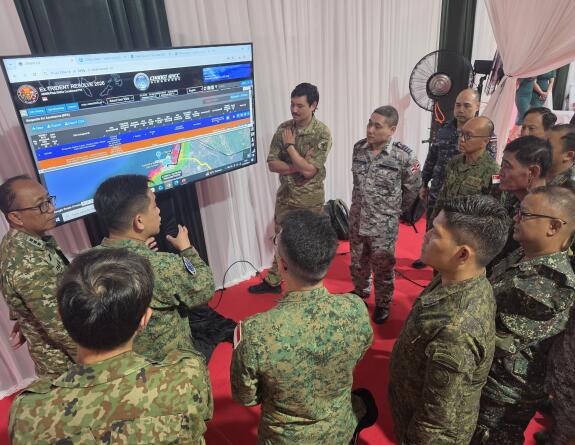
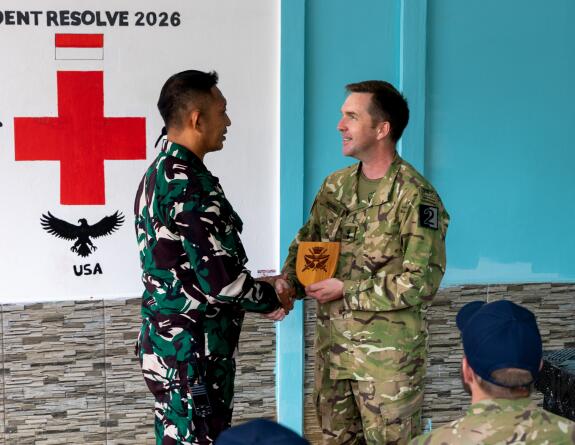
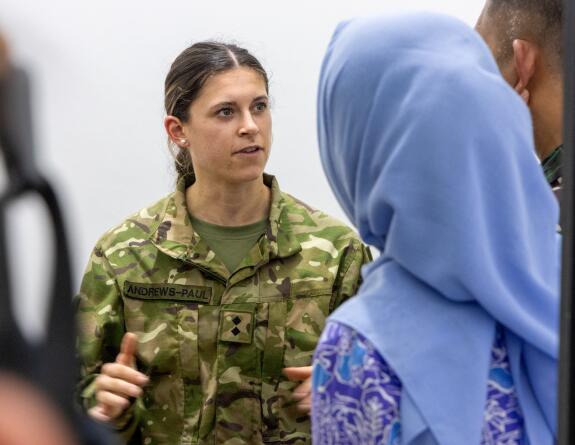
Exercise Trident Resolve has shown how military capabilities can come together to assist communities in the event of a large-scale natural disaster.
The exercise included multiple field training activities where military personnel could apply their specialist skills in situations typical of the aftermath of natural disasters such as a volcanic eruption, earthquake or tsunami.
A group of 13 New Zealand Army engineers controlled a site and assisted in constructing a new building. At the conclusion of the exercise the newly completed medical facility at the site was handed over to the Tentara Nasional Indonesia, the armed forces of Indonesia.
Two Royal New Zealand Navy medics, a NZ Army dentist and Royal New Zealand Air Force health specialist worked alongside colleagues from other nations in training scenarios that included treating casualties and disaster victim identification.
NZDF cyber security personnel contributed to understanding how the cyber environment could be impacted in a natural disaster and how this could affect the emergency response.
The NZDF also deployed Women, Peace and Security (WPS) advisor Squadron Leader Alex Bertram, who partnered with representatives from Japan and Australia to advocate for the considerations of women, children and minority communities in the event of a natural disaster.
“The aim is that Women, Peace and Security principles are systematically integrated into all aspects of conflict and crisis prevention, preparedness, response and recovery, so that their application becomes second nature,’’ she said.
“Having robust discussions during an exercise such as XTR helps expand everyone’s knowledge and understanding of the application of WPS principles.”
NZDF contingent leader Senior National Officer Lieutenant Colonel James Russell said it had been a worthwhile exercise, working through complex tasks and coordination across multiple nations to practice delivering vital humanitarian aid and disaster relief.
“It has been a privilege to work with such professional personnel from across Southeast Asia, Australia and the United States. We are all now confident that should a large-scale disaster occur, we will be able to integrate with systems and people across multiple domains and functions to deliver life-saving aid,” he said.
12 August 2026
10 March 2026
07 February 2026
08 December 2025
01 October 2026
17 September 2026
07 August 2026
04 June 2026
25 July 2025