Multiple attack fronts now in use against wildfires for the NZ Army
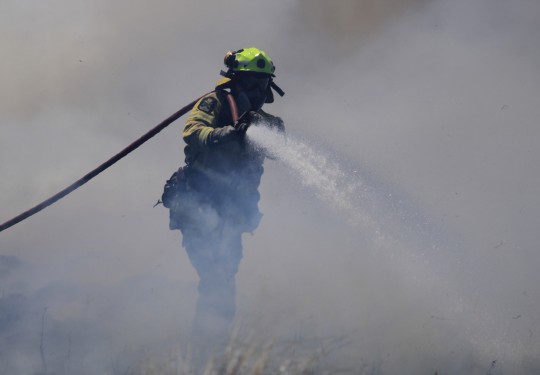
For the first time the New Zealand Army, Ngāti Tūmatauenga’s Emergency Response team has been able to train with commercial fixed-wing aircraft to broaden the range of their capabilities and more effectively attack wildfires.
11 February, 2026
The recent fire training, Exercise Falcon, at the Waiouru Military Camp Training Area, comes during the fire season in the arid area.
The intent of the training was to ensure fixed-wing aircraft could operate and land at the Moving Target Range, in the northern end of the training area, and to give key personnel at the Waiouru Fire Station an opportunity to direct and control multiple aircraft. The team also took the chance to incorporate and rehearse other fire protection measures.
The training focused on zones where artillery training takes place and where fires can sometimes break out, Fire Master Staff Sergeant Matthew Anker said.
“We often train with commercial helicopters with buckets, but it was the first time we also worked alongside a commercial fixed-wing aircraft that was able to land in the area.
“Our standard operating procedures mean we always have fire safety plans and mitigations in place for all exercises, but we always have to be prepared and train for when things go wrong.”
The fixed-wing plane from Airworks was loaded with 2000 litres of water, which it dumped over the controlled burn site, alongside two aircraft from Mid West Helicopters NZ with their buckets.
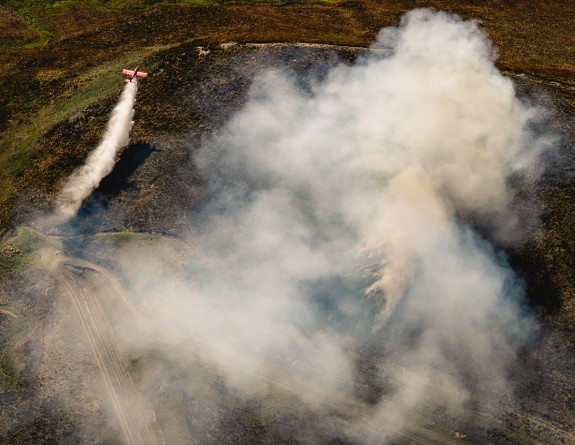
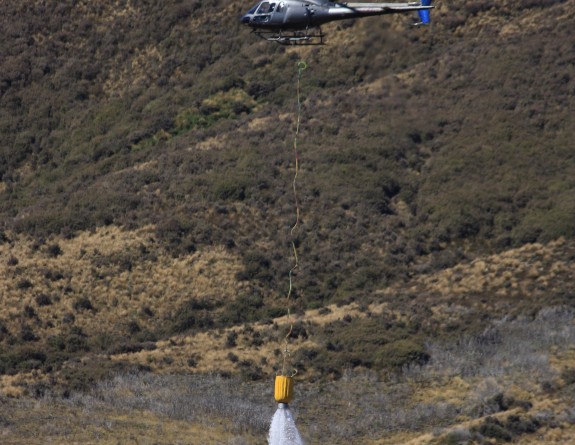
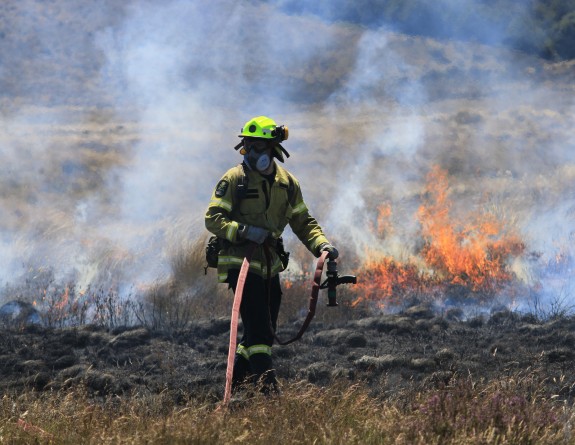
“The fires we set also acted as preventative burning in areas where fires are likely to start in the future. It created a dual effect to reduce the fuel-load for the fire season, a fire break of sorts, and we were then able to call the aircraft in to extinguish the fire that we had started,” Staff Sergeant Anker said.
“The aircraft was really effective in putting the fire out and stopping it in its tracks.”
The whole station of 20 personnel took part in the two-day training and volunteer firefighters were used to maintain cover of State Highway 1.
“The training was a huge success because we were able to establish standard operating procedures to use fixed wing aircraft on large scale fires. It was essentially a dry run to prepare us for the fire season.” Staff Sergeant Anker said.
“It was really valuable to be able to train with both the fixed-wing and helicopters at the same time. It’s like going from a small arms weapon to a 50-calibre gun. There's a much bigger punch and will prepare us well for this season.”
With the increasing effects of climate change and extreme weather, which in turn increases the risks of large-scale wildfires, it was good to be able to work effectively with outside agencies to combat those dangers, he said.