Military cooperation features during NZDF deployments to Indo-Pacific region
23 October 2026
Unfortunately you are viewing this website on an outdated browser which does not support the necessary features for us to provide an adequate experience. Please switch to a modern browser such as latest version of Google Chrome, Mozilla Firefox, Apple Safari or Microsoft Edge.
Ngā mihi nui
25th Anniversary
Commander Joint Forces New Zealand Major General Rob Krushka.
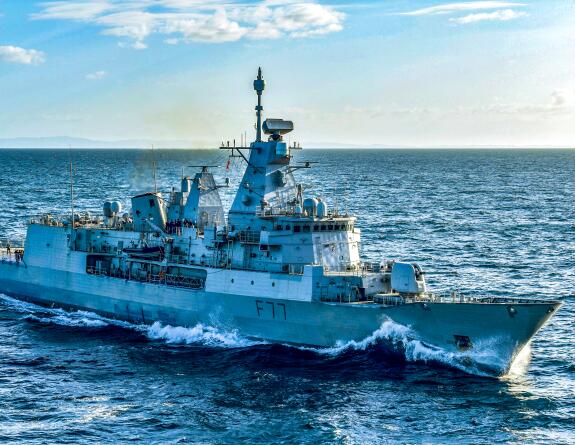
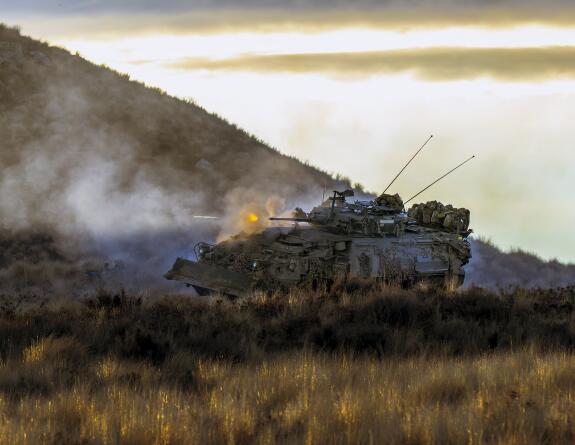
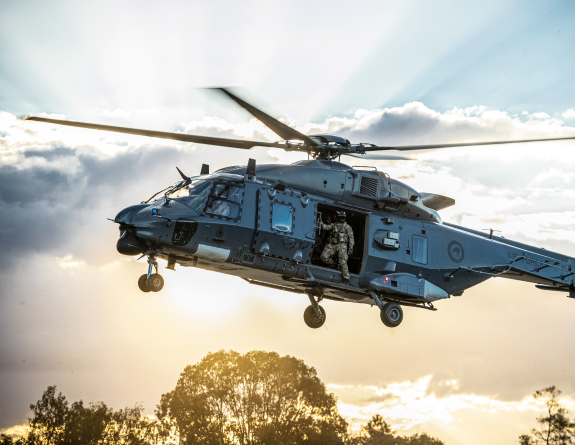
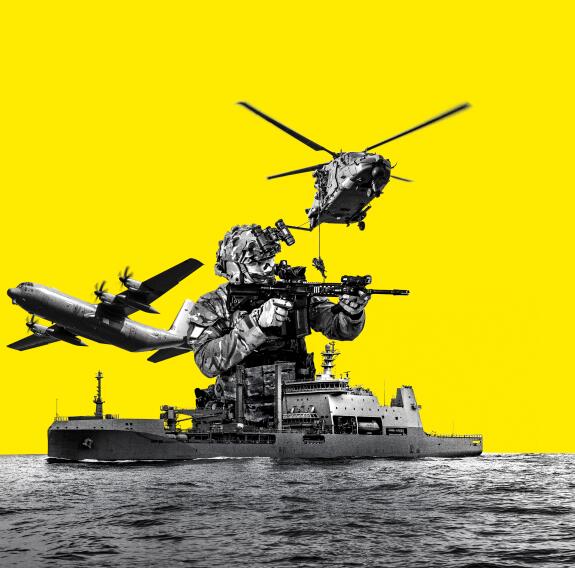
Headquarters Joint Forces New Zealand (HQ JFNZ) plans, deploys, sustains and commands New Zealand Defence Force (NZDF) deployments in New Zealand, the Pacific and around the world. The headquarters brings together personnel from maritime, land and air components as well as experts in fields such as health, logistics, communications and training, to plan and execute operational deployments – the sharp end of the military.
Commander Joint Forces (COMJ) New Zealand, Major General Rob Krushka explains that it is the role of the headquarters to exercise command and control of Government-mandated missions and “be ready to undertake significant activities anywhere around the globe”.
“The national security strategy, military strategy and Joint Campaign Plan enable us to focus on operations that are important to our Government, important to us as a Defence Force, and ensure that we are responsive in our near region.’’
Our impact over 25 years
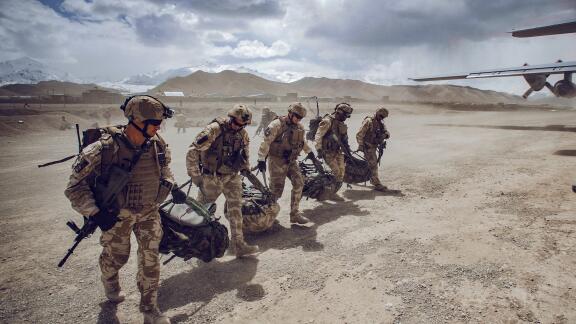
The world was thrown into turmoil 25 years ago in the wake of the September 11 attacks in the United States. HQ JFNZ had been operational for just over two months and had to act quickly, sending personnel to Afghanistan. In the two and a half decades that have followed, HQ JFNZ has been at the forefront of NZDF involvement in global conflicts, humanitarian disasters and political unrest.
HQ JFNZ was born 25 years ago out of the East Timor conflict and the increasing necessity to centralise the command of joint warfare across the Royal New Zealand Navy, New Zealand Army and Royal New Zealand Air Force. The deployment to the south-east Asian country was initially led by the Air Force Operations Command in Auckland, but it soon became apparent the largest component for the mission would be the New Zealand Army, supported by Royal New Zealand Air Force and Royal New Zealand Navy assets.
The Government’s view at the time also signalled greater coordination in the Defence Force, in effort and equipment acquisition. East Timor was a catalyst for the creation of Joint Forces, but it wasn’t the only one. It was a challenging journey to raise the headquarters in 2001, and processes put in place were developed and evolved as they continued to assist the New Zealand Government for the next 25 years.
In early 2000 Major General (Rtd) Martyn Dunne, who was deployed in East Timor as a Brigadier, was approached by Chief of Defence Force Air Marshal Carey Adamson to set up the headquarters. The idea was backed by the prime minister at the time, Helen Clark, but, starting with a staff of just three people, Major General Dunne had his work cut out for him to get the concept materialised into a 24/7 working operation. But just 18 months later, on July 1, 2001, doors were open and within the first three months they were handling multiple operations, including deployments to Afghanistan, following the terror attacks in the United States.
“When Prime Minister Clark came to Whenuapai to farewell the SAS going into Afghanistan, she asked me if we should tell the public about the deployment. I said, ‘let's get them on the ground first’, and she played along with that. So they arrived on the ground, and no one knew they were there for a time.”
Joint Forces personnel were housed in a refurbished communications building in Trentham, Upper Hutt, which was built for security, with two-metre-thick, earthquake-proof walls. Choosing a building outside Wellington city was deliberate, as should a major earthquake damage the CBD, there would still be a central hub where Defence Force work could continue.
“HQ JFNZ was a 24/7 functioning headquarters, providing the platform for deployed operational forces who at times had urgent and dangerous situations to deal with and receive guidance on. This was often demonstrated in the early days of the Afghanistan deployment.
“I have no doubt that with ongoing commitments, especially to East Timor, of an infantry battalion and aviation rotations, the urgent deployment of the SAS to Afghanistan along with No. 40 Squadron’s C-130 support, would not have been possible without HQ JFNZ. We might have muddled through, but much would have been lost.
“Everything from Standard Operating Procedures, security, intelligence, IT, global communications for deployed forces to personnel management had to be devised and implemented. We even worked up the triangle logo for the Command that endures today.
“Standing up Joint Forces was incredibly successful and there’s no way you could have found a better concept. The unity and command at the operational level was reinforced every day and on every operation.”
At the time service chiefs were yet to be fully convinced about the efficacy of Joint Forces, but that changed when the three services worked in conjunction on the Afghanistan deployment.
“I remember that time quite well when the world was poised and not really sure how the war was going to go. America billed it as something that would be short and sweet and they'd be able to get it done pretty quickly, but that wasn't really to be the case,” Rear Admiral Steer said.
However, during the deployment in Bamyan province the New Zealand military bases developed and the relationship with the American forces at Bagram Air Base grew, he said.
“The good thing about the Joint Forces Headquarters is when you plan for an operation or an exercise all three services plus representatives from other trades such as medical, supply and logistics, are all in one place.
“I'd hate to have seen either Afghanistan or East Timor planned without the Joint Forces Headquarters. It's one of the biggest successes of the NZDF. Working there as a chief of staff was fascinating, and then I was posted to the Maritime Component Commander role.
“I’ve seen time and time again that it’s proven its worth over the past 25 years. There's been so many operations and exercises, both overseas and here, where they've had to jump to action when things have happened.”
The governance of the facility meant decisions were able to be made quickly with all the relevant people in the room, he said.
“The work being done at Joint Forces Headquarters is just part of daily business now and it makes us a better Defence Force.”
“We can be proud of the difference we made to the lives of those living in Bamyan province. Through providing security, we were able to construct schools, roads, and buildings, allowing boys and girls to gain an education and improving commerce through roading and connectivity,” he said.
“More importantly, we demonstrated what good governance, improved government processes, and skilled policing looks like. We therefore improved the lives of all those we touched.
“I know everyone that served in Afghanistan will have lifelong memories of their contributions, knowing it was not always easy and that not everyone made it home. We made a difference.”
Joint Forces has had significant involvement in response planning for national disasters in the past 25 years, including the Pike River coal mine disaster, Christchurch earthquake, the Christchurch terrorist attack, Whakaari/White Island and the Covid pandemic.
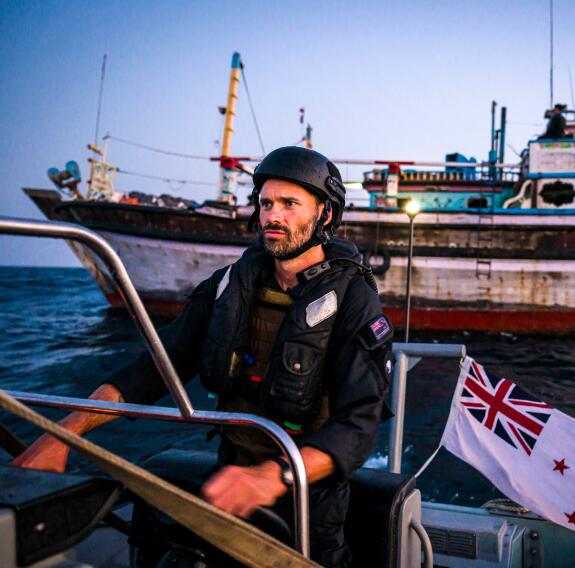
“We do not get it perfect every time and the regular change of staff means we need to continually review how we do business. The Whakaari/White Island response for example reinforced just how complex command and control can be in a multi-agency effort when time is precious.
“The progress HQ JFNZ has made in responding to domestic disasters has been significant over the years. Identifying specific areas where intended actions did not work out as planned, and applying corrections to operational procedures as a result has been key to ensuring the best response possible can be delivered.”
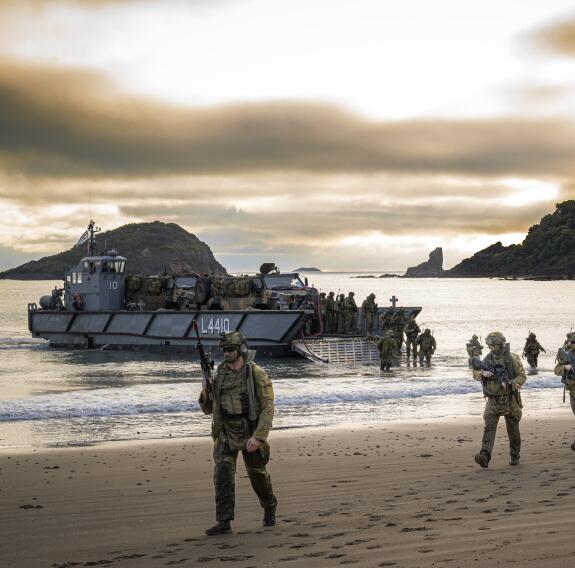
“A number of major exercises in south-east Asia and the Pacific are also ongoing, which are fantastic opportunities for personnel in all services to go out and stretch their legs.”
Over the years Joint Forces has developed cohesive and well-established doctrinal processes that allow thorough and coherent planning, linked over a 12-month to five-year plan, he said.
“Our military strategy has continually improved and is aligned via the Joint Campaign plan and now and linked with the three domains – maritime, land and air. There was a blip when the Covid pandemic hit and we had to adjust our procedures, but now we're back on track and this is as good as it's ever been.”