Huntly peacekeeper returns from operations in South Sudan
Healthcare, running water, electricity and sealed roads are all things you take for granted in New Zealand - Waikato soldier Major Dylan Wright says South Sudan is nothing like that.
09 June, 2026
Major Wright has just completed a nine-month deployment to Operation Sudden, as a military staff officer to the United Nation’s peacekeeping mission to South Sudan (UNMISS).
He joined the New Zealand Army in 2012, after attending Huntly College.
“The military was always of high interest to me through my childhood and high school years. The attraction of doing something cool and exciting played a big part,” he says.
He had always been attracted to visiting a remote part of the world that had a certain element of risk and adventure. Op Sudden had been on his radar as something to do once he promoted to major.
United Nations Peacekeeping, the largest and most visible representation of the United Nations, seeks to secure commitment and cooperation towards peace and security in volatile environments, particularly through the deployment of peacekeepers.
Over decades, the New Zealand Defence Force (NZDF) has supported a number of these peacekeeping initiatives, from the Middle East to North Africa and Asia, with the posting of personnel to these regions.
South Sudan is in the midst a humanitarian crisis driven by ethnic conflict.
New Zealand has supported UNMISS since 2011. Prior to South Sudan’s independence, New Zealand supported peace efforts in Sudan from 2005 to 2011.
The goals of the mission are to protect civilians, facilitate humanitarian assistance, provide electoral support, support the peace process and monitor, report and investigate violations of human rights.
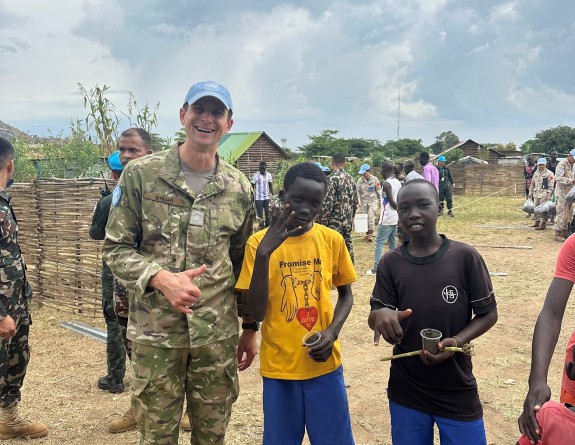
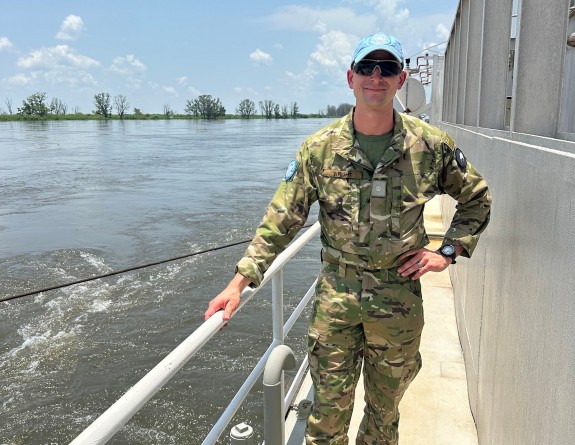
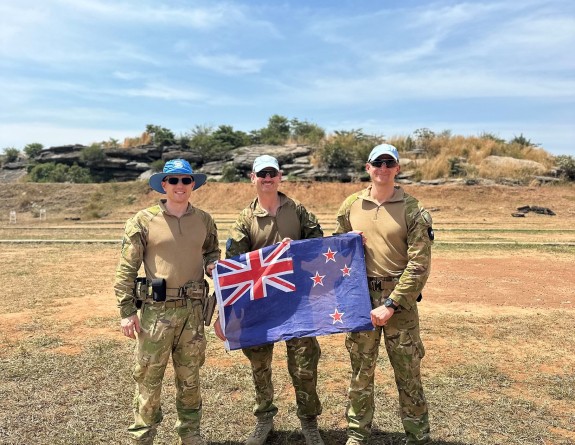
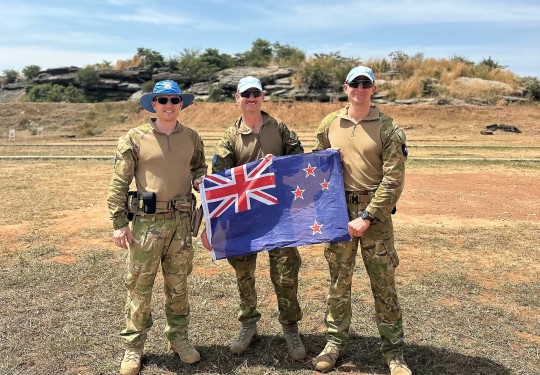
Major Dylan Wright at a local school in South Sudan (left), aboard a barge on the Nile River (middle) and with New Zealand Defence Force colleagues (right).
Major Wright was based in Juba, the capital of South Sudan, helping maintain one of a number of military sectors that cover the country. Each sector is commanded by a Sector Headquarters – along the lines of an Army Brigade Headquarters.
His main job, in Sector Juba HQ, was the upkeep of the team’s crisis contingency plan for if the security situation in South Sudan deteriorates and people need to be protected or evacuated.
Major Wright’s other responsibilities included helping with training and assessment for battalions in the section, and going on patrols to get a feel for how the patrols were being conducted and received.
He said patrols provide the “ground truths” in the neighbourhood; Juba might be the most stable part of the country, but it’s all relative.
“You still need to be aware of your surroundings as soon as you step outside the base.
“There are crazy driving conditions, opportunistic crime, small-scale conflicts, and police and military checkpoints with varying degrees of confrontation.”
English is the second language for most people and the level of training or experience amongst the United Nations cohort could be vastly different, said Major Wright.
“There are multiple levels of political, strategic and tactical challenges in the mission that can make it very difficult to feel like you are achieving what we are here to do - which ultimately is to stop people from dying.
“Mental resilience is important. You also need to be able to manage your emotions in times of confrontation, negotiation and explanation - extremely important when you find yourself in a sticky situation.
“Humility can also go a long way towards understanding that everyone around you has vastly different experiences and perspectives.”
Something that stuck with him was the resilience of the children.
“The fact they can have a smile on their face, laugh and play amongst living conditions beyond belief in our world, helps keep you going when all the other frustrations are weighing you down.”
Despite the adversity he witnessed, Major Wright said he had gained a lot from the experience and opportunities that couldn’t be replicated elsewhere.
Read more about New Zealand’s contribution to United Nations’ efforts worldwide.(external link)