Helicopter work ‘icing on cake’ for RNZAF avionics technician
Aircraftman Riley Kingi has taken to military life and is excited by his new avionics technician career, which will involve keeping Royal New Zealand Air Force (RNZAF) aircraft in the air, such as No. 3 Squadron’s A109 helicopters.
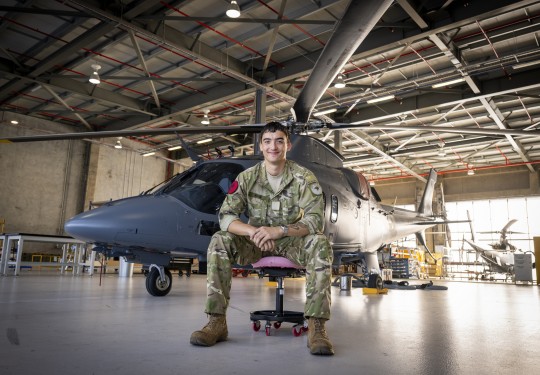
27 February, 2026
From Paihia, in the Bay of Islands, the 19-year-old credits a scholarship to Dilworth School in Auckland when he was eight years old for his progress.
Being away from home at an early age taught him resilience and independence, an experience that made his journey into the RNZAF “so much easier”.
“I loved military life and found it wasn’t so different from boarding school. At school I studied hard, played a lot of sport and made strong friendships – and my approach to military life is no different.”
He decided early to join the RNZAF but had to wait until he turned 18 to attend basic training at RNZAF Base Woodbourne, in Marlborough.
After graduation, Aircraftman Kingi did his 16-week primary trade training (the Aeronautical Engineering Fundamentals Course) where he learned core knowledge and skills such as maintenance practices and processes, science and workplace safety.
He then began a 45-week in-depth Avionics Mechanics Course, which included theoretical and practical training on the operation of fixed and rotary wing aircraft, their components and systems.
“I learned how to inspect, remove and fit aircraft components, as well as aircraft control systems, hydraulics, fire protection, power plant, propulsion and landing gear.
“The hands-on aspect of the job combined with a natural curiosity about how something works appealed to me. It reminded of working with robots when I was at school - creating something that worked and fixing it when it didn’t,” he said.
“It’s an important job as you’re helping to keep the helicopter safely in the air, but it’s not too stressful as you are supported by a great team.
“You never work alone, and the job is varied. One day I might be replacing a light in a dashboard panel, another I might be cleaning helicopter rotor blades and getting the aircraft ready for flight.”
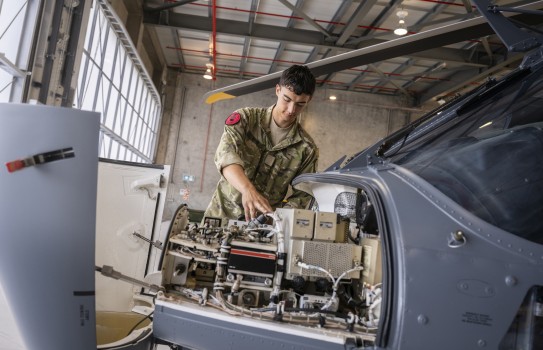
As part of the Avionics Mechanics Course, Aircraftman Riley Kingi learned now to inspect, remove and fit aircraft components, as well as aircraft control systems, hydraulics, fire protection, powerplant, propulsion and landing gear
After successfully completing the Avionics Mechanics Course as a junior Avionics Mechanic, Aircraftman Kingi has been posted to RNZAF Base Ohakea for up to 18 months of on-the-job training.
Then it will be back to Base Woodbourne for a 12-week advanced Avionics Technician course.
Enjoying math and physics at school has given him an edge in his new career.
“Taking the right classes at school certainly helped with initial aeronautical training. Being physically fit and strong significantly helped with recruit training and it’s important I’m always fit and ready to deploy with my squadron when I’m fully qualified.”
When the RNZAF deploys overseas for routine flights, peacekeeping, disaster relief or military operations, avionics technicians are part of the maintenance team to service and repair the aircraft.
“I’m really looking forward to being deployed overseas on exercises and missions and experiencing new cultures and environments,” Aircraftman Kingi said.
“Since joining the RNZAF I have learned a valuable trade – which I can use anywhere in the world - made great friends and enjoy going to work every day.
“Being deployed with No. 3 Squadron to keep our helicopters in the air is icing on the cake.”