Defence, Navy and industry complete sovereign radar tracking trial off Banks Peninsula
The Royal New Zealand Navy, Defence Science and Technology (DST), and Dawn Aerospace, have completed a live radar tracking experiment using a reusable rocket-powered aircraft off the Canterbury coast.

11 March, 2026
The Dawn Aerospace Radar Tracking Experiment (DARTE) involved Dawn Aerospace operating its suborbital spaceplane, Aurora, from Tāwhaki National Aerospace Centre, south of Christchurch, while HMNZS Te Kaha tracked the vehicle using the frigate’s surveillance radar systems.
The trial evaluated the radar’s ability to detect and track a high-altitude, high-speed air vehicle under controlled conditions. By conducting the experiment domestically, the New Zealand Defence Force (NZDF) gained real-world performance data without relying on overseas test ranges.
“DARTE shows the value of New Zealand industry, defence capability and national infrastructure working together with purpose”, says DST Director David Galligan.
“The experiment was designed to build our understanding of how systems perform in realistic conditions and demonstrates the strength of New Zealand’s ability to carry out sophisticated research at home.”
Aurora is a rapidly reusable suborbital spaceplane measuring 4.8 metres in length. During operations it can reach speeds of up to Mach 1.1 and altitudes of 25 kilometres.
This vehicle has paved the way for its upgrade, now in production, designed to reach speeds of up to Mach 3.7 – over 3800km/h - and altitudes over 100 kilometres.
By flying repeatable high-performance trajectories, Aurora provided a controllable and repeatable test vehicle to simulate trajectory profiles relevant to maritime surveillance and defence evaluation.
“We built Aurora because few reusable platforms in the world can match this performance envelope. It brings a completely new level of rapid, repeatable testing to the table for both civil and national security evaluations,” says Stefan Powell, chief executive of Dawn Aerospace.
“Proving out this capability in New Zealand with the NZDF sets the stage for us to deliver similar capabilities around the world.”
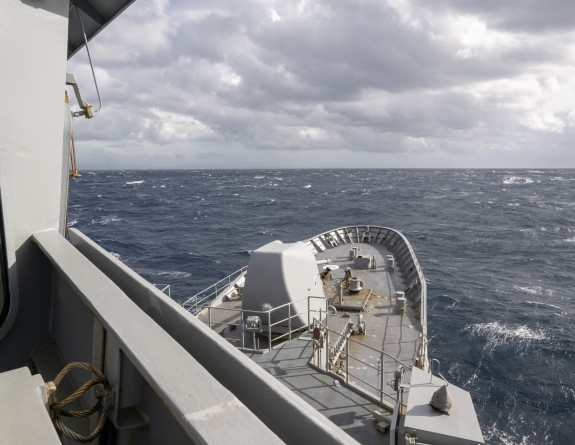
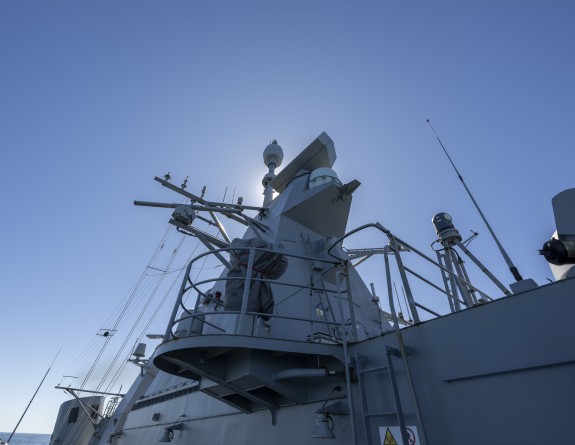

HMNZS Te Kaha has carried out a trial off the Canterbury coast tracking a high-speed rocket-powered aircraft operated by local company Dawn Aerospace.
Dr Galligan said undertaking this work in New Zealand strengthened sovereign defence capability.
“It combines national test infrastructure, defence expertise, and domestic aerospace technology to deliver cost-effective capability development within New Zealand waters.”
Mr Powell said the trial, which had been planned since last year, demonstrated how New Zealand’s aerospace sector could contribute directly to national resilience while supporting industry growth and international collaboration.
It also highlighted the growing role of reusable uncrewed aerospace platforms in supporting defence research and capability validation, he said.
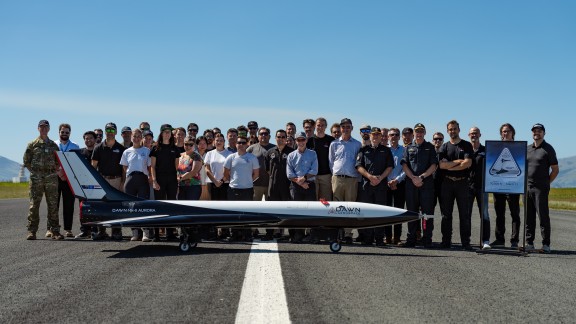
Defence, Navy and industry complete sovereign radar tracking trial video