C-130J Simulator nears next development milestone
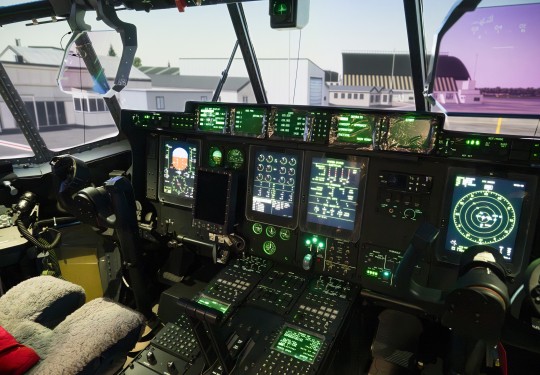
Systems power up, visuals are in place and the engine roars in the new C-130J Hercules simulator, installed at Royal New Zealand Air Force (RNZAF) Base Auckland.
02 March, 2026
While there is still important work ahead before it can be used for training, the project has reached several significant milestones.
Named Perseus after the mythical Greek demi-God, the simulator arrived on base in August in 58 crates weighing 49 tonnes, on two flights in one of the world’s largest aircraft, the C-5M Super Galaxy.
A hero famed for lopping off Medusa’s head, Perseus was Hercules’ half-brother and his great-grandfather.
Now fully constructed and beginning full-motion and systems testing, the simulator is designed to replicate the C-130J cockpit and flight environment with high realism. It will allow crews to rehearse a wide range of scenarios - from emergency procedures to poor weather conditions – all within a controlled, safe environment.
The team was making “steady, deliberate progress”, C‑130J Synthetic Training Centre manager Flight Sergeant Tony Strugnell said.
“There’s still a bit of work and testing ahead of us but we’re tracking towards a mid-year handover from Lockheed Martin to the New Zealand Defence Force. Every week we tick off another important piece of the set-up.”
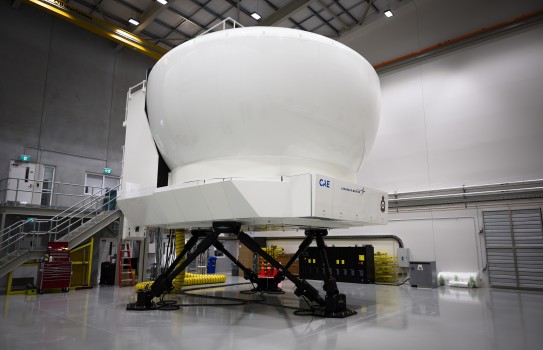
Perseus, the new C-130J Hercules simulator at RNZAF Base Auckland
Once certified, No. 40 Squadron crews will be able to walk across the road for simulator training instead of jumping on a flight to Australia or the United States.
“Being able to train here at home will save time and resources, and reduce the need to fly aircraft purely for training outcomes,” Flight Sergeant Strugnell said.
“The efficiencies will be significant once we’re up and running.”
The visual database is based on one already used in other RNZAF aircraft simulators and has been upgraded specifically for Hercules operations.
That includes adding Antarctic airfields and tactical training airstrips and drop zones in New Zealand, according to Squadron Leader Mel Fieldes from the Future Air Mobility Capability project team.
“We’ve been upgrading the database so we can conduct a range of training scenarios such as short field, grass strip and high-density altitude work,” Squadron Leader Fieldes said.
“The database also has in-built infrared signatures so we can conduct effective training on Night Vision Goggles.
“There are even full sound effects for different types of weather, such as hail and thunderstorms,” she said.
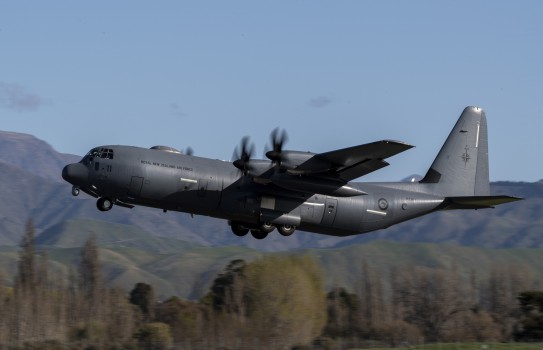
A Royal New Zealand Air Force C-130J Hercules aircraft.
It’s not just pilots who benefit from the simulator. Air loadmasters will be able to conduct weight‑and‑balance calculations the same as in the actual aircraft, and the simulator includes a Virtual Cargo Compartment and Virtual Aircraft Representation System which allows them to rehearse checklist actions both inside and outside the aircraft. Maintainers will also be able to use the system for engine-running training and fault replication.
The project has been ongoing since 2019 and it was great to see this stage nearly at an end, Squadron Leader Fieldes said.
“We’re looking forward to continuing the work towards certification. It will be a real milestone once it’s ready for training.”
Flight Sergeant Strugnell said the multi-national build process had been substantial, with the simulator constructed and tested in the United States before being shipped and reassembled in New Zealand.
“It’s been a long journey to get it to this point, and there’s still more to do. But seeing it come together has been hugely rewarding. It’ll be a great day when the first crew climbs in for training.”