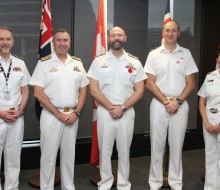
Five Eyes strategic navy talks conclude in Wellington
14 November 2025
Unfortunately you are viewing this website on an outdated browser which does not support the necessary features for us to provide an adequate experience. Please switch to a modern browser such as latest version of Google Chrome, Mozilla Firefox, Apple Safari or Microsoft Edge.
Ngā mihi nui
For Colonel Lisa Kelliher, the New Zealand Defence Force’s (NZDF) newly appointed Defence Adviser to Australia, Canberra represents both professional familiarity and the centre of New Zealand’s most important defence partnership.
New Zealand’s most important defence partnership.
“I’ve spent a significant part of my career here, including some formative years in my professional development,” Colonel Kelliher said.
Colonel Kelliher enlisted in Ngāti Tūmatauenga, the New Zealand Army in 1994 as an Officer Cadet and completed her training in Australia at the Australian Defence Force Academy and the Royal Military College–Duntroon, graduating into the Royal New Zealand Logistics Regiment in 1997.
Her professional ties to Australia continued over the following decades. In 2008, she returned to Canberra to attend the Australian Defence Force Command and Staff Course, where she was recognised as the top international graduate. She later served as Military Adviser to the New Zealand High Commission in Australia for three years from 2019, further deepening her experience within Australia’s defence and strategic policymaking environment.
“These experiences have given me a strong understanding of how defence policy and operations function in Canberra, but just as importantly, they have built enduring relationships on both sides of the Tasman,” Colonel Kelliher said.
While the operational relationship between Australian and New Zealand forces dates back to service at Gallipoli during the First World War, 2026 marks 75 years since the formal establishment of the Australia–New Zealand defence alliance.
Australia remains New Zealand’s only formal treaty ally, a relationship underpinned by deep trust, shared values, and an extensive record of standing together in conflict, stabilisation missions, humanitarian assistance, and regional security operations.
“In an increasingly uncertain global security environment, our alliance with Australia remains steadfast,” Colonel Kelliher said. “It is fundamental to how we protect and advance our shared interests—particularly in the Indo-Pacific—and to how we work alongside our neighbours as trusted and reliable partners.”
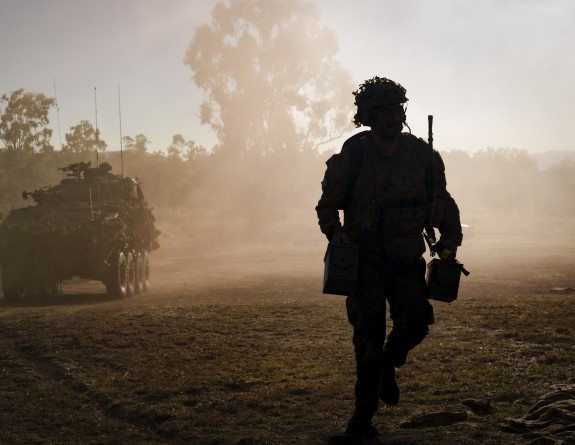
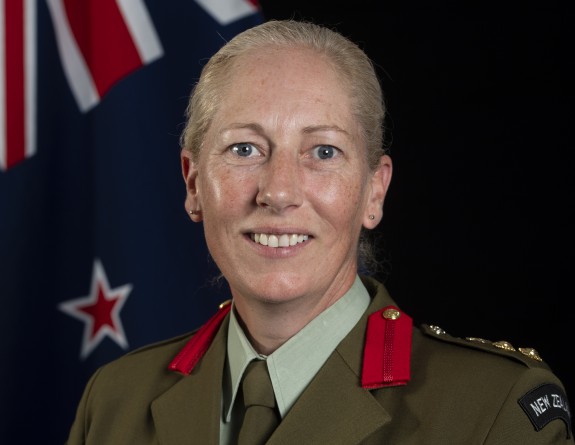
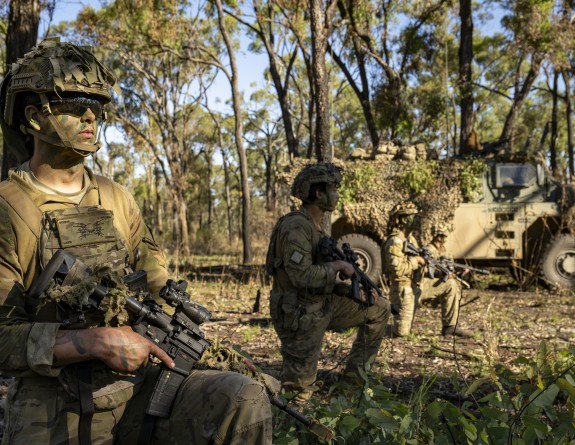
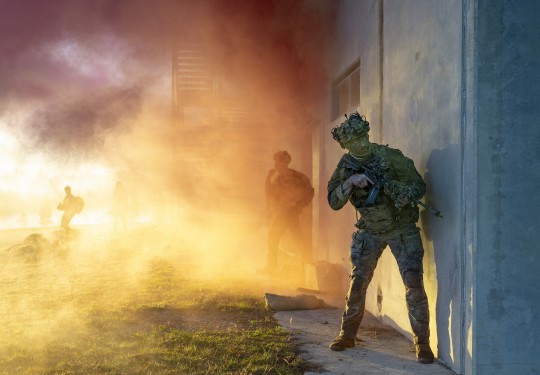
Soldiers from both the New Zealand and Australian armies tested their ever-increasing alignment and interoperability at Exercise Talisman Sabre (left and right) and Colonel Lisa Kelliher (centre).
Both countries continue to pursue an increasingly integrated ANZAC approach—focused on deeper coordination, alignment, and interoperability across the three services, including personnel, capability planning, and operational cooperation.
“This isn’t a new direction, but the natural evolution of an alliance built on decades of cooperation,” Colonel Kelliher said. “We’re seeing more personnel exchanges between both defence organisations, expanded opportunities for joint training, and deeper dialogue on future capabilities and strategic direction.”
She said this is where the Defence Advisor role is particularly important, by providing a familiar and accessible channel to sustain momentum, connect decision-makers and operators, and ensure cooperation remains aligned to changing strategic requirements and shared priorities.
For Australia and New Zealand—whose forces routinely operate together—this sustained liaison is critical to maintaining readiness, shared understanding, and the ability to respond quickly and effectively to regional security challenges.
Today, both nations are continuing to build an increasingly integrated ANZAC force, focused on greater coordination, alignment, and interoperability across the land, sea, air, cyber, and space domains. This effort spans personnel exchanges, joint training, shared capability development, and closer strategic consultation.
The strength of the ANZAC partnership was clearly demonstrated in 2025, when more than 600 NZDF personnel participated in Exercise Talisman Sabre(external link), operating alongside Australian and multinational partners in one of the Indo-Pacific’s largest and most complex military exercises.
Australian Defence Force personnel also supported Exercise Tropic Twilight in the Cook Islands, a New Zealand-led annual activity delivering critical engineering and infrastructure projects across the Pacific—highlighting the alliance’s shared commitment to regional resilience and practical cooperation.
Colonel Kelliher said she is looking forward to a busy schedule of activities.
“As we look ahead to an active program of bilateral and multinational engagements in 2026 and beyond, the ANZAC alliance - seventy five years on - continues to evolve, anchored in history but firmly focused on meeting contemporary security challenges.”
14 November 2025

16 October 2025

14 October 2025

14 October 2025
09 September 2025
11 December 2025

21 October 2025

05 September 2025
07 August 2025