Dedicated doctor receives prestigious Defence Health award
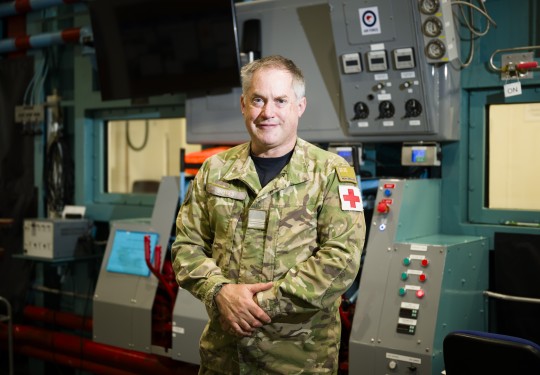
Medical officer Squadron Leader Kit Boyes has been at the forefront of major New Zealand Defence Force (NZDF) deployments over the past 16 years and has experienced workplace tragedies, a global pandemic and high-risk medical evacuations.
01 April, 2026
He has now been awarded the Force Health Organisation Person of the Year for exemplifying the core values and ethos of NZDF. His consistent dedication to the mission and his support for NZDF Health have set a standard of excellence across strategic, tactical, and operational levels.
Squadron Leader Boyes (Ngāti Awa and Ngāpuhi) was born in Lower Hutt, grew up in west Auckland and attended Kelston Boys’ High School.
His early career began in the courtroom as a lawyer. However, wanting something to prod him into getting more exercise, he joined the New Zealand Army Reserves as infantry.
“They sent me on a first aid course, then combat life-saver training, which got me interested in health, so I switched from the infantry to being a medic.
“The military made it all fascinating. I decided to have a bit of an early midlife crisis. I left law and went to medical school.”
After a few years working in a hospital, Squadron Leader Boyes turned his attention to specialist aviation medicine.
In 2010, he joined the Royal New Zealand Air Force (RNZAF), which was “the best place to do that”.
A master’s degree and fellowship in aerospace medicine followed, as well as a GP fellowship, and qualifications in aeromedical evacuation.
“My first large aeromedical evacuation was after the 2011 Christchurch earthquake, shifting people needing hospital care around the country.
“The RNZAF has aeromedical evacuation capabilities unique in New Zealand where we are able to shift a large number of patients a long distance, and to fly in and out of environments civilian air ambulances cannot go.”
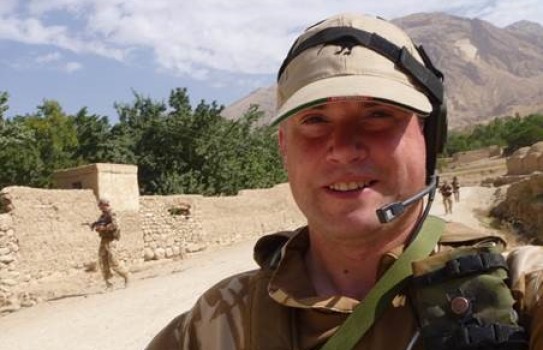
Squadron Leader Boyes on patrol in the Madr Valley in Bamyan, Afghanistan
Since then, Squadron Leader Boyes has contributed extensively to aeromedical evacuations, helping to collect patients from high-risk environments, including from vessels in rough seas, natural disaster zones, conflict zones and Antarctica in the depths of winter.
Deployment to Afghanistan in 2012 brought challenges, including a professional tragedy, but also gave Squadron Leader Boyes the opportunity to make a worthwhile difference.
Recognising soldiers lacked recent training in treating injuries during combat, his unit had taught trauma treatment to NZDF personnel and to Afghanistan security forces. They stocked bases with medical supplies and joined patrols who needed medical professionals.
“During my time in Afghanistan, tragically 13 of the Afghanis we worked with and five members of our team were killed in action, including medic Jacinda Baker.
“But our medical team – including Jacinda – saved casualties who otherwise would have died. The stores we brought and gave out were used and those we trained, treated people who otherwise would have died.”
Another medical challenge was the Covid-19 pandemic, where RNZAF Base Auckland - where he is now based - was at the forefront of activity. It operated as a port of entry and supported international air entry and was one of the largest hubs for personnel staffing the managed quarantine and isolation facilities.
“We donned protective clothing and swabbed people in and out of the country. We checked and escorted stranded and sick New Zealanders home on Defence aircraft. We escorted trapped Pacific Islands workers back to their homes.”
Squadron Leader Boyes was the doctor who took the first positive Covid swabs in Defence and administered the first Covid vaccines to personnel.
He credits the people and teams he works with for ongoing aviation medical successes. Over the years the teams may have changed, but he said they are always “consistently excellent people”.
“Serving in the military is not risk-free. It is not the best paid. The job is often challenging. Families make sacrifices, and I am very grateful for the patience shown by my wife and daughters.
“But it gives you a range of experiences you will and could not get anywhere else. You will meet some of the best people in the world. You will be proud to be in teams with them. And what you do is important, it counts, and it makes the world a better place. There is nothing else like it.”