RNZAF NH90 helicopter reaches global milestone
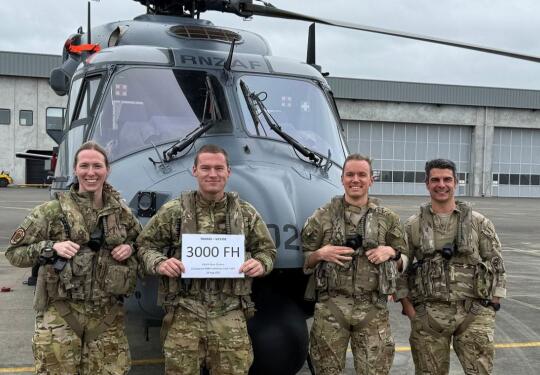
A Royal New Zealand Air Force (RNZAF) NH90 helicopter has made history this week by reaching 3,000 flying hours - the first of the type in the world to mark the achievement.
07 September, 2026
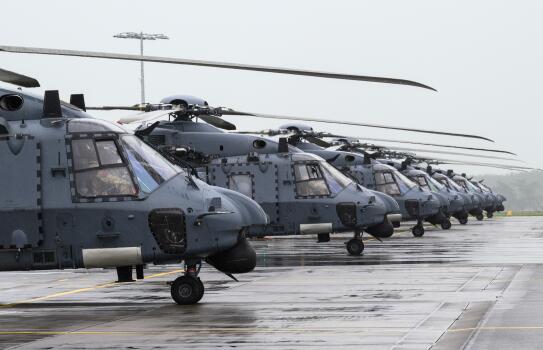
The aircraft was on a normal test flight between RNZAF Base Ohakea and the coastline on Wednesday when the clock ticked over the 3,000-hour mark. The milestone comes as the No. 3 Squadron fleet of eight NH90s clocked more than 20,000 flying hours.
“It's a significant achievement for what is a small fleet and small team,” NH90 Flight Commander Squadron Leader Lachie Johnston said.
“We need to always have these aircraft available to fly and it's a testament to the maintainers, who put in the long days in often trying conditions to get the helicopters flying, as well as the supply chain, and the fleet planners.
“They are the secret sauce to our success.”
Since the NH90s came into service in 2011 they have been central to humanitarian relief responses in New Zealand, including the Kaikōura earthquake and Tropical Cyclone Gabrielle.
They are also a valuable asset for search and rescue missions when conditions don’t allow local rescue helicopters into the search area.
“It’s an incredibly capable helicopter, and I think it serves New Zealand very well,” Squadron Leader Johnston said.
“In recent years there's been a significant demand for domestic HADR (humanitarian assistance and disaster relief) responses and it's a true all-weather platform that is particularly well suited at flying in this environment.
“It can fly long distances, over large bodies of water and has a significant capacity for people and stores.”
Recently the NH90s have flown between Australia and New Zealand, via Norfolk Island, a relatively daunting prospect in a helicopter, but Squadron Leader Johnston said it spoke to the capability of the aircraft and its design standard.
“We're clearly confident in the safety of the aircraft and it being able to fly those sorts of missions. It's incredibly well set up for overwater flight.
“The squadron relies on detailed maintenance planning to ensure maximum economies and efficiencies to provide the highest number of flying hours for the airframes. Both operators and maintainers need to work in concert to ensure today’s flying does not detrimentally impact future availability.
“The early members of the project team put systems in place that are still bearing fruit to this day.”
Airbus works alongside NH90 maintainers and the team lead for the NH90 programme, Patrick Power, has worked continuously on the platform since its introduction. He recalled the Kaikōura earthquake response and arriving in Christchurch with three NH90s to deliver critical aid and evacuate stranded civilians.
"Trucks would arrive with aid and we would load it onto the helicopter, they would depart for Kaikōura, and return with a full load of people. We would load it again, repeating that cycle many times a day." Maintainers also had to keep up with the intense pace on the ground.
A similar story unfolded during Cyclone Gabrielle in February 2023.
Mr Power was serving as Hangar Manager at the time, in charge of day-to-day maintenance. Seven of the eight NH90s were immediately available, with the maintenance team ensuring the last one was able to join the fleet and deploy that day.