NZDF support to Ukraine: Op Tīeke video series
In this exclusive video series, we take you behind the scenes of the New Zealand Defence Force's (NZDF) support to Ukraine.
02 December, 2025
For more than three years, NZDF personnel have been deploying to the United Kingdom and Europe to help turn civilians into soldiers as part of the international community’s efforts to support Ukraine’s self-defence against Russia.
The eight five to six minute videos take you on a journey to discover what NZDF personnel have contributed on Operation Tīeke. On top of the eight episodes, there are three reflection videos, through their eyes on deployment.
You can view all the videos below or watch on YouTube here(external link)
Episode 1: Operation Interflex
In this episode, the United Kingdom’s Training Delivery Unit 2 Commanding Officer, Lieutenant Colonel Rob Porter, tells us how for three years Operation Interflex has been taking Ukrainians with no military experience and turning them into soldiers. New Zealand might be the furthest from the conflict, he says, but the output provided by the Kiwis is huge.
Episode 2: Trident Training Company
In this episode, we watch as the six nationalities which make up ‘Trident Company’ put the Ukrainian trainees through their paces. It’s not just about what the countries pass on to the soldiers, but how each country can leverage each other’s knowledge, all towards the defence of Ukraine.
Episode 3: Basic Recruit Training
In this episode, we see how the instructors handle a variety of ages and skills as they turn civilians into soldiers through basic training. Some Ukrainians are young and fit, others are older and slower, but there’s no time for general fitness or marching. They need every skill the instructors can provide, to give them the best chance in a fight.
Episode 4: Essential Soldiering Skills
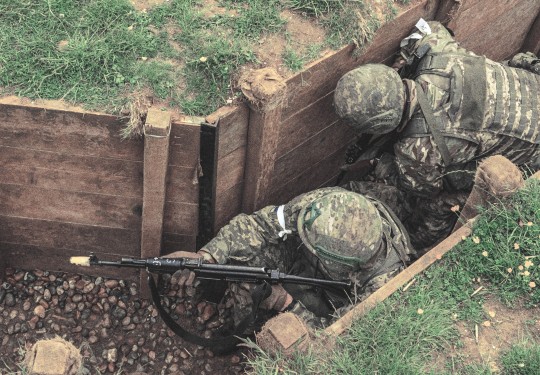
In this episode, we see factory workers and taxi drivers, between 25 and 60, being taught basic soldiering skills. Field craft, weapon handling, camouflage, concealment are drilled over and over, conversation becomes hand signals, and teamwork becomes second nature.
Episode 5: Tactical Combat Casualty Care
In this episode, the trainees are taught to save lives on the battlefield. Tactical Combat Casualty Care – TCCC – is using a repertoire of basic life saving skills using tourniquets, bandages, chest seals and blankets, in lessons designed to be as realistic as possible.
Episode 6: Counter Explosive Ordnance
In this episode, the trainees learn to deal with explosive ordnance, tackling minefield navigation and extraction, dealing with Improvised Explosive Devices (IEDs) and chemical and biological attacks – all possibilities on the battlefield in Ukraine.
Episode 7: Drone Warfare
In this episode, we see how the insect-like whine of a cheap drone can mean only seconds to react. The recruits are confronted with the predator-like devices, possibly attached with bombs, during exercises and are taught how and when to engage them and when to hide.
Episode 8: Training the Trainers
In this episode, it’s the role of our instructors to ‘train the trainers’ – building an element of self-sufficiency to Ukraine by providing instructor training to experienced Ukrainian soldiers, so they can train their own trainees.
Reflections - Connections
Instructor A discusses what drives him to do his best for Operation Tīeke.
“If I can keep one of them alive to come home to his family, that’s what motivates me.”
Reflections - Moral Compass
Instructor B reflects on being on the right side of history.
“If I could talk to New Zealanders back home and tell them about what we're doing here, I would want them to know that what we're doing here is important. It's standing up for our values. It's standing up for people who share the same values as us.”
Reflections - From the frontline
A Ukrainian instructor says he will continue the fight, as long as he can.
“The first few days, I felt fear. But I knew that if I didn’t stand up for my country, no-one would stand up for her. Thank you to all the partners that are helping Ukraine.”
Learn more about our support to Ukraine
Learn more about our support to Ukraine on the Operation Op Tīeke feature.