NZDF and partners drill for Pacific emergency response
New Zealand Defence Force personnel joined forces recently with military partners and other government agencies to rehearse procedures for a humanitarian assistance and disaster response to a tropical cyclone in the Pacific.
08 October, 2025
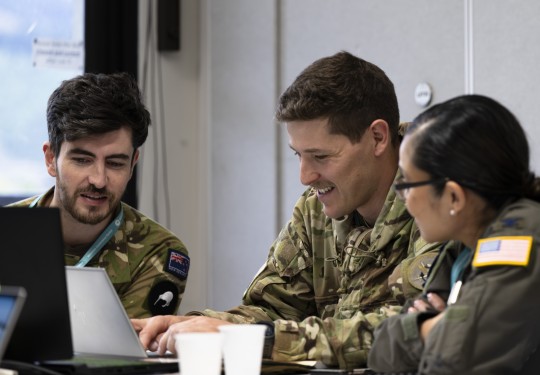
Exercise Pacific Manaia, held in Wellington, was based around a realistic and serious scenario - a category five cyclone, hitting Niue. The aim of the exercise was to test procedures and determine actions each agency will take in a disaster response, taking into account environmental and resource limitations.
“While we hope an event like this doesn’t occur, we know it’s important to continue to test our planning and procedures so that if we’re called on to respond in a disaster, we understand how to work together effectively during an emergency response,” says Colonel Anthony Childs.
The exercise comes ahead of the high-risk weather season, a period from November to April when tropical cyclones are more likely to develop in the Pacific.
Under the exercise scenario, aid would be airlifted in, New Zealanders and approved foreign nationals airlifted out, infrastructure would be assessed, and light engineering works carried out.
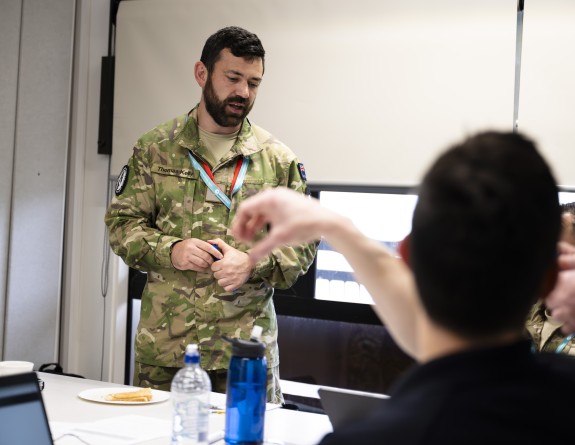

COL Childs is the Commander of the Deployable Joint Inter-agency Task Force Headquarters, whose personnel would be among the first to deploy in a natural disaster in the Pacific.
The deployable headquarters provides the critical capability of command and control of a Joint Task Force undertaking joint, inter-agency and multinational operations.
“That means working with experts from other agencies, understanding complex situations, problem solving, and commanding assets and expertise to deliver an emergency response that helps communities,” he said.
“The NZDF wouldn’t be the lead agency in an emergency response like this. We would be working alongside others to determine which specialist NZDF capabilities could be used in the response and then helping direct those assets to where they would be needed most. Close relationships with other military organisations, and an understanding of what capabilities they could bring, could be critical in getting support to communities in remote locations.
“This year’s exercise tested planning and briefing skills and built relationships across government agencies and with partners in the Pacific so that we understand each other’s perspectives and capabilities.”
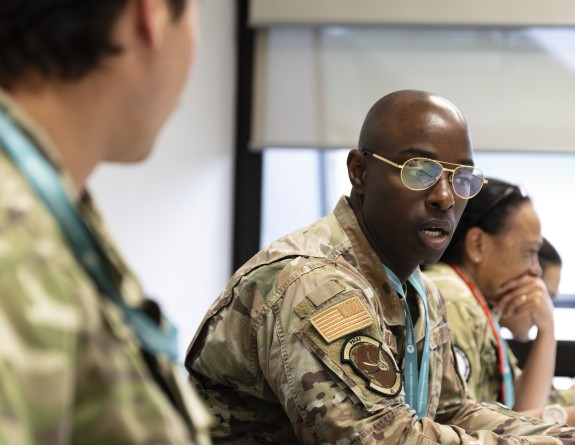
About 40 personnel and staff were involved in the exercise. Representatives from the Ministry of Foreign Affairs and Trade, Fire and Emergency New Zealand, the National Emergency Management Agency, New Zealand Police, Republic of Fiji Military Forces, Pacific Response Group, and a team from the United States Air Force were involved.