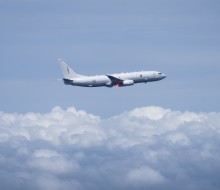
Royal New Zealand Air Force joins anti-submarine warfare exercise in Guam
10 March 2026
Unfortunately you are viewing this website on an outdated browser which does not support the necessary features for us to provide an adequate experience. Please switch to a modern browser such as latest version of Google Chrome, Mozilla Firefox, Apple Safari or Microsoft Edge.
Ngā mihi nui
New Zealand Army soldiers and their Pacific counterparts have been pushed to their limits in a fiercely contested 1st (NZ) Brigade Skill at Arms competition at Waiouru in the central North Island.
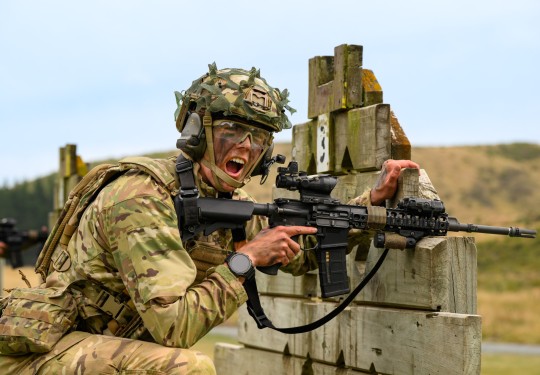
Ten teams from across the brigade (including three Reserve Force teams) were last week joined by Australians, Fijians and, for the first time, a team from Tonga’s His Majesty’s Armed Forces.
The three-day competition is designed to push soldiers to their limits, testing core fighting skills, endurance, teamwork, and leadership in challenging conditions under pressure.
Jubilant soldiers from 5th/7th Battalion, Royal New Zealand Infantry Regiment eventually scooped all three trophies; the Falling Plate trophy (a shooting competition testing both shooting accuracy and speed) and the Top Reserve Force trophy – winning bragging rights for one of the NZ Army’s most demanding and respected competitions.
The competition simulates a range of all-arms scenarios including close combat and open combat across a variety of environments and is set at a level that makes it accessible to all trades within the brigade whilst ensuring high standards and a combat focus.
The trades include mechanics, drivers, engineers and artillery competing against infantry soldiers and gunners.
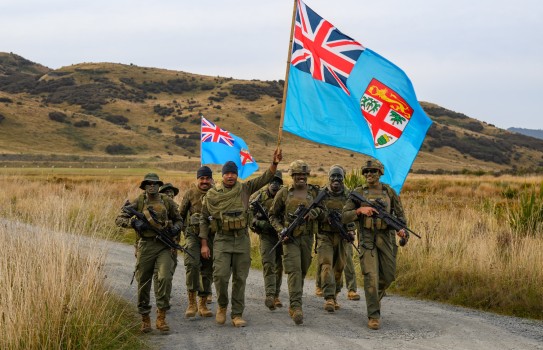
Soldiers from the Republic of Fiji Military Forces declined wet weather gear to test themselves further during the competition
Training Warrant Officer, Warrant Officer Class One (WO1) Paul Buckley, says Skill at Arms is more than just a competition, it’s a snapshot of where the soldiers are excelling and what areas need more work.
“All soldiers – combat and combat support services - must display core soldering skills of weapon handling, fitness and combat shooting techniques,” he said.
The soldiers are challenged when they’re cold, tired, wet and under time pressure. They covered around 20km carrying packs weighing 30kg while tired and on minimal food and sleep.
“These tests identify their physical and mental strength, painting a picture as to how soldiers will perform in arduous and austere conditions in potential combat situations,” WO1 Buckley said.
“Specific challenges like the pond swim in cold conditions and driving rain test their resilience and teamwork. We want to see teams digging deep and encouraging each other when the going gets tough."
“That’s what soldiering is all about – world class combat skills, integrity, courage, commitment and comradeship.”
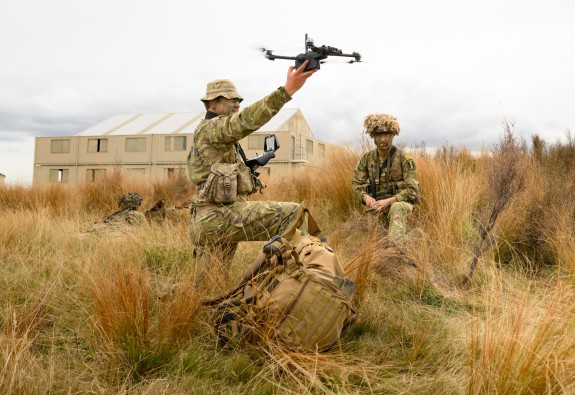
As part of the competition, soldiers deploy Unmanned Aircraft Systems (UAS).
The competition also provides a vital opportunity to forge deeper relationships in the region.
Fiji’s Lance Corporal Timothy MacPherson says the weather was challenging but his team embraced the cold and rain.
“We chose not to wear wet weather gear so we could make the experience as hard as possible. This is what we may encounter overseas so we need to be able to perform.
“Everyone expected the pond swim to be our weakest point and when we got in, we couldn’t feel our legs. But our spirit got us through and we scored 1000 marks out of a 1000.
“When we heard that, we were shouting like it was the end of the competition.”
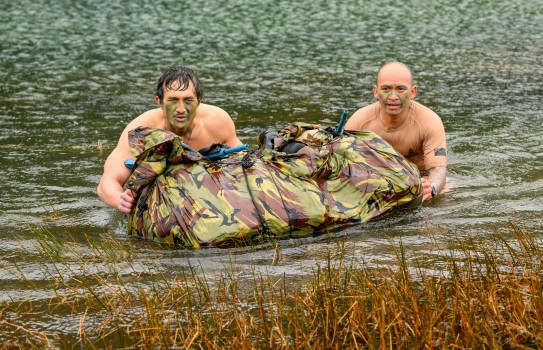
Soldiers embraced the cold and rain during the pond swim, pushing them to their limits in adverse conditions
1st (NZ) Brigade Commander, Colonel Mike van Welie, says forging deeper relationships in the region is vital.
“The threats to our nations are too much to weather alone, but together we can harness our individual strengths and secure our region.
“There are a range of pressures that affect our region from climate change to strategic competition. Each of these things impacts our security as a nation and people's feelings of security and safety.
“Our military is the nation's insurance policy, and we must be ready at short notice for whatever might happen.
“Skill at Arms and other exercises where we work closely with our ally Australia and our Pacific friends builds mutual trust and collective capability.
“We know that we can respond together to challenges in our region. In short, we have each other’s backs.”
Observers from Vanuatu and Papua New Guinea observed the competition with a view to sending teams next year.
10 March 2026
07 February 2026
08 December 2025
25 July 2025
26 February 2026
11 December 2025
13 November 2025
21 October 2025
20 October 2025