NZDF teams with Customs to monitor Pacific regions
03 September 2026
Unfortunately you are viewing this website on an outdated browser which does not support the necessary features for us to provide an adequate experience. Please switch to a modern browser such as latest version of Google Chrome, Mozilla Firefox, Apple Safari or Microsoft Edge.
Ngā mihi nui
Exercising the tactical defence of Malaysia and Singapore is an enduring task with a lot of training benefits for the New Zealand Defence Force (NZDF), says Squadron Leader Pete Jackson.
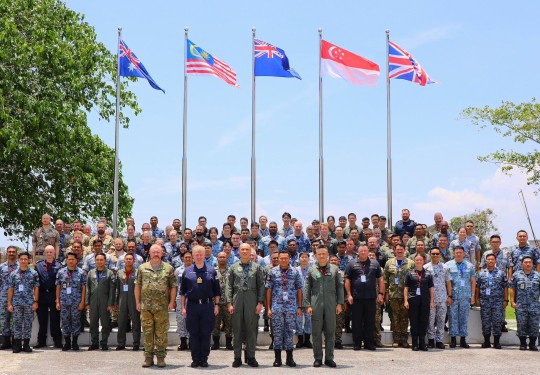
As NZDF Senior National Officer, he and his contingent have just returned from Exercise Bersama Shield, one of three annual exercises in the Five Power Defence Arrangements’ (FPDA) calendar.
The three-week exercise is a key component of the FPDA, a multilateral security arrangement involving Australia, Malaysia, New Zealand, Singapore and the United Kingdom.
Bersama Shield runs across Malaysia, Singapore, and the surrounding air and maritime regions. It is designed to exercise combined joint operations in complex, multi-domain scenarios across land, sea, air and cyber environments.
Outcomes include strengthening interoperability and reinforcing military partnerships, in particular reaffirming New Zealand’s commitment to security in the South-East Asia region.
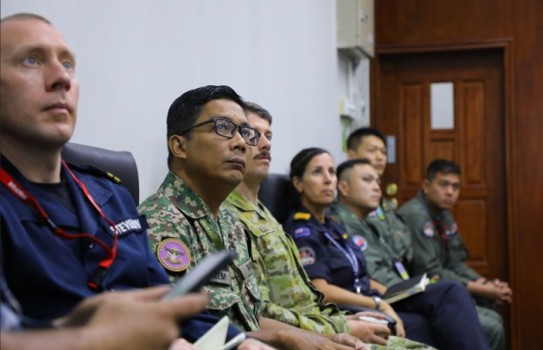
The exercise scenario, a multi-threat environment off the coast of Malaysia, provides useful training opportunities for New Zealand’s eight-person contingent, who were utilised widely, says Squadron Leader Jackson.
“We had two in Combat Plans, developing and issuing the 72-hour air task orders for aircraft. Three were in Combat Operations and the Communications Team, monitoring the status of exercise participants. We provided an NZDF legal officer to provide legal advice on matters such as rules of engagement and the Law of Armed Conflict, and personnel assigned to safety matters.”
Preserving the FPDA relationship is important, but a key benefit is having NZDF personnel practising their skills in a complex South-East Asia environment, he says.
“Those augmenting the headquarters are often adapting their trade specific skills and knowledge to a broader, operational role.
“Few of the personnel I deployed with had participated in multinational activities, and it was rewarding to see them perform well.”
It was a first time for engineering officer Flight Lieutenant Diardu Terblanche, who put his hand up as soon as he saw the notice posted on the internal net.
“I was the national safety officer. I was a bit nervous about the role but I wanted to get the experience and I knew I could do it.
“My main job was to investigate safety reports and help ensure safety for the entire exercise. New Zealand didn’t have an aircraft or ship at the exercise which certainly made my life a lot easier.”
“For me, doing this shows the FPDA is strong. It was a great experience doing something new in a different country.”
Established in 1971, the FPDA is the longest standing multilateral defence arrangement in Southeast Asia, representing more than five decades of collaboration, trust and collective commitment to regional stability.
Exercises such as Bersama Shield remain critical to ensuring the FPDA continues to adapt to contemporary security challenges while promoting cooperation and preparedness among partner nations.
Preserving the FPDA relationship is important, but a key benefit is having NZDF personnel practising their skills in a complex South-East Asia environment, he says.
“Those augmenting the headquarters are often adapting their trade specific skills and knowledge to a broader, operational role.
“Few of the personnel I deployed with had participated in multinational activities, and it was rewarding to see them perform well.”
It was a first time for engineering officer Flight Lieutenant Diardu Terblanche, who put his hand up as soon as he saw the notice posted on the internal net.
“I was the national safety officer. I was a bit nervous about the role but I wanted to get the experience and I knew I could do it.
“My main job was to investigate safety reports and help ensure safety for the entire exercise. New Zealand didn’t have an aircraft or ship at the exercise which certainly made my life a lot easier.”
“For me, doing this shows the FPDA is strong. It was a great experience doing something new in a different country.”
Established in 1971, the FPDA is the longest standing multilateral defence arrangement in Southeast Asia, representing more than five decades of collaboration, trust and collective commitment to regional stability.
Exercises such as Bersama Shield remain critical to ensuring the FPDA continues to adapt to contemporary security challenges while promoting cooperation and preparedness among partner nations.
03 September 2026
14 November 2025

16 October 2025

14 October 2025

14 October 2025
09 September 2025
10 July 2026
11 December 2025

21 October 2025