Navy’s largest ship sails into its New Plymouth home port
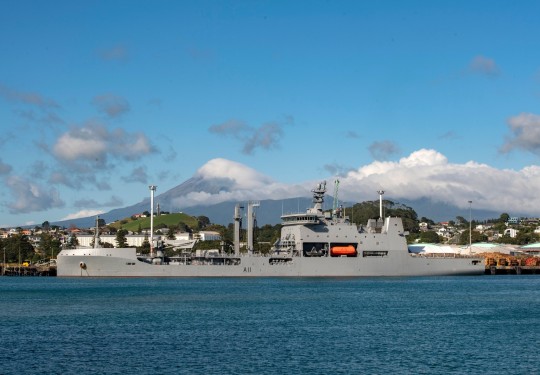
The Royal New Zealand Navy’s maritime sustainment vessel, HMNZS Aotearoa, sails into New Plymouth, Ngāmotu this week, for a six-day home port visit, which will include Waitangi Day celebrations and a ship open day.
04 February, 2026
Since last in its home port in 2023, the ship and crew has sailed to Antarctica on a resupply mission to McMurdo Station and Scott Base; conducted a series of replenishments at sea and port visits in Asia; and supported the United Nations Security Council sanctions against North Korea.
Public open day:
The Commanding Officer of Aotearoa, Commander Rob Welford, and the ship‘s company, would like to welcome the public to tour the ship on Saturday, 7 February.
“This is very much their ship and we’ll be very proud to show them around,” said Commander Welford. “Everything about our Navy’s largest-ever ship is big – in capability and capacity – so there will be plenty to experience while on board.”
Where:
- Public tours of Aotearoa will begin and end at Port Taranaki’s East Gate, on Ocean View Parade, adjacent to the New Plymouth Yacht Club.
- The waiting area for buses will be in the tree-covered area near the children’s playground at Ngāmotu Beach.
- Buses will take groups to the vessel and return to the same location.
- Public parking is available along Ocean View Parade and the adjacent reserve.
When:
Saturday, 7 February 2026
Time:
10am to 3.30pm
Note: There are likely to be queues so to avoid disappointment get there early.
What to bring:
- It is a condition for access to Port Taranaki for all visitors over the age of 16 to carry Photo ID.
- Visitors should come dressed for the elements, wearing suitable footwear for a tour of the ship (closed toe with gripping soles – not jandals or high heels) and bring water.
- Don’t forget the camera and plenty of questions to ask our sailors.
Please note: The tour of the ship involves narrow access ways and a number of stairwells making access difficult for those in wheelchairs or with limited mobility.