
NZ Army conducting stability and security training in Whanganui
12 August 2026
Unfortunately you are viewing this website on an outdated browser which does not support the necessary features for us to provide an adequate experience. Please switch to a modern browser such as latest version of Google Chrome, Mozilla Firefox, Apple Safari or Microsoft Edge.
Ngā mihi nui
Layer by layer, system by system and exercise by exercise, the New Zealand Army is generating a Motorised Infantry Battle Group (MIBG) and preparing to deploy it into the field.
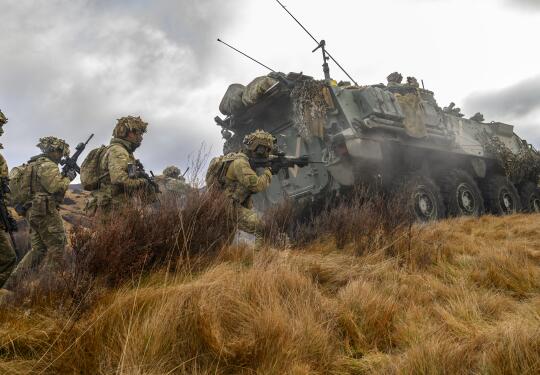
Land Component Commander, Brigadier Jason Dyhrberg, says Exercise Hill 60 – the Army’s principal force generation activity for 2026 – is the latest in a series of exercises to progressively generate the New Zealand Army’s MIBG – a formation based on the 1st Battalion, Royal New Zealand Infantry Regiment, a Linton-based unit that is equipped with NZ Light Armoured Vehicles and Bushmaster Protected Mobility Vehicles. With the addition of enabling capabilities and an opposition force being provided by the 2nd/1st Battalion, Exercise Hill 60 peaked at 700 personnel in the field.
“The New Zealand Army generates combat-capable land forces to make sure that we can both defend New Zealand and protect its interests. The MIBG is our largest military response option that we're required to provide under the NZDF Defence Output Plan,” Brigadier Dyhrberg says.
The ongoing generation of the MIBG will ensure that, as part of a wider NZDF commitment, the New Zealand Army is prepared to credibly contribute to multi-domain combat operations with our ally, Australia. This will be tested in the second half of 2027 when the Army intends to deploy an MIBG of up to 900 personnel and more than 200 vehicles to Exercise Talisman Sabre. This is a major international exercise with nearly 30 nations expected to participate.
“The MIBG includes a range of enabling capabilities that allows it to undertake “combined arms” operations – adding critical capabilities such as artillery, engineers, logistics, communications, health, and intelligence ensures the MIBG’s effectiveness across a range of different activities.” Brigadier Dyhrberg says.
For the personnel involved, it means testing themselves, and their training, their systems and processes – and their resilience over 16 days in the field, which for some of the infantry involved in the exercise, included a 12-kilometre night-time dismounted infiltration in temperatures well into the negatives and several inches of snow.
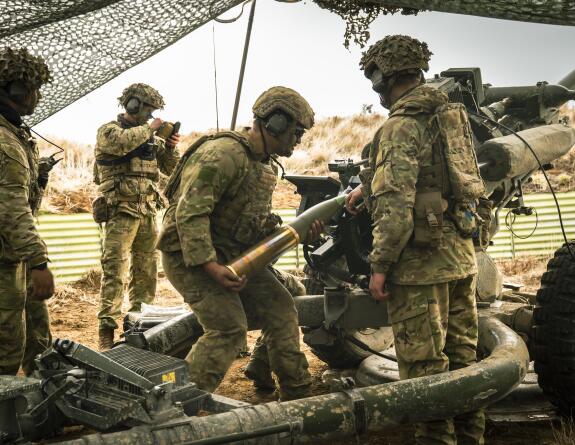
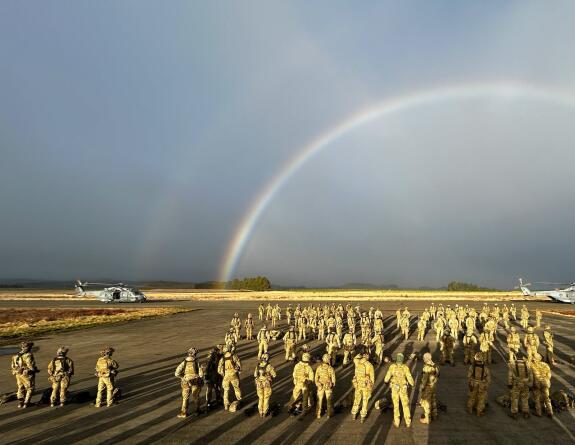
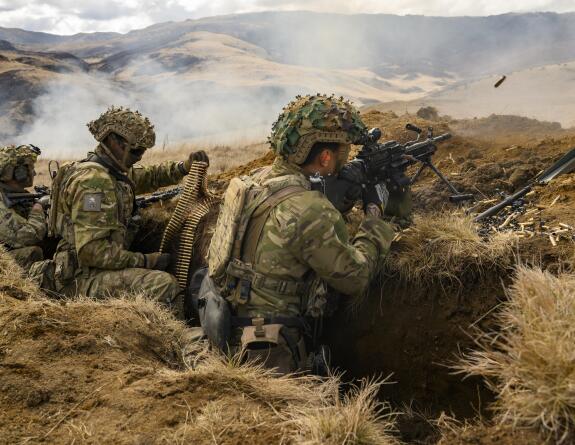
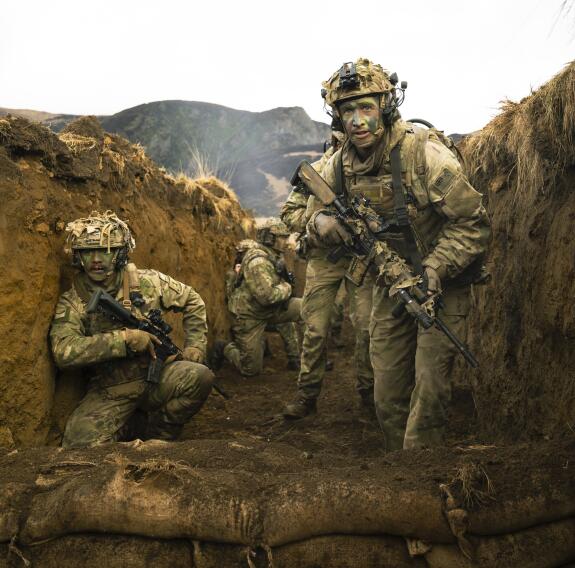
New Zealand Army soldiers and the Royal New Zealand Air Force train during Exercise Hill 60.
“Last year we committed about 250 personnel to Talisman Sabre 2025. This was a great opportunity for us to integrate a land combat capability into an Australian Army formation. We are now looking to scale that up for the next Talisman Sabre in 2027,” Brigadier Dyhrberg says.
“Exercise Hill 60 is a major step forward in the generation of the MIBG. Not only has it allowed us to practice combat operations at our largest scale, but it has enabled us to test some of the new communication nodes that have been delivered by the Network Enabled Army Programme, and to learn some valuable lessons on how we need to operate in an environment with a persistent drone threat.”
“The New Zealand Army sending the MIBG to Exercise Talisman Sabre will be major undertaking for an organisation of our size. We know that we produce great soldiers that are at least as good as their international peers. Our ability to successfully integrate the MIBG into 1st (Australia) Division – a formation of about 17,000 personnel – on that exercise will further build on that strong reputation.” Brigadier Dyhrberg says.
12 August 2026
10 March 2026
07 February 2026
08 December 2025
01 October 2026
17 September 2026
07 August 2026
04 June 2026
25 July 2025