SNIFFING FOR EXPLOSIVES
04 March, 2026
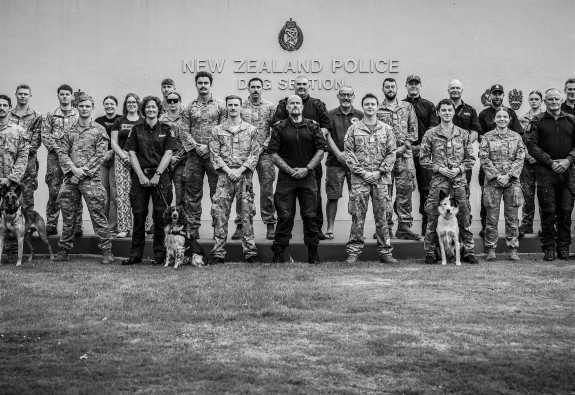
The New Zealand Defence Force has championed a top-level home-made explosive detection exercise for NZ Government and coalition partners who employ dogs to detect the presence of potential explosive threats.
There’s everything at stake for Wella, a six-year-old black labrador.
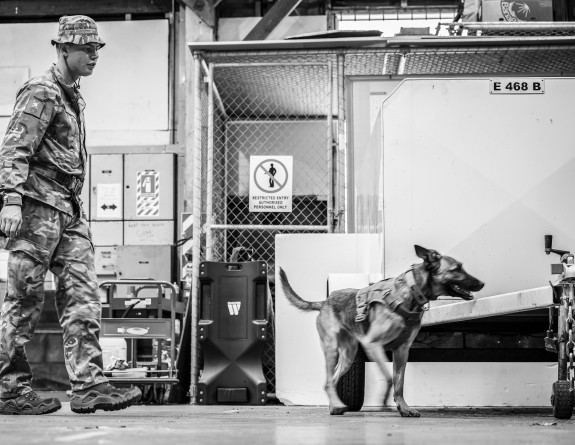
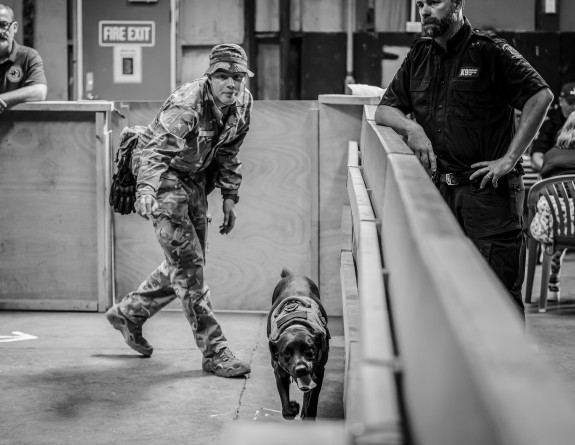
She’s an Explosive Detector Dog (EDD) with 2nd Field Squadron, 2 Engineer Regiment, Royal New Zealand Engineers, under the direction of Lance Corporal Henry Wallace. She seems barely aware of the long leash as Lance Corporal Wallace manages her through a methodical sweep of a lounge and kitchen in a sports pavilion at Davis Field, opposite Trentham Military Camp.
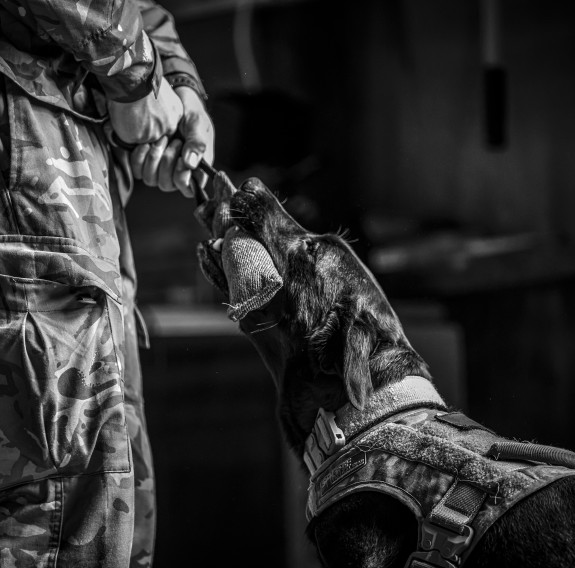
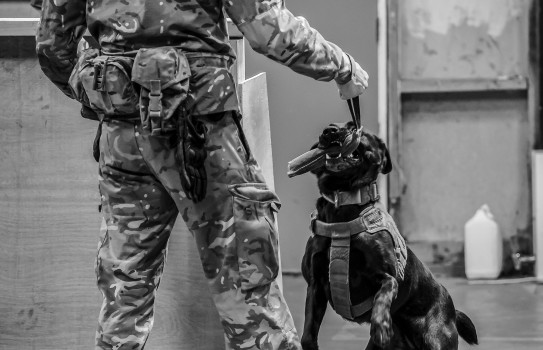
There’s a doggie double-take moment for her in front of a cupboard. Wella stares at the handle, frozen. And then she sits. You can tell Wella knows she’s right, that in front of her, hidden in the cupboard, is a small amount of explosive. She’s quivering slightly, thrilled she’s found it and knowing her handler is going to reward her. The chew toy, the squeaky ball, the game of tug-of-war is her ultimate incentive to work.
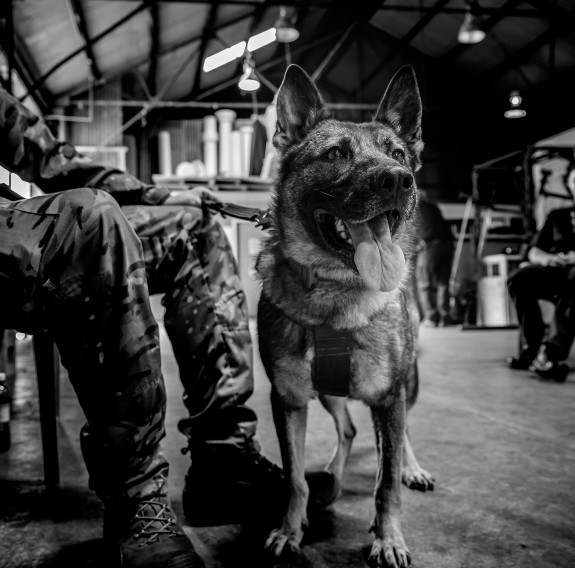
Wella’s moment of success is part of a multi-agency week-long exercise involving the detection of home-made explosives, on a scale and complexity not seen before in New Zealand. Hosted by the New Zealand Defence Force, the invite list has 20 teams of EDDs and handlers from the NZDF, Australian Defence Force, New Zealand Police and Aviation Security. And it’s not all about the stereotypical ‘tough’ dog. Mixed among the Belgian malinois and German shepherds are English springer spaniels, labradors, and collie-crosses.
It might be a collection of mixed breeds, but they all have what it takes: a drive to succeed and earn the praise and the prize. The New Zealand Army has a strong legacy of EDDs in service, including missions to Afghanistan from 2012 to support New Zealand’s Provincial Construction Team.
Outside the pavilion is NZDF Military Dogs Capability Manager Alan Inkpen, who has the air of a man watching everything click together after some formidable organisational and logistical sweat. His aim, in partnership with the EDD teams from the Royal Australian Engineers, was pretty high, especially with dogs making the complex cross-border trip.
He’s created an exercise where each day, each dog team is tested with a different sample of home-made explosive. The samples are based on the most recent operational knowledge on what are likely to be the biggest home-made explosive threats to New Zealand. And unusually, the samples, made on-location by scientists from the NZDF’s Defence Science and Technology, are much larger than normal and made with ‘real time’ materials.
He knows the dogs can find the standard samples they’ve been trained on over and over. But can the dogs do the math with something that’s not quite the same in terms of size or chemical makeup?
Obviously, the best outcome is a dog goes in a room, goes, ‘I remember that smell, that’s linked to me getting my reward. I’m confident.’ And it indicates.
What he wants to test is the ‘family theory’ of explosives, where explosives are related in terms of the same base component and a primary odour.
“Some of these dogs haven’t been exposed to some of the samples,” he says. “And at the same time, we can’t provide the dogs with every kind of explosive.”
So it’s crucial for the handler to read their dog, he says.
“We push the handlers on identifying the changes in the dog’s behaviour. If we use another brand of explosive, the dog might not be perfect, it might get confused, but its behaviour will change. The handler must be able read their dog and inform the search team. The quicker we find it, the safer we are.”
But why should a larger size of explosive be a problem? For a dog, surely that’s going to be like all Christmas’s coming at once?
An increased sample size is another risk of confusion for the dogs, says Alan.
“What we know is that every scent has a vapour pressure – the force of the smell. You open a can of diesel, that ‘force’ hits you. Every substance has that different level of pressure and in bulk, that scent picture changes. The dogs might get confused because it’s just too big.”
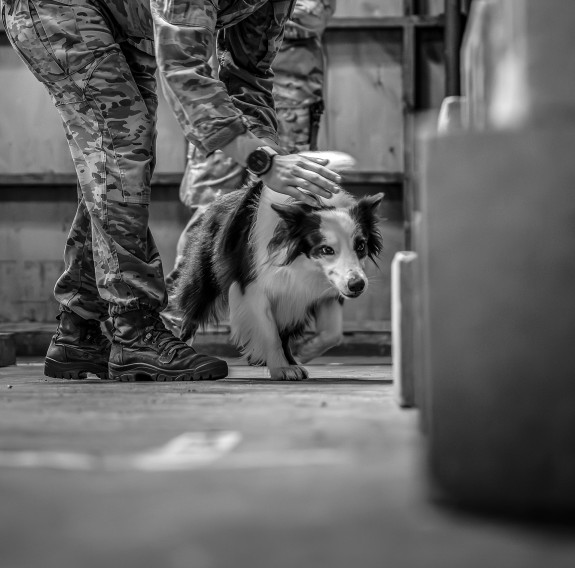
The pavilion is one of many venues being used in and around Trentham Military Camp. With each location, the sample is hidden and given a 10-minute ‘soak’ before the first dog enters. As each day passes, and the dogs take turns with each hidden sample, each location is used up in terms of lingering scents. Each day needs a new venue. The team are cataloguing the three outcomes – ‘No response’, ‘Change of Behaviour’ or ‘Indication’ for each sample, keeping the dogs and handlers anonymous. A few days in, and the dogs seem to be absolutely nailing it, regardless of different or related odours or sample sizes. Lance Corporal Wallace says Wella has done well.
“She’s gone pretty smoothly,” he says. “Even if it’s not something she’s exactly smelt before, she’s recognised it’s in the ballpark, it has the same makeup as other odours she knows.”
He’s also enjoying the networking opportunities.
We usually work with the New Zealand Police, but having the Australians come over has been great. It’s really cool to see how different nations do their stuff.
The six Australian Defence Force EDD teams are waiting their turn, enjoying the relative cool of a 22-degree sunny morning in Upper Hutt. It’s the first time the Australians have come to New Zealand for this kind of training, another reason why Alan had to make it worth their while.
Sapper Chloe Leifels, of 2nd Combat Engineer Regiment in the Australian Army’s 7th Brigade, has been working with four-year-old black labrador Jasper for over a year.
“He’s gone quite well over this week. I’m very happy with how he’s going. He’d only had a bit of exposure prior to this course, and three of the odours this week were brand new to him.”
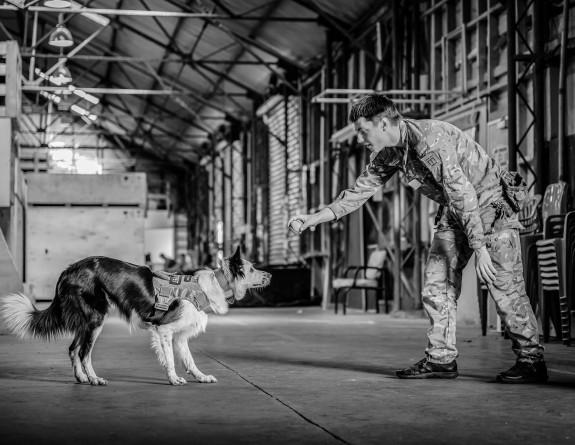
She says it’s also an opportunity to see the differences in training, and different kinds of equipment being used with the dogs. Some trainers, particularly on the military side, prefer to have the dogs on the leash, albeit a long one, while others let the dogs have free rein.
Aviation Security dog trainer Steve Pike, who came with three teams of dogs (Auckland, Wellington, Christchurch), says their search scenarios allow more free rein movement.
“The military have a more controlled search because that’s their environment, while our work is airside and that’s a safer environment,” he says.
Working with significant samples has been very useful for them, he says.
Early on in the week it showed that our dogs train on these sample types on a regular basis. But the different scent pictures created by the NZDF team has been a fantastic opportunity for our dogs to work on odours with slightly different compositions. Multi-agency exercises are always good for getting different perspectives, training techniques and of course comparing our capability.
Emily, a senior scientist at Defence Science Technology, is also watching the action at the pavilion. She made the explosive samples at Trentham with the support of the New Zealand Army’s Explosive Ordnance Disposal (EOD) Squadron. It wasn’t the sort of thing that could be made at their headquarters in Auckland and then transported. Some of the samples were sensitive.
“We had a discussion with EOD about what size could be safely managed,” she says.
“This is the first time we have prepared training samples for dogs, and for some dogs it’ll be the first time they’ve been exposed to some of these explosives. It’s really valuable to observe how the dogs respond, particularly to those samples.
“It’s a great experience for DST to link in with operational units and develop a new capability to help provide accurate and real-world training for such a high-value activity.
“It’s been really rewarding to see the dogs do well.”
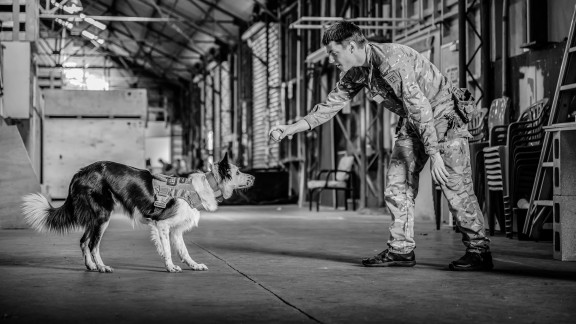
While the dogs are being tested, Sarah Thomas of Pet Transport is on site with a veterinarian, already starting the process to safely ship the Australian dogs back home. Pet Transport, a 50-year-old business, is the official pet transporter for the New Zealand Defence Force. Sarah came to the business in 2014 after her father bought it in 2002. She’s now a company director.
Importing an animal between countries is not for the faint-hearted. There are blood tests, vaccinations, and records needed for dog dimensions, microchip numbers and history of other overseas travel, all to comply with Ministry for Primary Industries requirements.
“The import regulations are pretty strict,” she says. “The main difficulty we were dealing with for six dogs is that they come from multiple barracks across Australia, which meant different points of contact.
We needed them all to attend vet appointments and get the requirements done on time. For us, it’s getting hold of the right people and make the information understandable for them, because it can be quite confusing if you’ve not done it before.
It’s a well-worn procedure for her. She’s organised the transportation of Royal New Zealand Air Force dogs to Australia for Exercises Pitch Black and Talisman Sabre. In 2024 NZ Army personnel and dogs were transported to Samoa for security work alongside NZ Police dog teams for the Commonwealth Heads of Government Forum.
Outside of Defence, she’s handled the passage of New Zealand conservation dogs to other countries and even transported hunting dogs for pig eradication programmes in Guam. Having good networks in this industry is essential, she says. It also helps that Australia and New Zealand are rabies-free.
“The New Zealand Government is very understanding when it comes to the movement of military dogs and police dogs. They just don’t want any kind of biosecurity risk. So I’m using the relationships we’ve built up over the years to support these shipments and make sure it all works.”
Learning how to import dogs is another big output for this exercise, says Alan. It’s a chance for the Australian Defence Force to practise the procedure.
“Interoperability between the New Zealand Defence Force and with our main ally and partner government agencies, has been invaluable. It’s opened something of a Pandora’s Box – in a good way – about where we can take this sort of training to in the future.”
“We’re all in the same fight to make our countries as safe as possible and be ahead of the curve.”