
NZ Army conducting stability and security training in Whanganui
12 August 2026
Unfortunately you are viewing this website on an outdated browser which does not support the necessary features for us to provide an adequate experience. Please switch to a modern browser such as latest version of Google Chrome, Mozilla Firefox, Apple Safari or Microsoft Edge.
Ngā mihi nui
RNZAF Aviation Rescue Fire Fighters have enhanced their ability to respond to emergencies after training alongside U.S. Air Force, Rhode Island Air National Guard and U.S. Marine Corps firefighters during a joint exercise hosted at RNZAF Base Auckland.
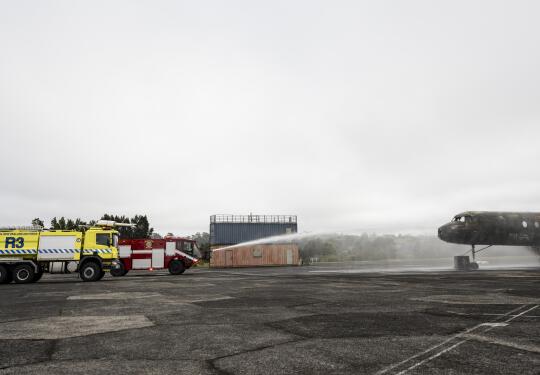
Exercise Southern Steel 2026 is a scenario-based firefighting training exercise.
It is designed to test the ability to deploy capability across the Pacific, to different airfields and to respond to scenarios such as an aircraft crash in remote locations and extracting personnel to safety.
The exercise strengthens interoperability and preparedness, while developing working relationships.
More than 60 personnel from 15 units across the United States and Pacific region, deployed to New Zealand with specialist firefighting equipment and vehicles to support the exercise.
The RNZAF's Flight Sergeant Hayden Bayliss said Southern Steel provided a valuable opportunity for New Zealand and US personnel to train together and strengthen their ability to operate as one team.
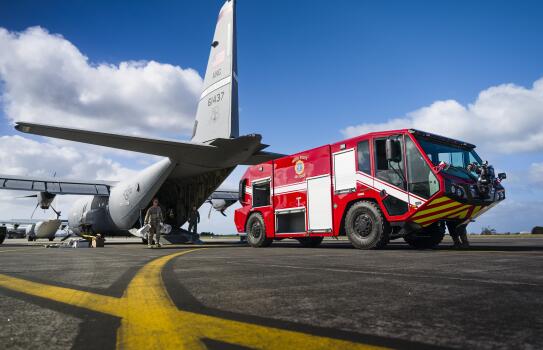
P19C specialist firefighting vehicle being unloaded from a Rhode Island Air National Guard C-130J at Base Auckland.
“Training together helps us understand each other's procedures, equipment and ways of operating, so we are better prepared to respond together in the future," he said.
While a large part of the exercise is focussed on firefighting skills, Chief Warrant Officer Joseph Dixon (USMC) said Southern Steel also demonstrated the complexity of deploying personnel and equipment across the Pacific.
“Southern Steel enhances our mission readiness by getting our personnel and equipment that we would be using in a real-world activity across the Pacific to New Zealand.
“Then we can go back to our bases and figure out what worked and what didn’t work for doing it better next time."
Seeing real world movement of specialist vehicles on C-130J aircraft also highlights opportunities for interchangeability between the RNZAF and US agencies which operate this aircraft.
The exercise provided an opportunity to test the new USAF MARK-1 aviation response firefighting vehicle in demanding off-road conditions. The compact all-terrain vehicle, equipped with a 570-litre water tank and high-capacity pump, gives firefighters greater flexibility to reach aircraft incidents in remote or difficult terrain.
Personnel also completed vehicle familiarisation, hazardous materials training, extraction, rappelling and aviation rescue training.
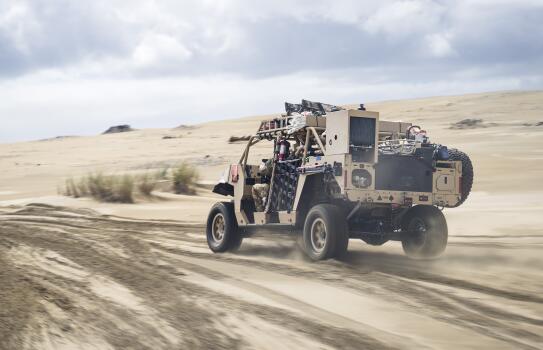
The USAF Mobile Airfield Rescue Kit (MARK-1) specialist firefighting off road vehicle being tested at Kaipara Air Weapons Range.
Comparing processes, procedures and equipment enable US and New Zealand teams to understand how they can integrate and work together during emergencies, natural disasters and other contingency operations across the Pacific.
The exercise also expanded beyond firefighting activities, with a United States Explosive Ordnance Disposal team training alongside RNZAF Armourers in rapid airfield clearance drills.
The scenario simulated an airfield attack that left a runway contaminated with unexploded ordnance, helping both forces identify opportunities for future training.
Chief of Air Force, Air Vice-Marshal Darryn Webb, said Southern Steel demonstrated the enduring partnership between New Zealand and the US.
"The relationship between our Air Forces is both important and enduring. It’s fantastic to welcome the latest team of Aviation Firefighters and Explosive Ordnance Disposal experts to New Zealand. It strengthens those bonds and enhances our collective capability.”
12 August 2026
10 March 2026
07 February 2026
08 December 2025
01 October 2026
17 September 2026
07 August 2026
04 June 2026
25 July 2025