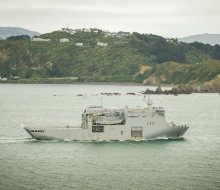
HMNZS Canterbury’s fourth capital visit this year highlights ship’s critical Defence role
29 August 2025
Unfortunately you are viewing this website on an outdated browser which does not support the necessary features for us to provide an adequate experience. Please switch to a modern browser such as latest version of Google Chrome, Mozilla Firefox, Apple Safari or Microsoft Edge.
Ngā mihi nui
A high-tech Uncrewed Aerial System, Skydio X10, recently acquired by Royal New Zealand Air Force (RNZAF) Base Ohakea can be used for surveillance, building and aircraft inspections and emergency situations, marking a shift in capability for the base.

Operations Squadron are now planning for the Skydio X10 to be used across Security Forces, Aviation Rescue Fire Flight and airfield management.
Constructed of plastic and carbon fibre, the Uncrewed Aerial System (UAS) weighs about 2kg and comes equipped with thermal imaging, the ability to photograph and map 3D objects, and is designed to be able to carry spotlights, a speaker and sensors clipped to the frame.
“We can map infrastructure and aircraft by taking numerous photos using an automated mapping flight plan. We then upload those photos to cloud software that will form a larger 3D map,” airfield manager Paul Smillie said.
For aircraft maintenance, this can eliminate the need for personnel to inspect aircraft using cherry-pickers to spot defects in hard-to-reach areas. The gimbled camera can also swivel and take images from underneath the aircraft.
Operations Squadron units will work together to ensure the UAS can be used alongside core work.
The UAS can also provide live video back to an operations centre on the ground, he said.
“It could also be used for security forces tracking an insider threat. We can fly it remotely from up to 12km away and provide them with the live footage they need without putting any of their people at risk.”
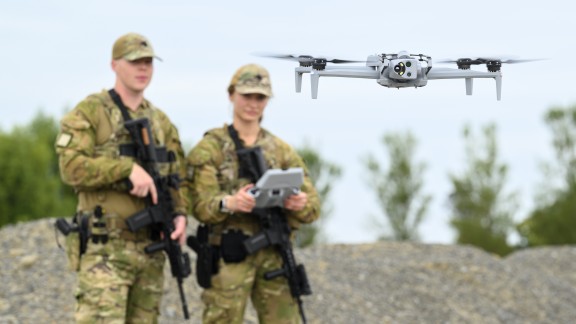
New drone at Base Ohakea | Royal New Zealand Air Force
Another safety aspect of the UAS that’s valuable at a busy airfield is its sensors. It detects aircraft transponder systems, which transmit their GPS position, and informs the controller.
Mr Smillie said UAS technology was evolving and it would likely soon play a more dominant role in military capability. One potential was for UAS to be housed in secure, weather-proof docks located in remote areas and controlled from the base.
“It can be programmed to go at the same time, every day, every week.”
Increasingly utilising UAS capabilities on the base was going to be an interesting journey, Mr Smillie said.
“We'll be working with a regulator to allow better-use cases at an aerodrome. It's got some good safety features, so with the mitigation those bring we can look at flying closer to active runways.”
29 August 2025

19 February 2026

12 May 2025
07 March 2025
26 November 2024
23 April 2024
01 December 2023
11 August 2023

13 March 2026