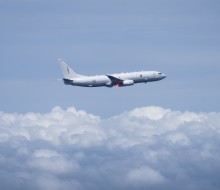
Royal New Zealand Air Force joins anti-submarine warfare exercise in Guam
10 March 2026
Unfortunately you are viewing this website on an outdated browser which does not support the necessary features for us to provide an adequate experience. Please switch to a modern browser such as latest version of Google Chrome, Mozilla Firefox, Apple Safari or Microsoft Edge.
Ngā mihi nui
Under the cover of darkness and in rapidly deteriorating weather conditions, a Royal New Zealand Air Force NH90 helicopter rescued 35 people from an East Coast campsite after flooding and slips shut State Highway 2 between Ōpōtiki and Mātāwai.
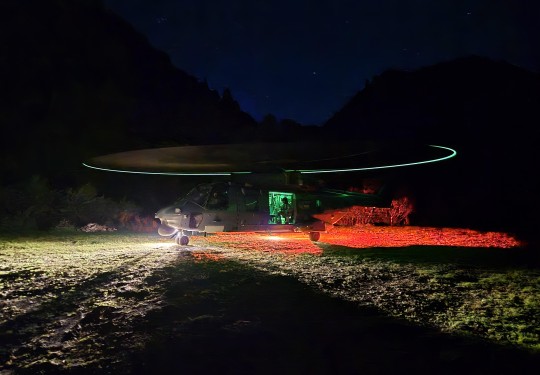
The No. 3 Squadron crew were called to assist on January 16 and arrived at the scene about 9.30pm, NH90 captain Flight Lieutenant George Bellamy said.
Earlier that evening stranded motorists had been flown by a local rescue helicopter to Manganuku Campsite where the NH90 could land and transport large groups to safety.
“We were able to fly groups of 10 or 11 in four flights to evacuation centres at Mātāwai and Ōpōtiki,” Flight Lieutenant Bellamy said.
“For the most part the passengers were pleased to be on board, but some of the children were a bit nervous. We handed out some chocolate bars from our little stash, which I think improved morale.
“People were arriving in jandals and t-shirts and certainly not prepared to be out overnight with more rain coming.”
The crew finished the mission about midnight.
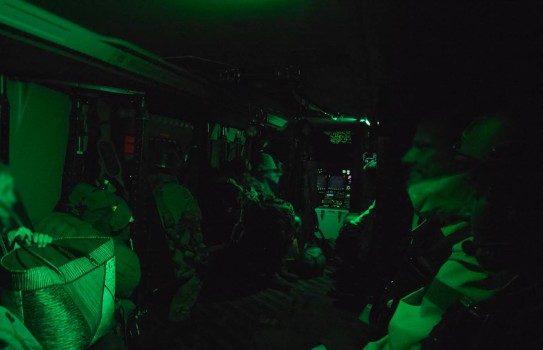
Groups of 10 or 11 people at a time were taken to evacuation centres at Mātāwai and Ōpōtiki by NH90 helicopter.
Weather conditions were fine at the start of the mission, but Flight Lieutenant Bellamy said by the last flight cloud had lowered significantly, which they had to fly underneath through a gorge.
“There were significant hazards in some areas in the gorge, like wires that were difficult to spot. There was no ambient or cultural lighting, but we were wearing night vision goggles, which did a good job.
“We could see all the slips, all the big scars over the road and could tell there was quite a lot of damage done.” he said.
The operation was NZ Police-led and involved them coordinating the rescue from the ground, which streamlined the process.
“If we had had to come back again even later, we would have found it pretty difficult and would have needed to fly close to some significant hazards, so we couldn't afford to delay too much.
“Without the coordination skills of those on the ground there very well could have been unprepared people left out overnight,” Flight Lieutenant Bellamy said.
10 March 2026
07 February 2026
08 December 2025
25 July 2025
31 March 2026
26 February 2026
11 December 2025
13 November 2025
21 October 2025